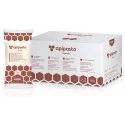
 Apipasta with vitamins 15kg
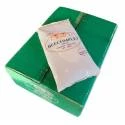 Beecomplet® Spring 14Kg
 Beekeeper suit with round veil
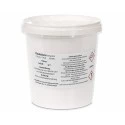 Oxalic acid 1kg
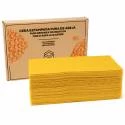 Beeswax Foundation 5kg
 Fresh royal jelly 20g
 Classic honey jar 1kg comb-lines TO77 - Pack of 16 units
 Promotor L Apis 1 litre
- To order





 Share in WhatsApp
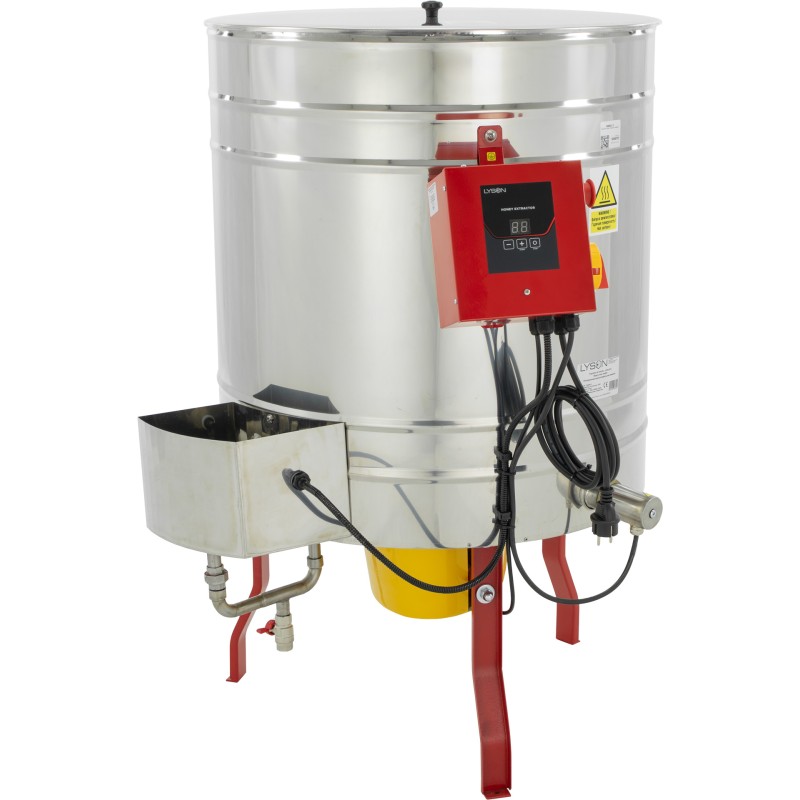
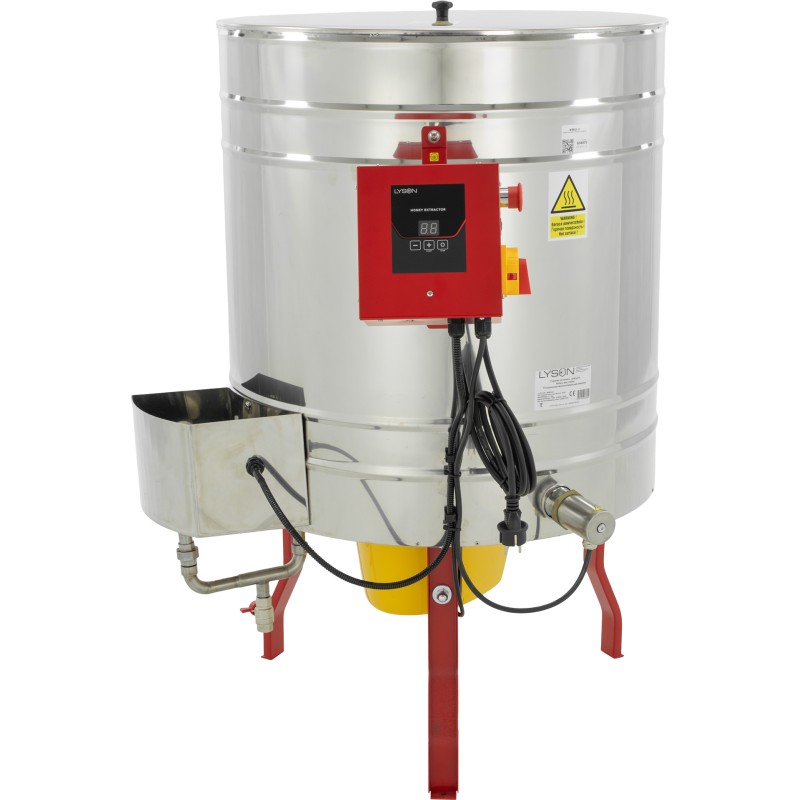
Ø 505 MM INSULATED STAINLESS DRUM, 480 HIGH | 3,000 W HEATER IN WATER, 250 W MOTOR, 230 V |
PT100 PROBE AND DIGITAL CONTROL; LOW-WATER CUT-OUT | 20 min PER LOAD PER THE CATALOGUE; 40 KG |
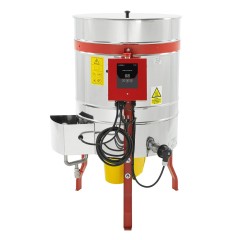
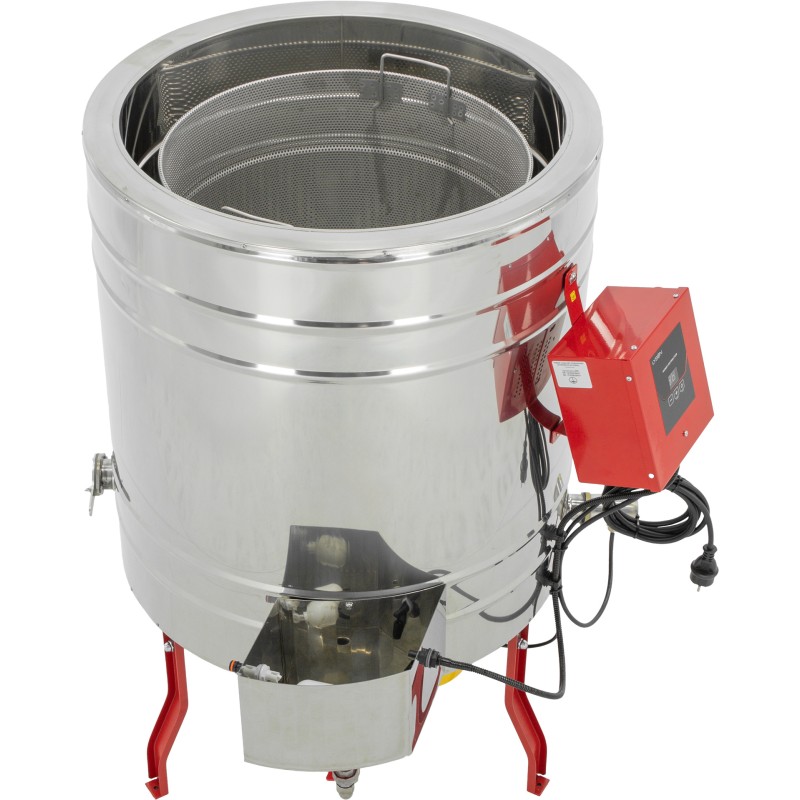
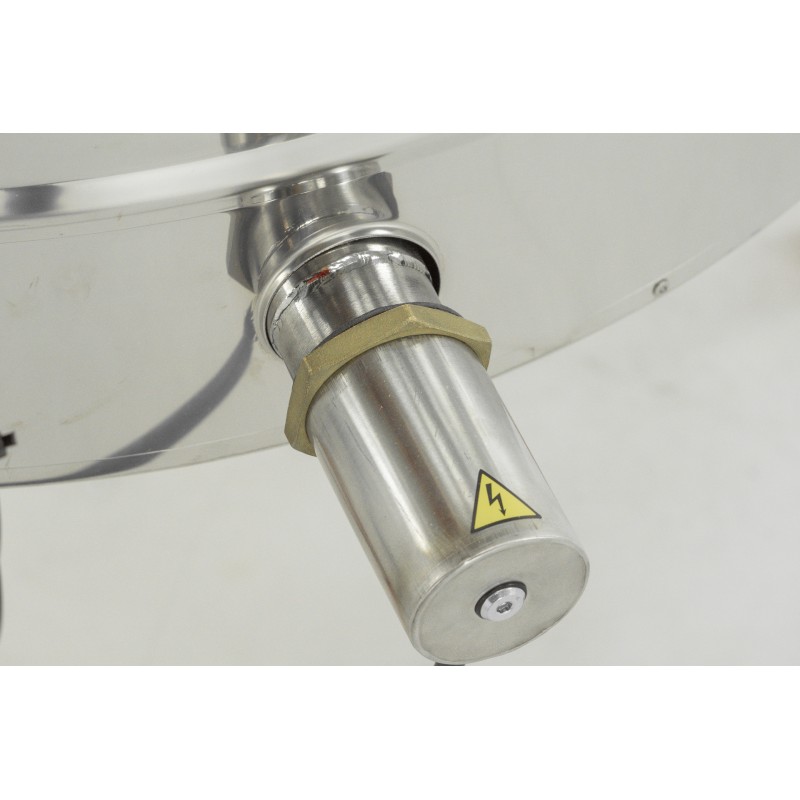
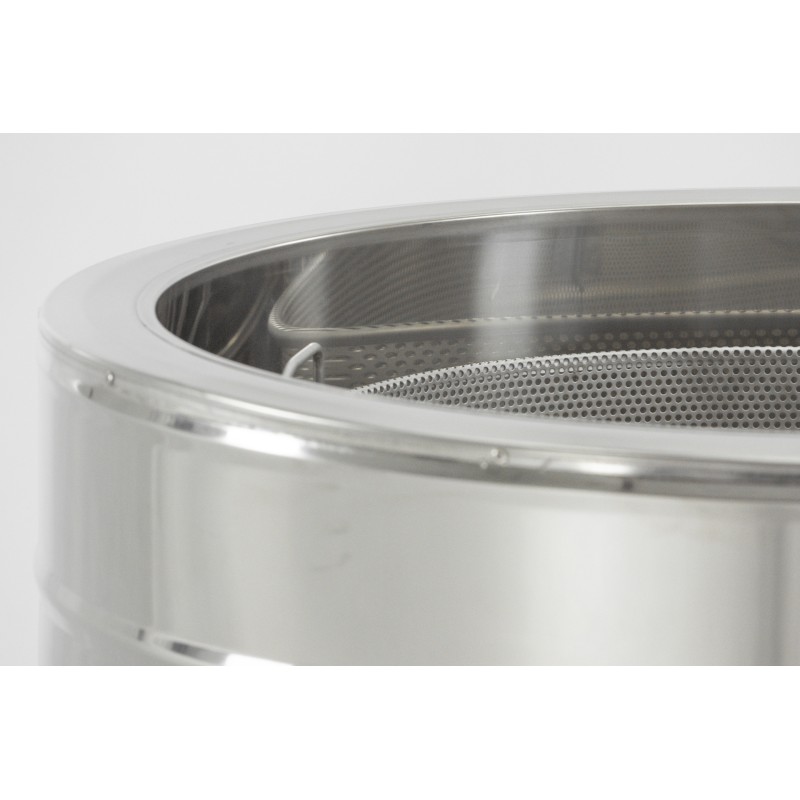
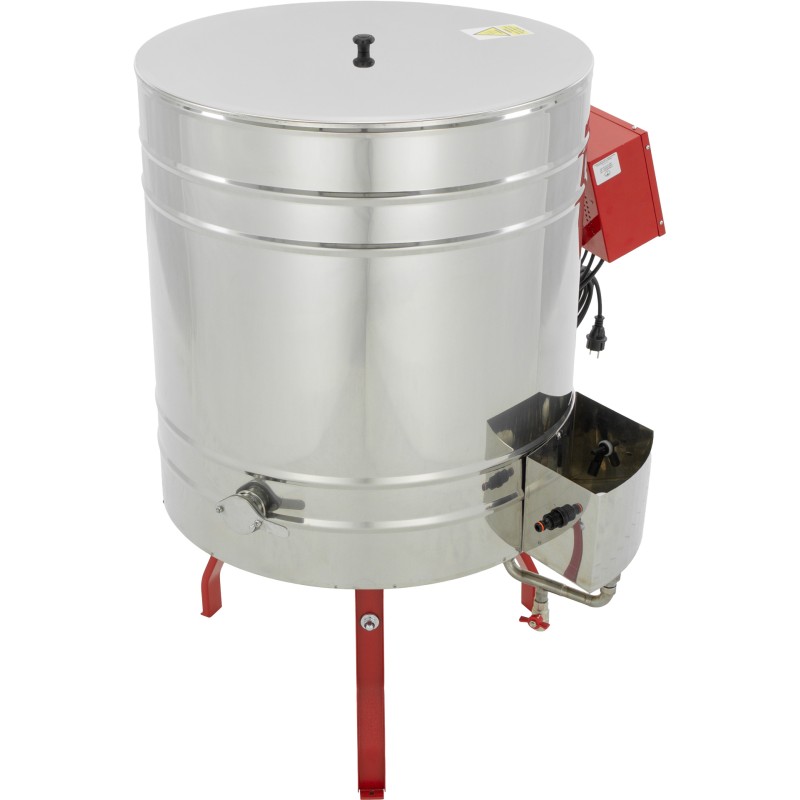
LYSON centrifugal wax melter with insulated drum: it melts with steam the cappings and old frames loaded in a perforated Ø 3 mm basket and then spins it with a 250 W motor, so clean wax leaves by the 6/4″ butterfly valve and the dry residue stays in the basket. Stainless drum of Ø 505 × 480 mm, 3,000 W heater in a water bath with PT100 probe, digital control and low-water cut-out; 230 V, 1,110 mm high and 40 kg. Supplied to order.
A steam melter leaves wax in the slumgum and the slumgum in the press; here centrifugal force pulls the wax out of the slumgum in the same drum, with no press or second pass.
01 · HOW IT WORKS
The 3,000 W heater warms the water at the bottom and the steam rises through the perforated basket, where whole frames, cappings or pieces of comb go, and melts the wax. Then the 250 W motor spins the basket: centrifugal force throws the melted wax against the drum wall, from where it runs to the bottom and out through the 6/4″ butterfly valve; the dry cake of cocoons and debris stays in the basket. The insulated body keeps the heat in cold rooms and the catalogue puts a load at about 20 minutes.
02 · THE CONTROL
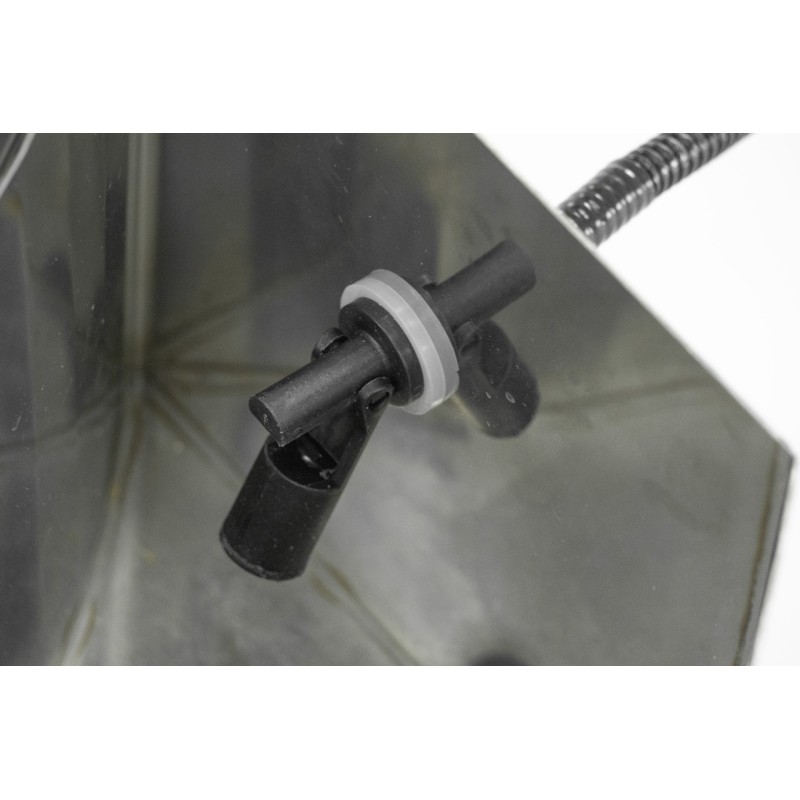
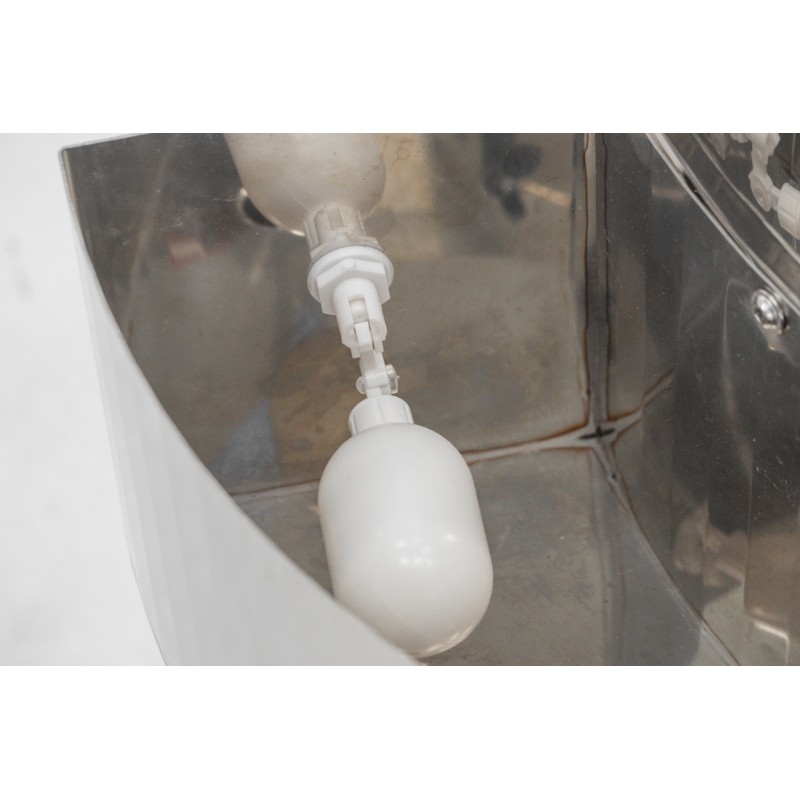
The digital controller with PT100 probe sets the bath temperature and holds it, which is what keeps the wax from cooking: above 100 °C for hours it degrades and loses quality. The low-water protection cuts the heater if the bath runs dry, the typical failure of these machines. A few litres of soft water are topped up before each load; with hard water the wax comes out milky.
03 · WHAT IT RECOVERS
From undrained cappings the honey is recovered too, settling by density to the bottom after the cycle. From old, black frames less wax comes out than from light comb, because much of the weight is already cocoon and residue, but what a solar melter would leave in the slumgum does come out. Every kilo of recovered wax goes back to the hive as foundation: closing the cycle at home instead of sending it out.
04 · WHO IT IS FOR
It is a workshop machine: from about a hundred hives with yearly frame renewal, or a cooperative centralising the melting of several members, the investment makes sense against the solar melter (3077), free but seasonal, or the steam melter with basket (313), slower and with more labour. Below that, those two cover the work. Complements: a tank for the recovered honey, a wax settler and a foundation mill.
05 · BEFORE YOU BUY
The melter is supplied with its basket, controller and cable, to order; the outlet sits 370 mm off the floor for a container underneath.
| ✓ FITS | Honey houses, cooperatives and semi-professionals with over a hundred hives melting old frames and cappings by the hundreds of kilos who want the wax out of the slumgum without a press. |
| ✕ DOESN’T FIT | Under fifty hives with normal renewal: the solar melter (3077) or the 115-litre steam melter (313) cover the work. |
| ⚠ NOT INCLUDED | Tank, settler or mill. |
⚠ PRECAUTIONS
Steam and water above 90 °C: open the lid with gloves and face turned away, never with the basket spinning. Top up the water before each load and never bypass the low-level cut-out. Disconnect from the mains before cleaning; clean basket and drum hot so propolis does not set, on a grating with a drain because wax drips.
| Reference | W4805_O |
|---|---|
| Brand | LYSON |
| Product | Centrifugal wax melter with insulated drum |
| Drum | Acid-resistant stainless, Ø 505 × 480 mm, insulated |
| Basket | Perforated stainless, Ø 3 mm |
| Heater | 3,000 W, in water bath |
| Motor | 250 W |
| Control | Digital with PT100 probe; low-water cut-out |
| Valve | 6/4″ butterfly; outlet 370 mm off the floor |
| Cycle | About 20 minutes per load, per the catalogue |
| Power supply | 230 V, 50 Hz |
| Dimensions | 1,110 mm high |
| Weight | 40 kg |
| Frame | Epoxy-coated steel legs, ring and control box |
| Availability | To order |
| Alternatives | Solar melter 3077; 115 L steam melter 313 |
Data sheet
1 file available