 Apipasta with vitamins 15kg
 Beecomplet® Spring 14Kg
 Beekeeper suit with round veil
 Oxalic acid 1kg
 Beeswax Foundation 5kg
 Fresh royal jelly 20g
 Classic honey jar 1kg comb-lines TO77 - Pack of 16 units
 Promotor L Apis 1 litre

 Share in WhatsApp
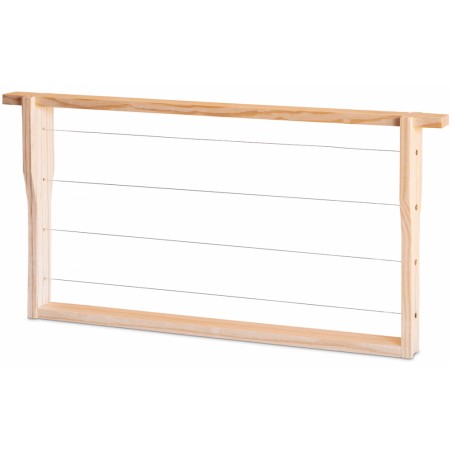
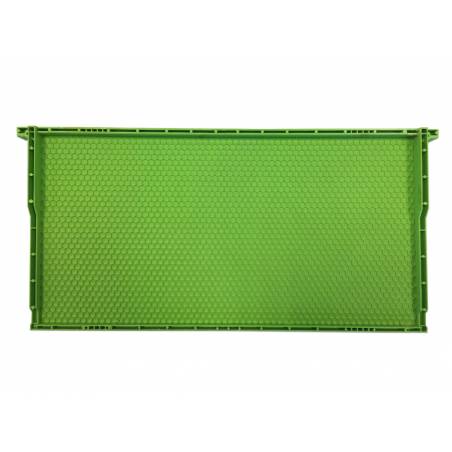
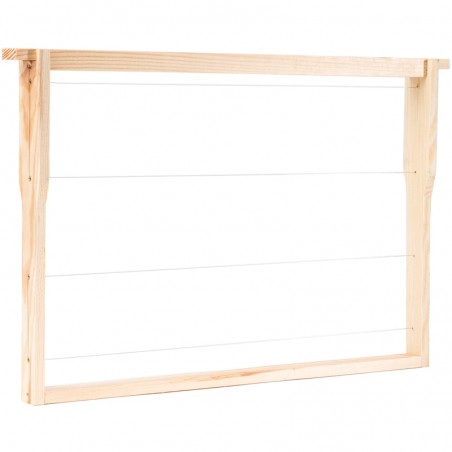
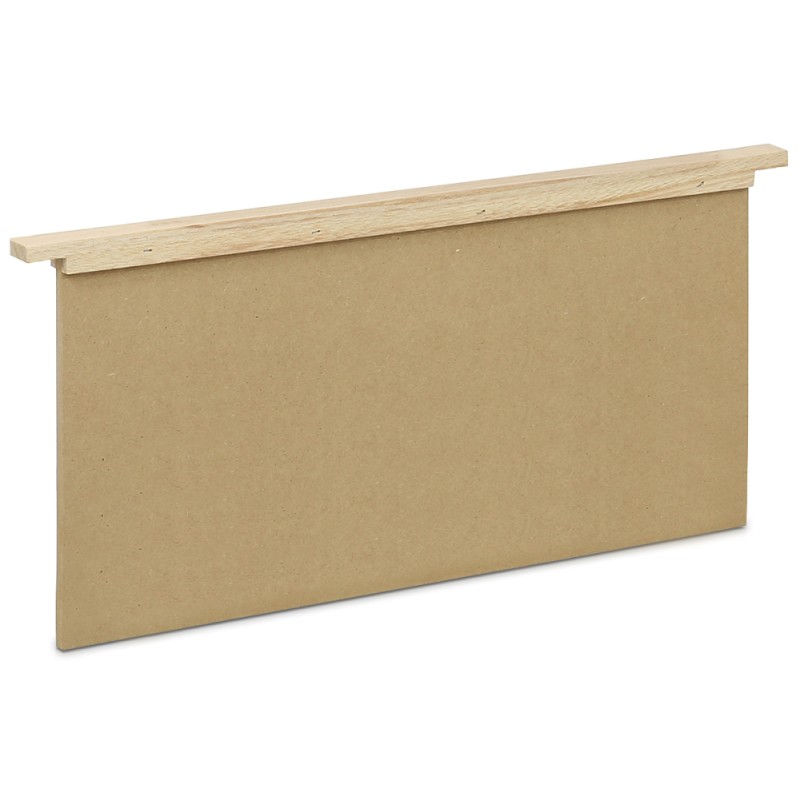
This Langstroth dummy board acts as a divider: it hangs from the frame rests like a frame but contains no comb.
Its function is to mark the boundary of the space the colony should occupy, leaving out the volume not yet covered by the bees. It is useful in nucleus hives, small colonies and for wintering adjustments, always depending on the actual strength of the hive.
01 · USE
Place it after the last frame actually covered by bees so that the brood is concentrated in a manageable area. The divider helps to prevent the hive from becoming too large, but it does not, on its own, remedy a lack of food, damp, varroa mites or a low bee population. The necessary stores must remain on the side accessible to the colony.
02 · HANDLING
When overwintering or establishing a nucleus colony, the partition allows you to start with a smaller space and expand it gradually. Check the space as brood production increases: if the colony has already filled the last frame and needs more room, move the partition or remove it before it restricts egg-laying or storage. There is no single position that is valid for the entire season.
03 · MAINTENANCE
Carefully scrape the wax and propolis off the top bar to keep the passage clear and ensure it moves smoothly. Check that the division board remains flat and store it in a dry place when not in use. Its main function is to divide the space; it should not be used as complete insulation for the hive.
04 · BEFORE YOU BUY
| ⚠ NOT INCLUDED | Check the measurements—even in a Langstroth hive. The top bar is 482 mm, the board is 447 mm long and the total height is 232 mm. Measure the distance between the frame rests and the clearance above the bottom board before purchasing: bottom boards, rebates and country-specific variations may affect the fit. The divider should hang freely, without resting on or being forced against the bottom. |
| Format | Langstroth |
|---|---|
| Top-bar length | 482 mm |
| Board length | 447 mm |
| Overall height | 232 mm |
| Approximate weight | 615 g |
| Construction | Solid board with wooden top bar |
Data sheet

Write your question
check_circle
check_circle