 Apipasta with vitamins 15kg
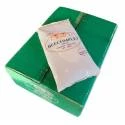 Beecomplet® Spring 14Kg
 Beekeeper suit with round veil
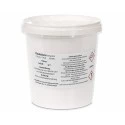 Oxalic acid 1kg
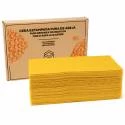 Beeswax Foundation 5kg
 Fresh royal jelly 20g
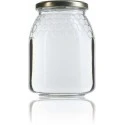 Classic honey jar 1kg comb-lines TO77 - Pack of 16 units
 Promotor L Apis 1 litre

 Share in WhatsApp
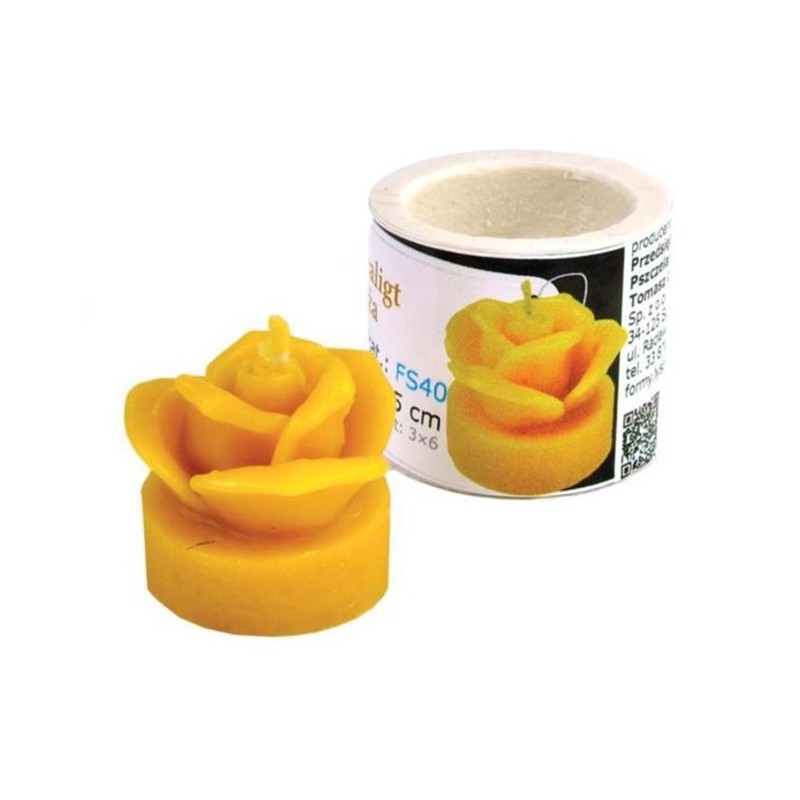
Silicone mould for a small candle shaped like an open rose on a round base: 3.5 cm tall, 3.2 cm across and about 22 g of wax.
A small beeswax favour: about 45 roses per kilo of wax, with the 3×6 wick LYSON recommends.
01 · WICK AND BANDS
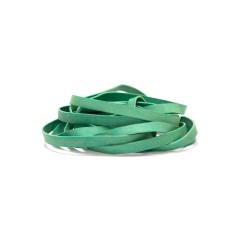
This mould has a slit: thread the 3×6 wick through the centre, hold it taut with a stick and close the mould with rubber bands so the wax does not escape through the join. A light coat of silicone spray inside helps the petals come out whole, and the beeswax is poured at 70-75 °C, slowly, so it fills every petal.
02 · THE BASE
Wax shrinks as it cools, and the poured face, which becomes the base of the rose, sets uneven. Level it while the piece is still warm, trimming the excess with a knife, because cold wax splinters. Then unmould once it is completely cold, opening the mould along the slit so the petals do not break.
03 · BEFORE YOU BUY
A 3.2 cm candle is lit on a plate or in a candle holder. And a mould that has been used with wax does not go back to the kitchen: LYSON does not intend it for food.
| ✓ FITS | Table and gift favours in batches: about 45 roses per kilo of wax. |
| ✕ DOESN'T FIT | Floating candles: it is a rose standing on its base, not a floating disc. |
| ⚠ NOT INCLUDED | Wax, wick, rubber bands or release spray. |
| Reference | FS40 |
|---|---|
| Design | Open rose on a round base |
| Finished candle | 3.5 cm tall × 3.2 cm diameter |
| Wax per piece | About 22 g, some 45 candles per kilo |
| Recommended wick | 3×6, not included |
| Mould type | With a slit; closed with rubber bands before pouring |
| Pouring temperature | 70-75 °C |
| Material | Flexible silicone; not for food use |
Data sheet
Write your question
check_circle
check_circle