 Apipasta with vitamins 15kg
 Beecomplet® Spring 14Kg
 Beekeeper suit with round veil
 Oxalic acid 1kg
 Beeswax Foundation 5kg
 Fresh royal jelly 20g
 Classic honey jar 1kg comb-lines TO77 - Pack of 16 units
 Promotor L Apis 1 litre
- Out of stock

 Share in WhatsApp
The Iberian mated queens (Apis mellifera iberiensis) are an excellent option for beekeepers looking to strengthen the genetics of their hives or form new nuclei. These queens are carefully selected after starting to lay brood in a nucleus, ensuring they arrive in full reproductive capacity and ready for integration into the hive.
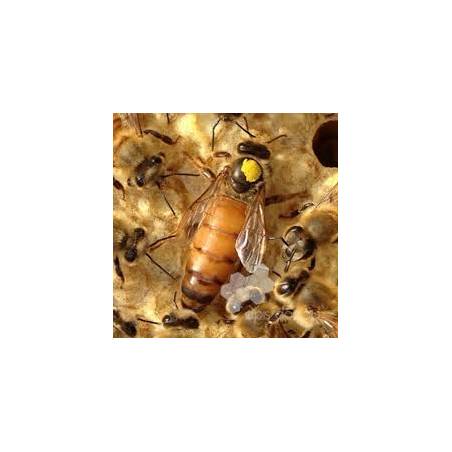
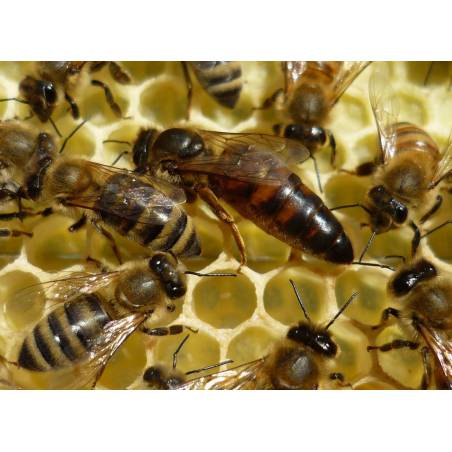
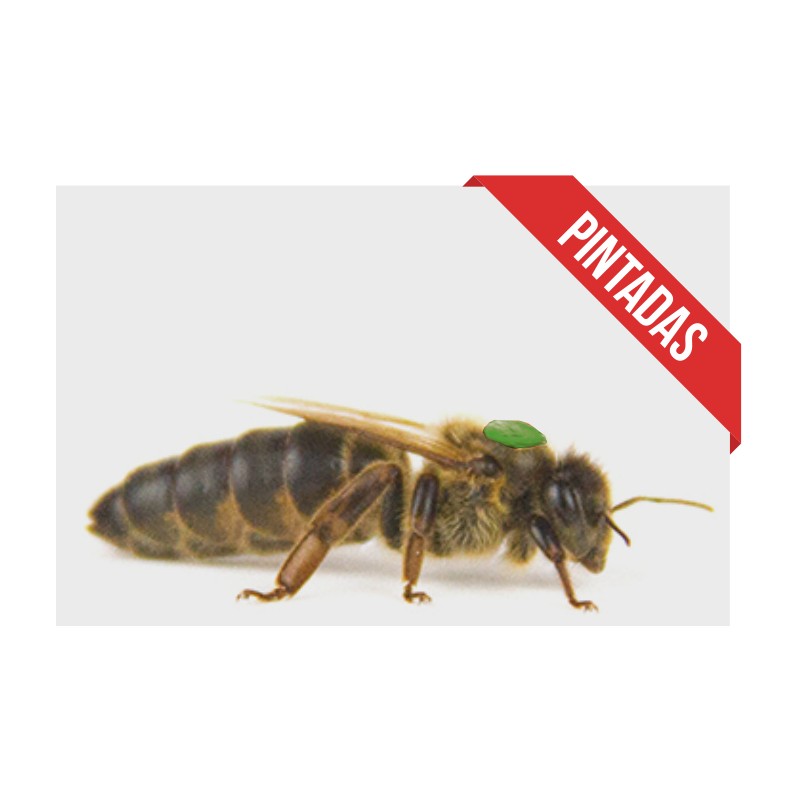
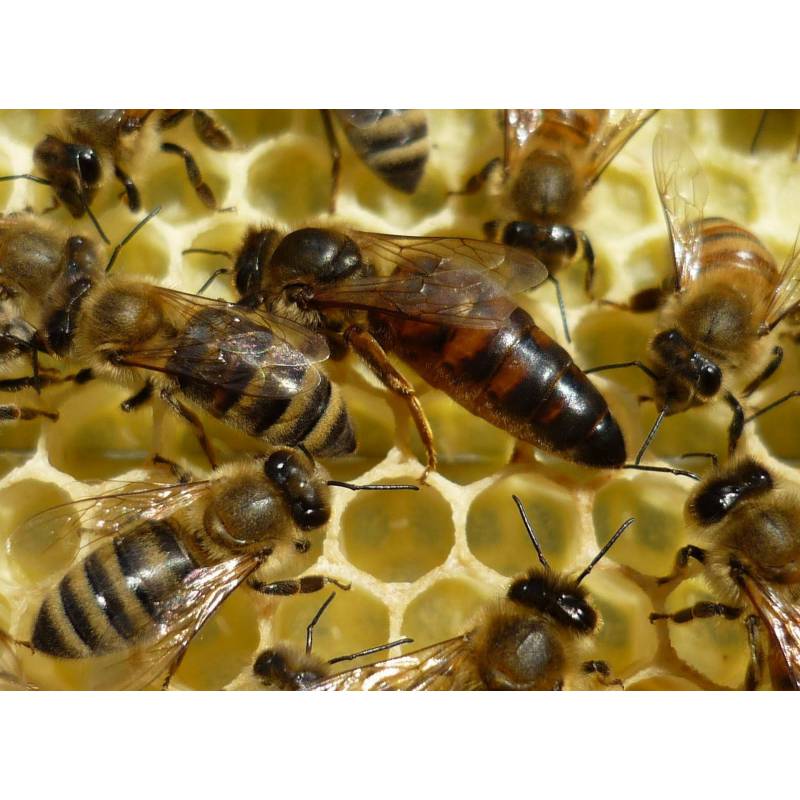
Iberian queen (Apis mellifera iberiensis), mated and laying: she only leaves the rearing yard once she has started to lay.
She travels in a Nicot cage with attendant bees, and she arrives alive or she does not arrive: that is why shipping has a fixed day and conditions worth reading before ordering.
01 · WHAT A PROVEN LAYER MEANS
No newly hatched queen is sent out to see what happens. This one has been mated in a nucleus and held until she starts laying before being selected: by the time she reaches your hive her fertility is demonstrated. She comes marked with the colour of the current year, which is what will tell you two seasons from now whether the queen you are looking at is this one or a daughter of hers.
02 · THE IBERIAN GENETICS
Apis mellifera iberiensis is the bee of the peninsula and is adapted to its dry summers and irregular winters: it handles drought well and matches laying to the forage in front of it. Against imported strains, the advantage is not raw yield but that her daughters go on behaving — there is no surprise in the second generation when they cross with the drones of your district.
03 · INTRODUCING HER
This is where queens are lost. The colony has to be queenless — for some hours at least, better a day — and free of queen cells: go through and take them all out, or they will raise their own and kill yours. Put the closed cage with its candy between two frames of brood, exit upwards, and leave it three or four days without opening the hive. At seven to ten days look for eggs, not for the queen. Never release her straight onto the frames.
04 · WHEN TO REQUEEN
Requeening is one of the few decisions that change a whole hive: a young queen lays more, holds the colony together better and reduces the swarming urge. It is also the quick route to bringing hygienic behaviour into an apiary. And you do not have to wait for the calendar: a hive with patchy brood, low population or bad temper is a candidate as soon as queens are available.
05 · BEFORE YOU BUY
The minimum order is 5 queens. Shipments leave on Tuesdays only, delivered on Wednesday before 15:00, and only within the Iberian peninsula. An order placed from Thursday to Monday goes out the following Tuesday.
| ✓ FITS | Requeening and making up nuclei, within the Iberian peninsula. |
| ✕ DOESN'T FIT | Orders of fewer than 5 queens or destinations outside the peninsula. |
| ⚠ NOT INCLUDED | Nucleus, hive or an extra introduction cage. |
| Species | Apis mellifera iberiensis |
|---|---|
| Condition | Mated, laying proven in a nucleus |
| Marking | Colour of the current year |
| Shipping | Nicot cage with attendant bees |
| Dispatch days | Tuesdays only · delivered Wednesday before 15:00 |
| Destination | Iberian peninsula only |
| Minimum order | 5 queens |
| Introduction | Caged with candy, colony queenless and free of queen cells |
| Reference | 100102 |

The Iberian mated queens (Apis mellifera iberiensis) are an excellent option for beekeepers looking to strengthen the genetics of their hives or form new nuclei. These queens are carefully selected after starting to lay brood in a nucleus, ensuring they arrive in full reproductive capacity and ready for integration into the hive.
check_circle
check_circle