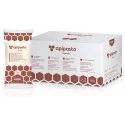
 Apipasta with vitamins 15kg
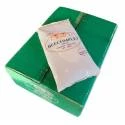 Beecomplet® Spring 14Kg
 Beekeeper suit with round veil
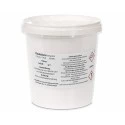 Oxalic acid 1kg
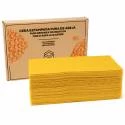 Beeswax Foundation 5kg
 Fresh royal jelly 20g
 Classic honey jar 1kg comb-lines TO77 - Pack of 16 units
 Promotor L Apis 1 litre
- Made in 🇫🇷

 Share in WhatsApp
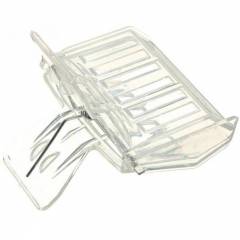
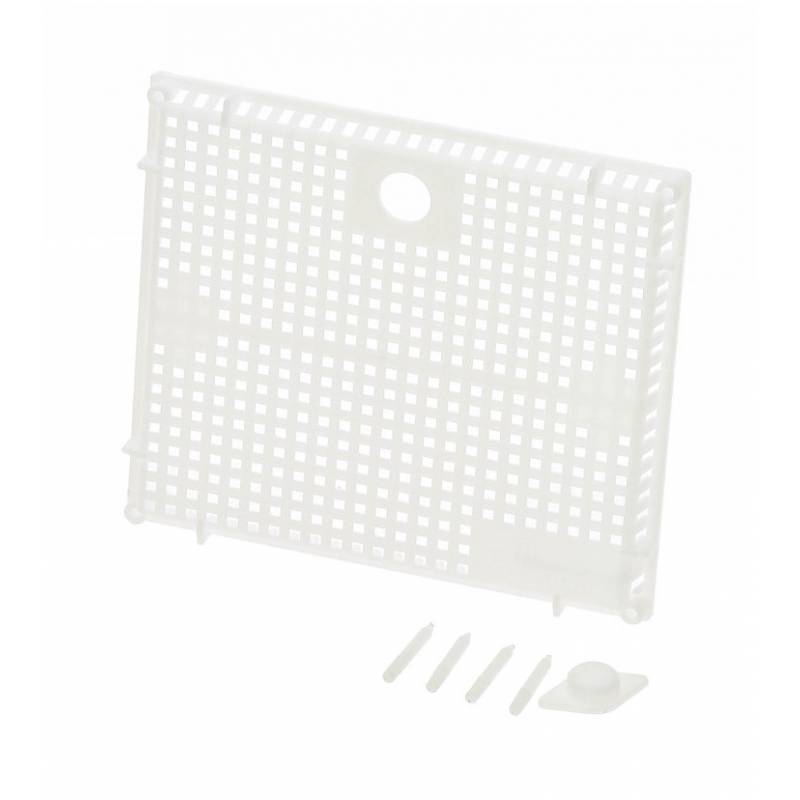
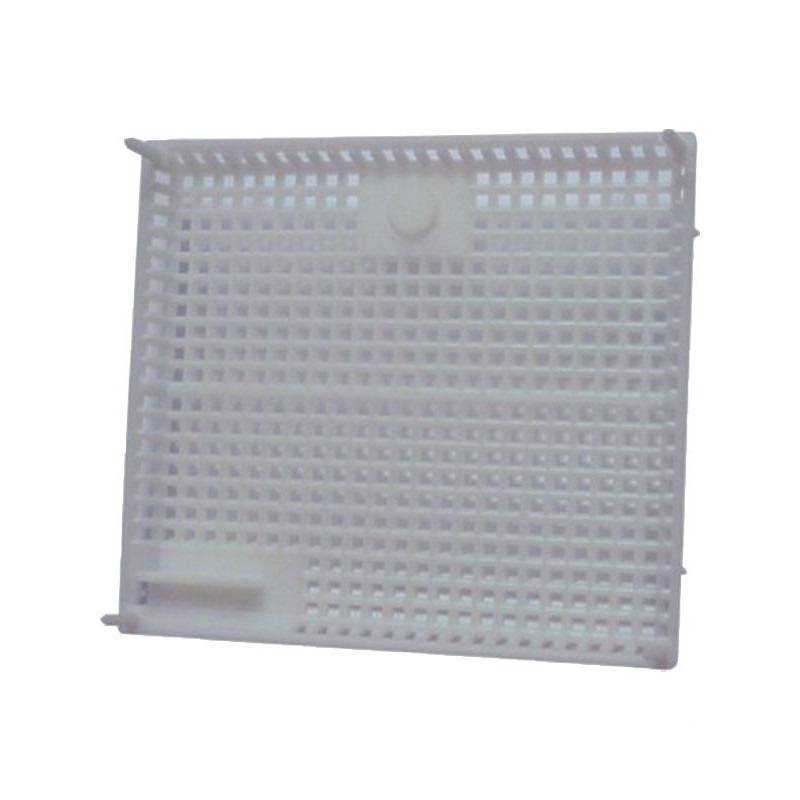
148 × 130 mm COMB AREA COVERED | 4 FIXING SPIKES |
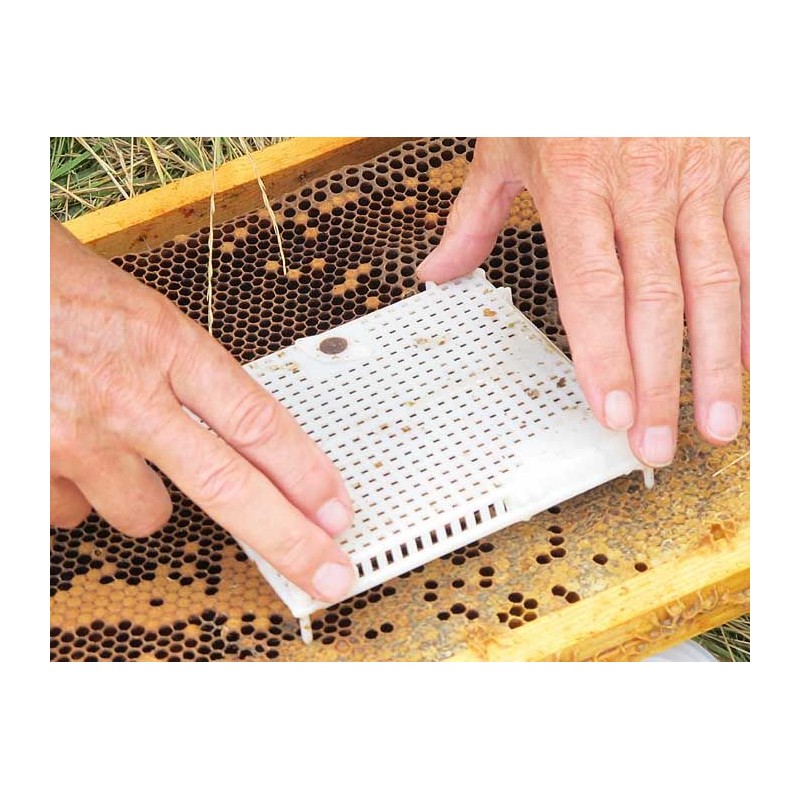
A mesh cage that pins straight onto the comb to introduce a mated queen and let the colony release her itself.
It is NICOT food-grade plastic and works on a frame of emerging brood: the queen is held against the comb, the workers tend her through the mesh, and it is they who open the way by eating through the candy. Mind the use case — this cage is for mated queens, not for newly emerged virgins.
01 · WHEN TO USE IT
Its scenario is requeening: you take the old queen out and want to put in a mated one, bought or reared yourself. The colony has to be queenless and prepared first — as a rule of thumb around 24 hours of queenlessness if she comes with bees from her own colony and around 48 if not, though every breeder has their own protocol. What this cage is not: the way to introduce a newly emerged virgin. That case calls for an introduction cell, which mimics the hatch rather than caging the queen.
02 · FITTING
Order matters. First load the candy into the store recess and close it with its plug. Then pick a frame of emerging brood, ideally from the colony itself: the bees that hatch inside the cage come into the world alongside the queen and tend her without conflict. Shake or brush the bees off that patch, uncap the area that will end up enclosed and press the cage home on its four spikes, flat against the comb. Only then, with everything set, put the queen in and close it.
03 · WHY IT FAILS
The usual failure is not the candy, it is the seating. If the frame does not bed right down onto the comb, the workers tunnel through the wax at the edges and get in underneath without touching the plug — and the release stops being gradual. Push all four spikes fully home and check the rim bites into the wax all the way round. After that, leave it alone: no daily peeking, no knocks, no direct sun, no strong smells. If on inspection you find bees biting persistently at the mesh, that is a sign of rejection and worth rethinking rather than pressing on.
04 · BEFORE YOU BUY
The cage lowers the risk and gives you control over the pace of the release, but the colony has the last word: acceptance rests on queenlessness, population, the state of the queen, feed and the weather. No accessory guarantees it.
| ✓ FITS | Any brood comb with 148 × 130 mm of clear flat surface. |
| ✕ DOESN'T FIT | Newly emerged virgin queens: that case wants an introduction cell, not a cage. |
| ⚠ NOT INCLUDED | The candy. It goes in the store recess and it is what sets the pace of the release. |
| Use | Introducing a mated queen on the comb, with candy release |
|---|---|
| Dimensions | 148 × 130 × 11 mm |
| Material | Recyclable food-grade plastic |
| Fixing | 4 spikes pressed into the comb |
| Release | Store recess for candy, closed with a plug (candy not included) |
| Placement | On a frame of emerging brood, in a queenless and prepared colony |
Data sheet
1 file available

check_circle
check_circle