 Apipasta with vitamins 15kg
 Beecomplet® Spring 14Kg
 Beekeeper suit with round veil
 Oxalic acid 1kg
 Beeswax Foundation 5kg
 Fresh royal jelly 20g
 Classic honey jar 1kg comb-lines TO77 - Pack of 16 units
 Promotor L Apis 1 litre


 Share in WhatsApp
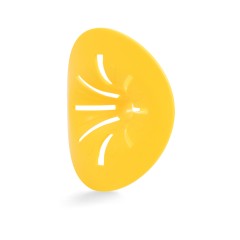
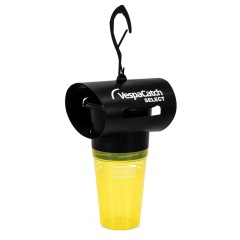
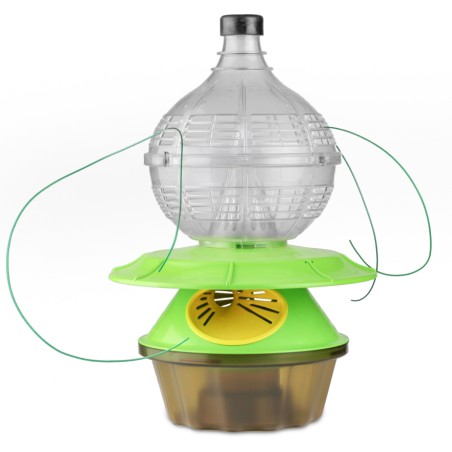
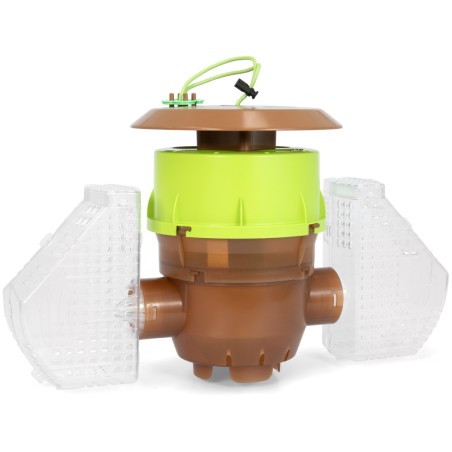
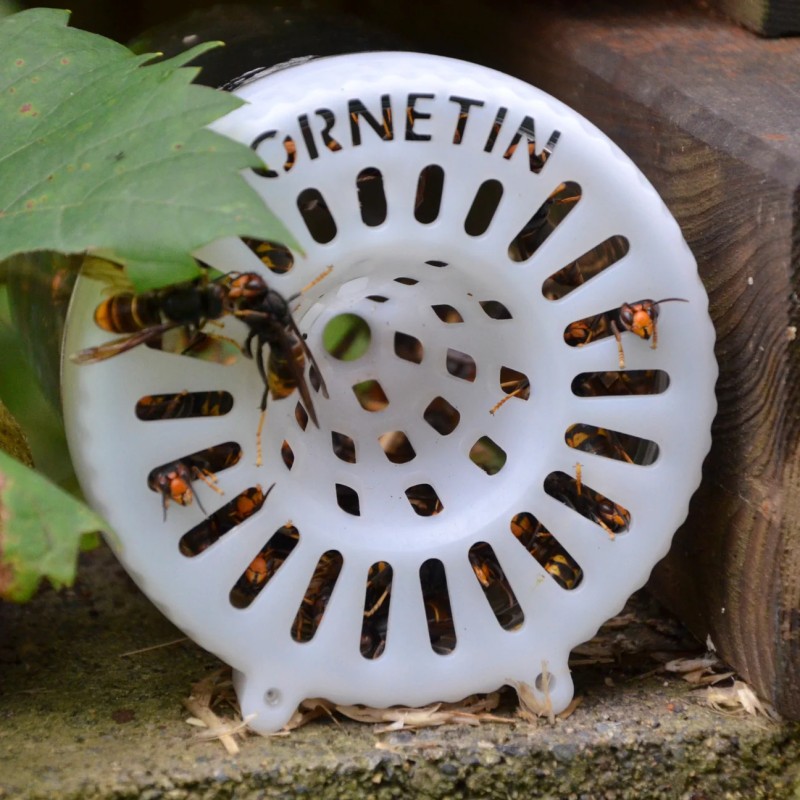
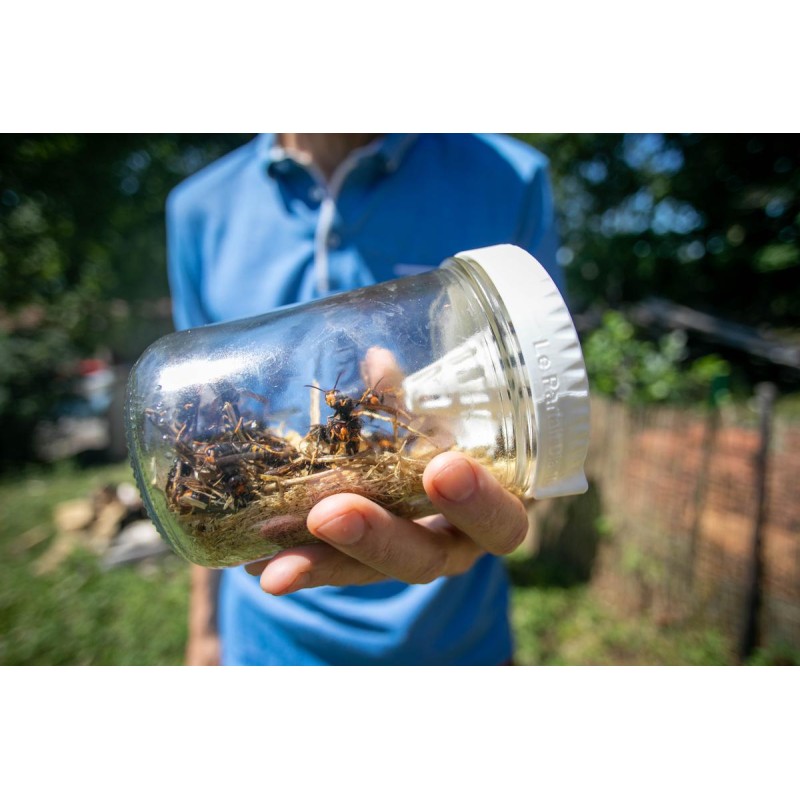
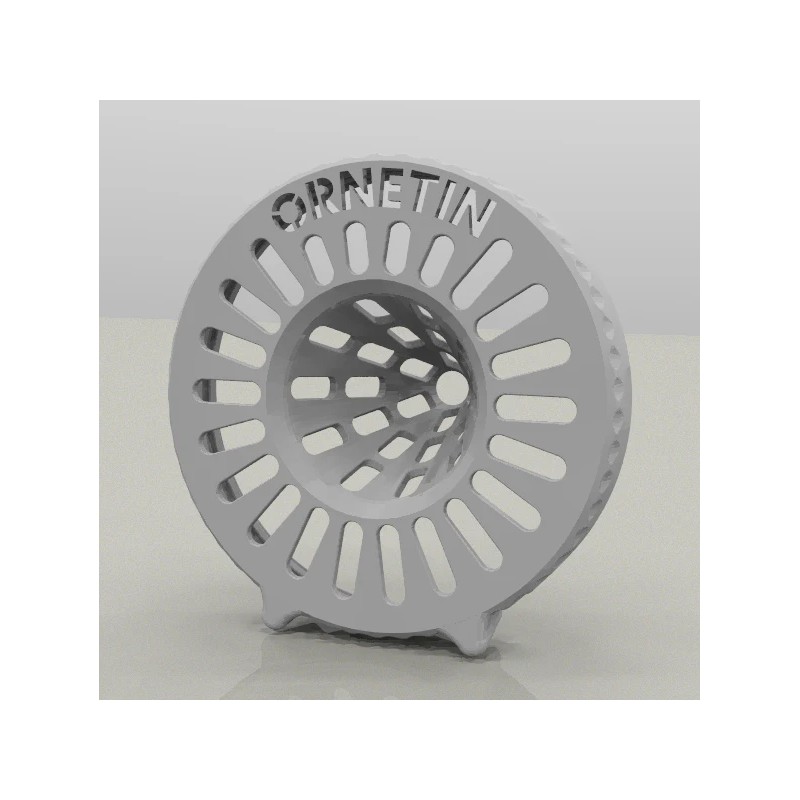
The Ornetin® trap is an effective and eco-friendly tool specifically designed to capture Asian hornets (Vespa velutina), an invasive species that poses a threat to bees and other pollinators.
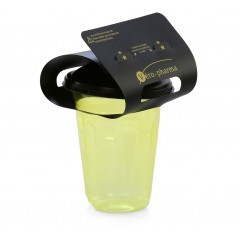
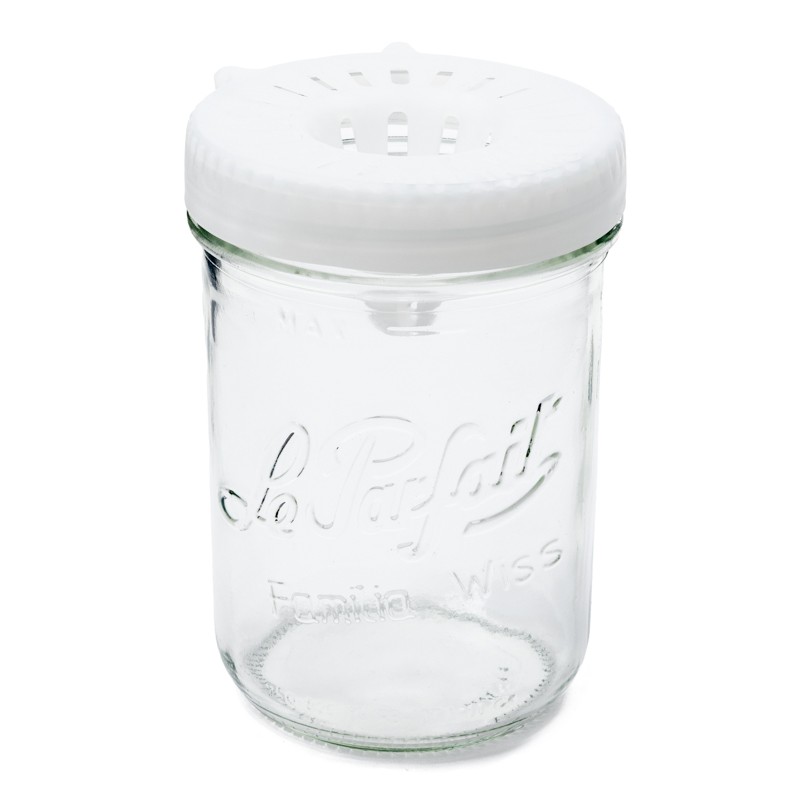
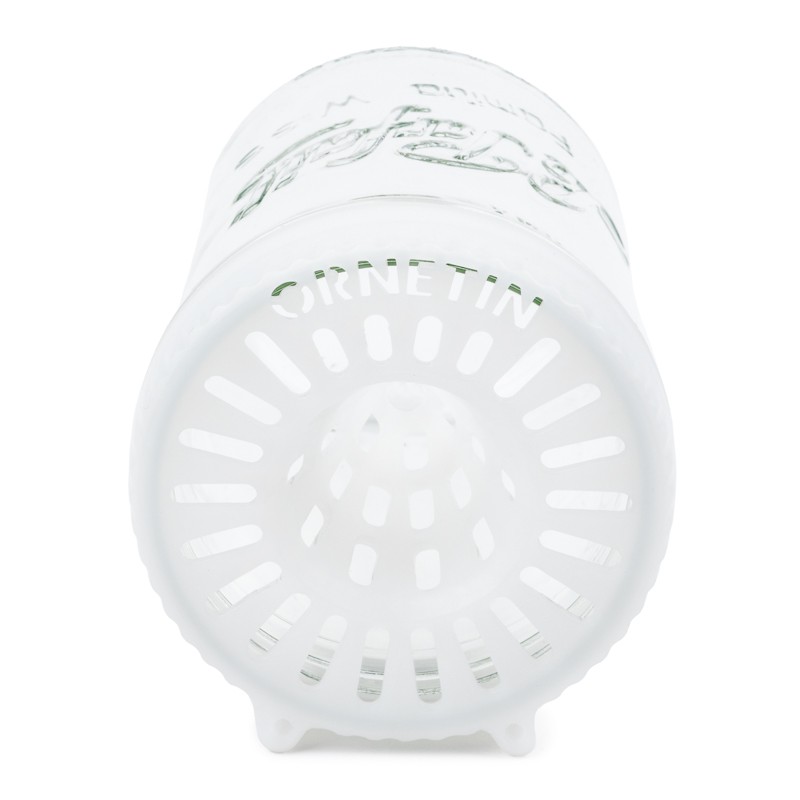
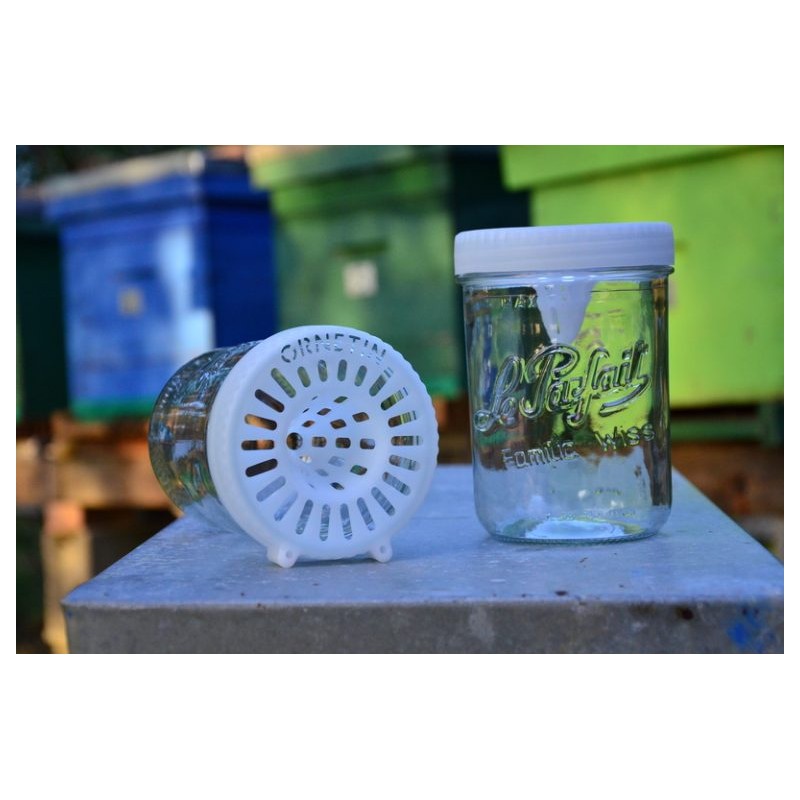
This kit includes everything you need to get started: an Ornetin® trap with a threaded attachment and an 825 ml Le Parfait glass jar with a wide 100 mm mouth, which maximizes capture surface and makes cleaning and reuse easy.
Ornetin® is a highly selective trap that captures only Asian hornets, avoiding accidental capture of other beneficial insects like bees and butterflies. This selective design is essential for protecting biodiversity, allowing effective control of this invasive species without harming the local ecosystem.
A hornet trap is not judged by what it catches. It is judged by what it lets out.
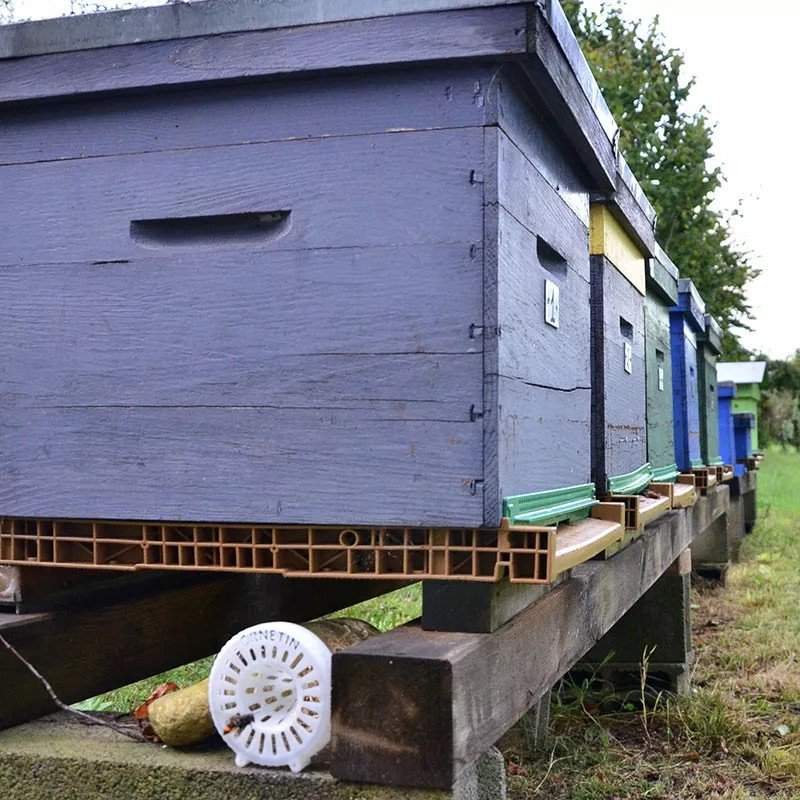
Reusable Ornetin® trap for the Asian hornet, supplied with an 825 ml Le Parfait glass jar. It works upright with liquid bait and on its side with dry syrup.
01 · FIRST, THE LEGAL PART
Vespa velutina is listed as an invasive alien species of Union concern. That has two practical consequences: captured specimens are not released and not moved alive, and if you find a nest, the thing to do is report it to your regional authorities — not deal with it yourself.
A trap is a tool for monitoring and for easing pressure at the entrance, not a method of eradication. It tells you when the hornet has arrived and takes the weight off the hive front; the nest is for whoever has the means and the authority to handle it.
02 · SELECTIVITY
The design relies on wide openings that let non-target insects escape — bees, butterflies and small pollinators. That is its argument and it is a real one, but it deserves stating precisely: no baited trap is entirely selective.
What most affects selectivity is not the trap but the bait and the checking: protein baits attract everything, sugary baits with alcohol are far more selective, and checking often is what lets you release what should not be there before it is too late.
03 · SPRING OR AUTUMN
In spring, for founding queens, it is used upright with liquid: white wine, red-fruit syrup and beer. It is slow to start, because until the liquid reaches a certain level it attracts little.
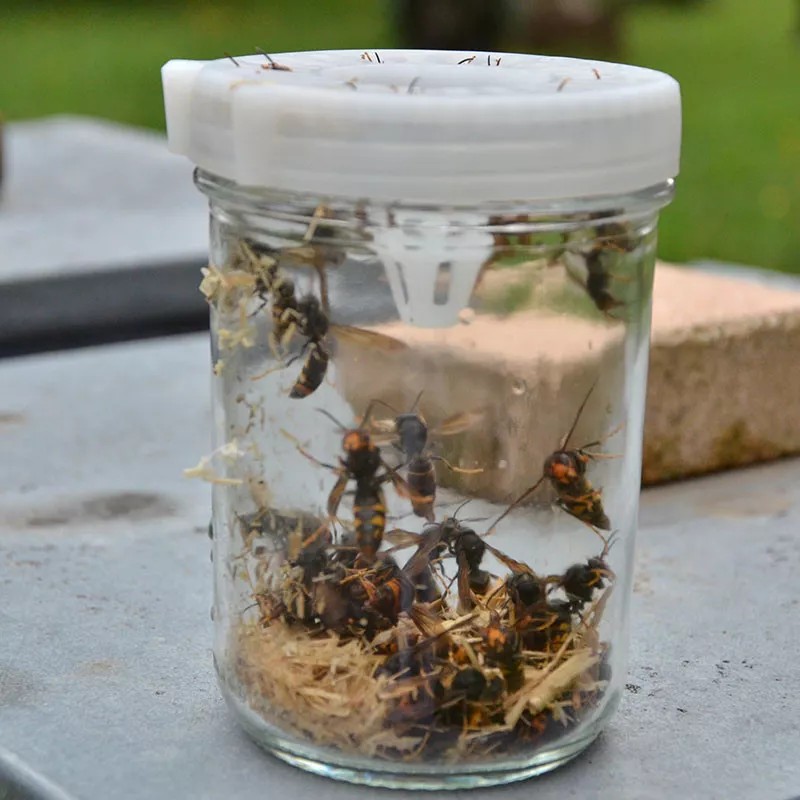
In summer and autumn, with workers hunting at the entrance, it works upright with liquid or on its side, dry: two spoonfuls of syrup on an absorbent material — straw, cotton or paper. The first hornets caught draw in the next.
04 · THE JAR
It comes with an 825 ml Le Parfait jar, and that is a maintenance advantage more than a design one: when it breaks or gets past cleaning, the replacement comes from any hardware shop or supermarket instead of waiting for a spare part.
The trap itself is reusable season after season: you clean it and put it back together.
05 · BEFORE YOU BUY
It is a management tool, with what that means and what it does not:
| ✓ FITS | Monitoring and easing pressure at the hive entrance, spring and autumn. |
| ✕ DOESN'T FIT | As a method of eradication: nests get reported to the official services. |
| ⚠ NOT INCLUDED | The bait. And the jar is an 825 ml Le Parfait, easy to replace. |
| Target | Asian hornet (Vespa velutina) |
|---|---|
| Includes | Reusable trap and 825 ml Le Parfait glass jar |
| Upright | With liquid bait: white wine, red-fruit syrup and beer |
| On its side | Dry: two spoonfuls of syrup on absorbent material |
| Selectivity | Wide openings for non-target insects to escape |
| Maintenance | Reusable; replacement jar is a commercial format |
| Weight | 400 g |
| Reference | ORNETIN |
The Ornetin® trap is an effective and eco-friendly tool specifically designed to capture Asian hornets (Vespa velutina), an invasive species that poses a threat to bees and other pollinators.
This kit includes everything you need to get started: an Ornetin® trap with a threaded attachment and an 825 ml Le Parfait glass jar with a wide 100 mm mouth, which maximizes capture surface and makes cleaning and reuse easy.
Ornetin® is a highly selective trap that captures only Asian hornets, avoiding accidental capture of other beneficial insects like bees and butterflies. This selective design is essential for protecting biodiversity, allowing effective control of this invasive species without harming the local ecosystem.