 Apipasta with vitamins 15kg
 Beecomplet® Spring 14Kg
 Beekeeper suit with round veil
 Oxalic acid 1kg
 Beeswax Foundation 5kg
 Fresh royal jelly 20g
 Classic honey jar 1kg comb-lines TO77 - Pack of 16 units
 Promotor L Apis 1 litre

 Share in WhatsApp
25 ml PER LITRE IN SPRING | 10 ml PER LITRE IN LATE SUMMER |
2-5 APPLICATIONS PER COLONY | 3 SIZES: 125 ml, 1 L AND 5 L |
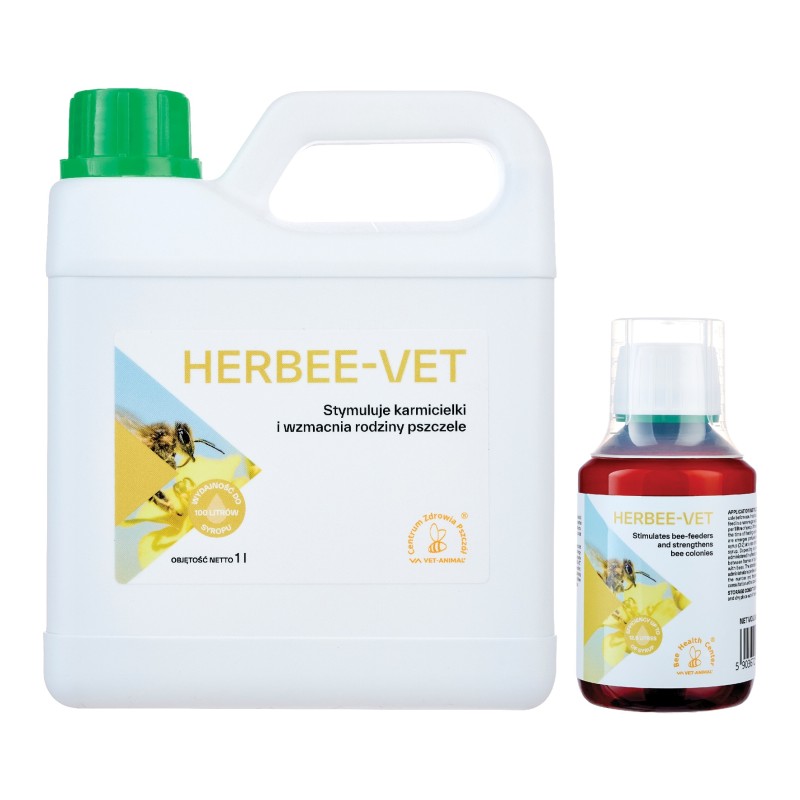
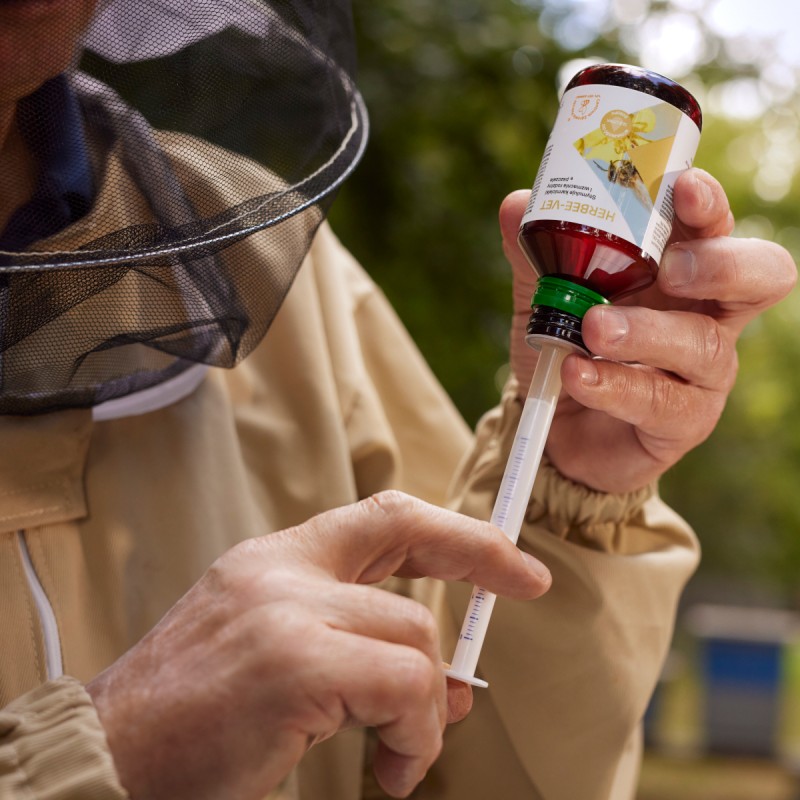
Liquid complementary feed of nettle and greater celandine extracts to add to syrup: 25 ml per litre in spring.
It takes a traditional Polish beekeeping practice — nettle juice in the syrup — into a standardised formula with glycerine and a precise dose. Sizes of 125 ml, 1 and 5 litres.
01 · WHERE IT ACTS
In spring some hives take off and others stay at half throttle, even with a queen, stores and some pollen coming in. Often the brake is not the syrup but the hypopharyngeal glands of the nurse bees: if they do not secrete royal jelly strongly, brood does not develop at the rate the queen could sustain, and the colony never quite takes off when it matters most.
02 · THE CONDITION
This is what to read before buying: HERBEE-VET works when the colony already has protein, whether from pollen coming in or because you are feeding a patty or protein substitute. With protein available, the manufacturer reports a positive effect on royal jelly secretion and nest development, especially in spring. With no protein in the hive it will not correct a pollen shortage: in that case the bees will mostly get the antioxidant effect of the bioflavonoids. Put plainly: it does not replace pollen, it builds on what pollen or a patty is already allowing.
03 · HOW TO DOSE IT
Shake vigorously before use. In spring, in thin 1:1 syrup, at 25 ml per litre; in late summer, in thick 3:2 syrup, at least 10 ml per litre. The standard protocol is 2 to 5 applications per colony; to raise the number or frequency, the manufacturer advises consulting a specialist. It can go in a feeder, sprayed onto the bees in the seams between frames, or lightly misted over the frames.
There is a very practical side effect: mixed into the syrup, it markedly neutralises the smell of sugar. In summer feeding that lowers the risk of robbing, which is when a sweet-smelling syrup can set off raiding between hives in a matter of minutes.
04 · BEFORE YOU BUY
Yield decides the size: 125 ml makes up 5 to 12.5 litres of syrup depending on strength, 1 litre covers 40 to 100 and 5 litres, 200 to 500. On results, the manufacturer reports field observations from a study of 120 hives across several apiaries, with an experimental and a control group, and gives no closed percentage of improvement because the outcome depends on the state of the hives and the weather. Used as labelled, it states a safety margin of up to 50 % above the recommended dose; even so, this is not a product to pour by eye.
| ✓ FITS | Spring and late summer, in hives already taking pollen or with a protein patty on. |
| ⚠ NO SUBSTITUTE FOR POLLEN | With no protein available it will not correct a pollen shortage. Protein first, this after. |
| LTA reference | HERBEE-VET |
|---|---|
| Type | Liquid complementary feed based on herbal extracts |
| Composition | Nettle and greater celandine (Chelidonium majus) extracts with glycerine |
| Spring dose | 25 ml per litre of thin 1:1 syrup |
| Late-summer dose | At least 10 ml per litre of thick 3:2 syrup |
| Pattern | 2 to 5 applications per colony |
| Application | Feeder, sprayed between frames or lightly misted |
| Before use | Shake vigorously |
| Yield | 125 ml: 5-12.5 L · 1 L: 40-100 L · 5 L: 200-500 L of syrup |
| Sizes | 125 ml, 1 litre and 5 litres |
| Condition of use | Requires the colony to already have a protein supply |
check_circle
check_circle