 Apipasta with vitamins 15kg
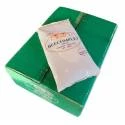 Beecomplet® Spring 14Kg
 Beekeeper suit with round veil
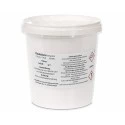 Oxalic acid 1kg
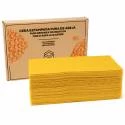 Beeswax Foundation 5kg
 Fresh royal jelly 20g
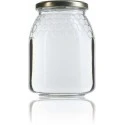 Classic honey jar 1kg comb-lines TO77 - Pack of 16 units
 Promotor L Apis 1 litre

 Share in WhatsApp
500 mg AMITRAZ PER HIVE | 2 strips DAYS 1 AND 12 |
35 days UNTIL THE STRIPS COME OUT | 50 HIVES PER BOTTLE |
Amitraz in solution: you soak the cellulose strips that come in the box yourself.
There isno ready-to-hang strip here: the bottle holds the medicine and the strips arrive dry. You are the one who loads them, the evening before. It brings the cost per hive right down, but it hands part of the outcome to the beekeeper:a badly soaked strip means an underdosed hive, and you only find out when you count the drop.
01 · HOW IT WORKS
Amitraz acts on theoctopamine receptorsof the mite, and the route is contact: the bees brush against the strip and spread the product through the nest. From there comes the rule that governs everything else — it only reachesphoretic varroa; the one under the capping is out of reach. That is why it is appliedwhen there is little brood and that is why it runs 35 days: that is how long the capped brood takes to emerge and expose the mites that come out with it.
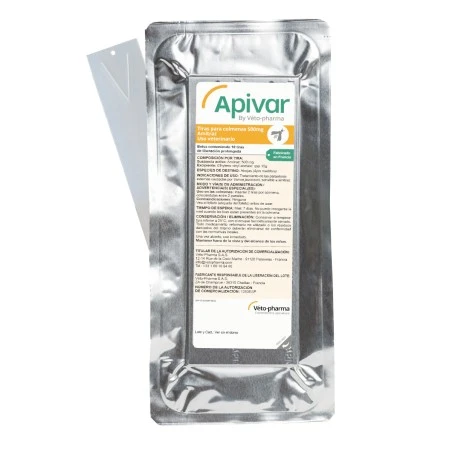
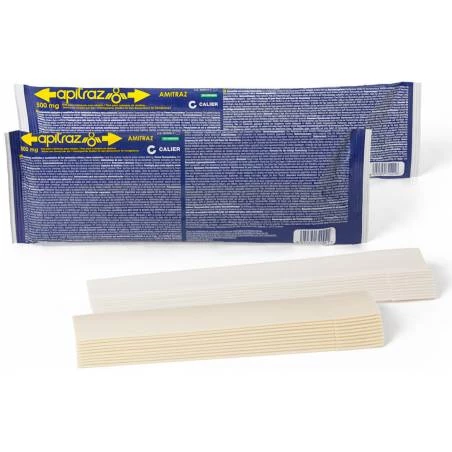
It also explains a figure that throws you when comparing: Amicel treats with500 mg of amitraz per hive, while the plastic strips with the same active substance —Apivar, Apitraz— go to1 g. The manufacturer puts it down to the carrier: bees work cellulose easily, the spread is more efficient and half the dose is enough.
02 · PREPARING THE STRIPS
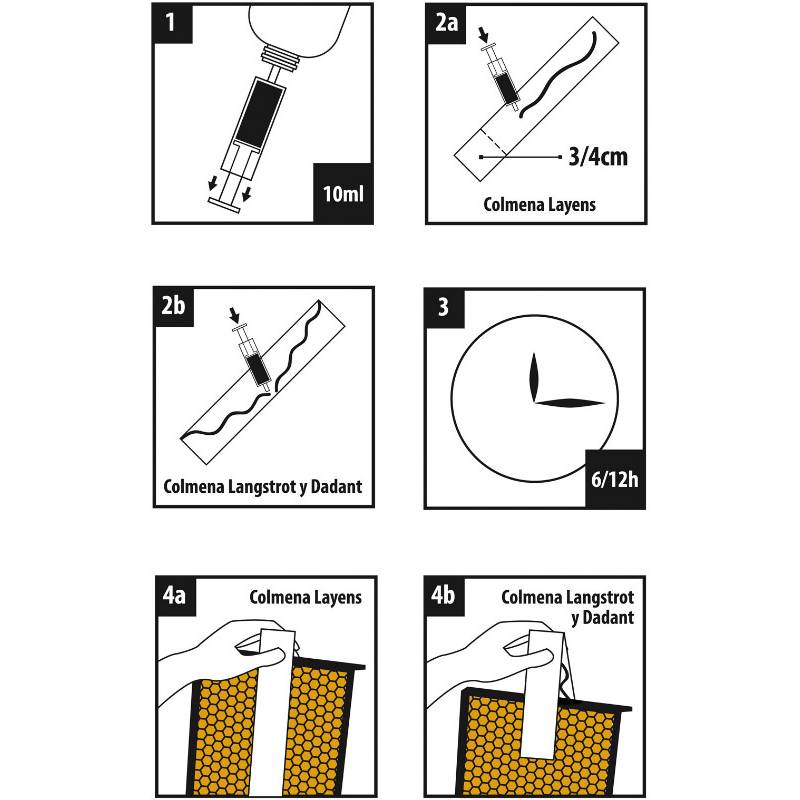
Apply10 ml per strip with the graduated syringe in the box, on one face only, letting it soak in. The6 to 12 hours window is not about convenience: it is how long the cellulose takes to spread the product and air off. The strip goes in loaded, not soaking. In Layens, spread it evenly and leave3-4 cm dry at the top, which is where you handle it; in Langstroth and Dadant, soak from the corners in both directions and fold it in half to insert it.
With a whole apiary ahead of you, the temptation is to tip the bottle over hundreds of strips stacked in a tray. The problem is not haste: laid flat, the solution runs down by gravity and the bottom ones end up waterlogged while the top ones come out dry. If you work that way,stand them upright and let them air off. A dripping strip doses worse: it runs off to the floor instead of staying where the bees brush it.
03 · TIMING AND PLACEMENT
They hang on the frame at thecentre of the brood area, and both can go in the same spot. Day 1, first strip; day 12, second; day 35, both come out along with any cellulose debris on the floor. Together they add up to the500 mg dose: adding more improves nothing. And the other instruction is worth committing to memory —treat the whole apiary at the same time, because any hive you leave untreated will reinfest the treated ones through robbing.
04 · HONEY AND HARVEST
The technical sheet sets thehoney withdrawal period at zero days and, in the very same section, adds the other half:do not use during the foraging period. Do not stop at the first one. Zero days says there is no waiting period before discarding honey; the second says when you may use it, and that is outside the flow — the same thing the mode of action already required.
⚠ PRECAUTIONS
Prepare and place the strips wearingrubber gloves. Amitraz can have neurological effects in humans and is amonoamine oxidase inhibitor (MAOI): if you take MAOI medication, take extra care. Do not eat, drink or smoke while handling it.
Do not go over10 ml per strip and never reuse the strips. The technical sheetsets no minimum temperature for application: if you have read a figure in degrees, it does not come from there. What does condition the result is the bees being able to walk the strip — with the colony clustered, contact drops and efficacy with it.
05 · SUPPLY AND PACK SIZES
Amicel Varroa is aprescription-only veterinary medicine and is administered under veterinary supervision or control. Because of that status itcannot be supplied by distance selling: this page is informational and does not process any purchase. As for packs, this one, of1 litre with 100 strips covers 50 hives; the220 ml one with 22 strips, 11.
| ✓ FITS | Movable-frame hives: Layens, Langstroth and Dadant, each with its own soaking technique. |
| ✕ DOESN'T FIT | Use during the honey flow: the technical sheet rules it out. Nor is it an emergency product in full brood. |
| ⚠ NOTE | Once opened, the bottle keeps for6 months; a soaked strip,35 days. Match the pack to the hives actually being treated in the season. |
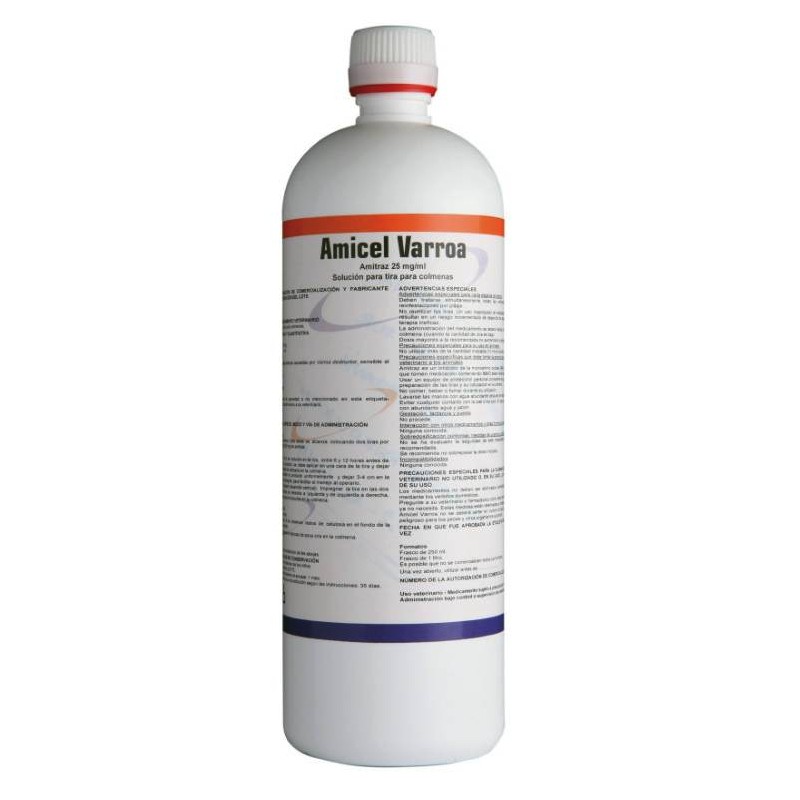
| Name | Amicel Varroa 25 mg/ml solution for strips for hives |
|---|---|
| Registration no. | 3157 ESP · Laboratorios Maymó, S.A.U. |
| Active substance | Amitraz, 25 mg/ml · ATCvet code QP53AD01 |
| Dose | 500 mg of amitraz per hive: 2 strips of 250 mg, 10 ml of solution each |
| Schedule | Day 1 first strip · day 12 second strip · day 35 both removed |
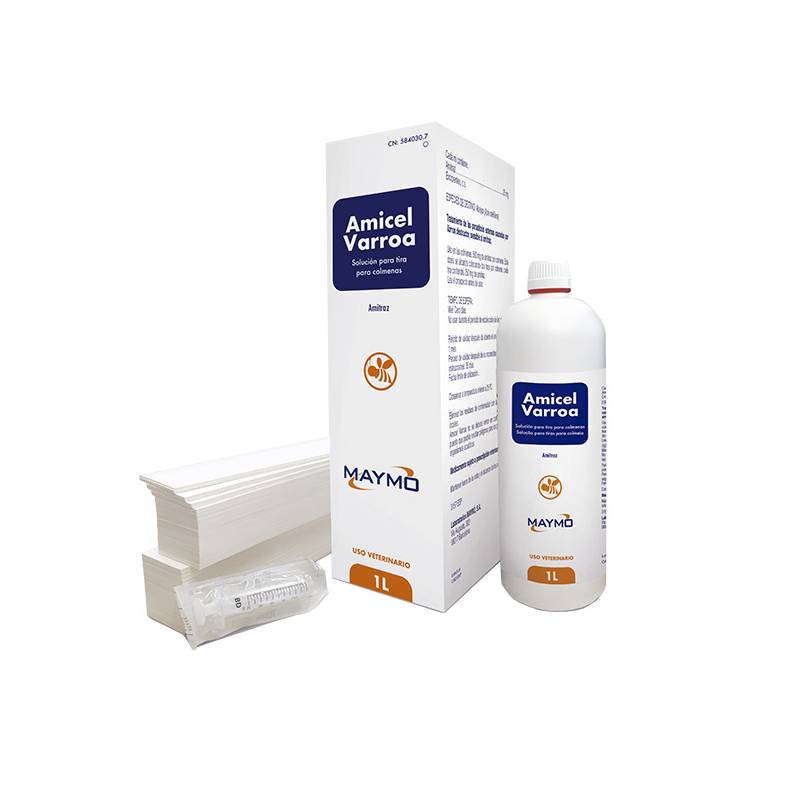
| Pack | 1 litre bottle, 100 cellulose strips and a 10 ml graduated syringe — 50 hives |
| Withdrawal period | Honey: zero days. Do not use during the bees' foraging period |
| Storage and shelf life | Below 25 °C · 18 months unopened · 6 months once opened · 35 days for a soaked strip |
| Supply status | Veterinary medicine subject to prescription, administered under veterinary supervision or control |
Data sheet
Specific References
The technical sheet for Amicel Varroa sets no minimum temperature for application. If you have read a figure in degrees, it does not come from there.
What does govern the outcome is the mode of action: amitraz works by contact, so the bees have to be able to walk the strip and spread the product through the nest. With the colony clustered, that contact drops and efficacy with it. The condition the sheet does impose is to apply it when there is little brood, because the product does not reach varroa under the capping.
Sorry, no results found.
Write your question
check_circle
check_circle
La información de esta sección, a la que está intentando acceder, se dirige exclusivamente a profesionales veterinarios residentes en España y a las personas autorizadas para dispensar medicamentos veterinarios sujetos a prescripción.
¿Es usted profesional veterinario o establecimiento dispensador de medicamentos veterinarios?