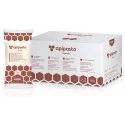
 Apipasta with vitamins 15kg
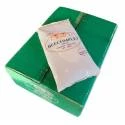 Beecomplet® Spring 14Kg
 Beekeeper suit with round veil
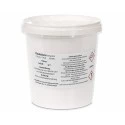 Oxalic acid 1kg
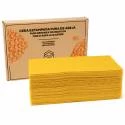 Beeswax Foundation 5kg
 Fresh royal jelly 20g
 Classic honey jar 1kg comb-lines TO77 - Pack of 16 units
 Promotor L Apis 1 litre

 Share in WhatsApp
50 l ≈ 70 kg OF HONEY | 175 W WALLS AND BASE |
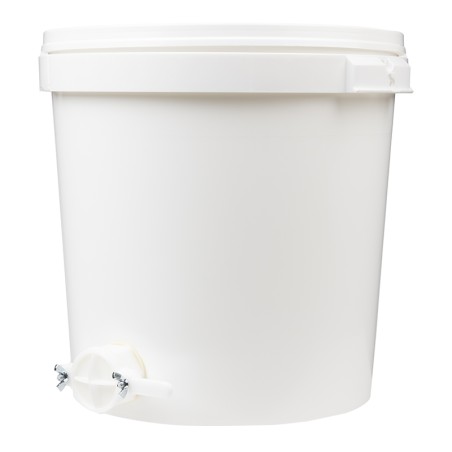
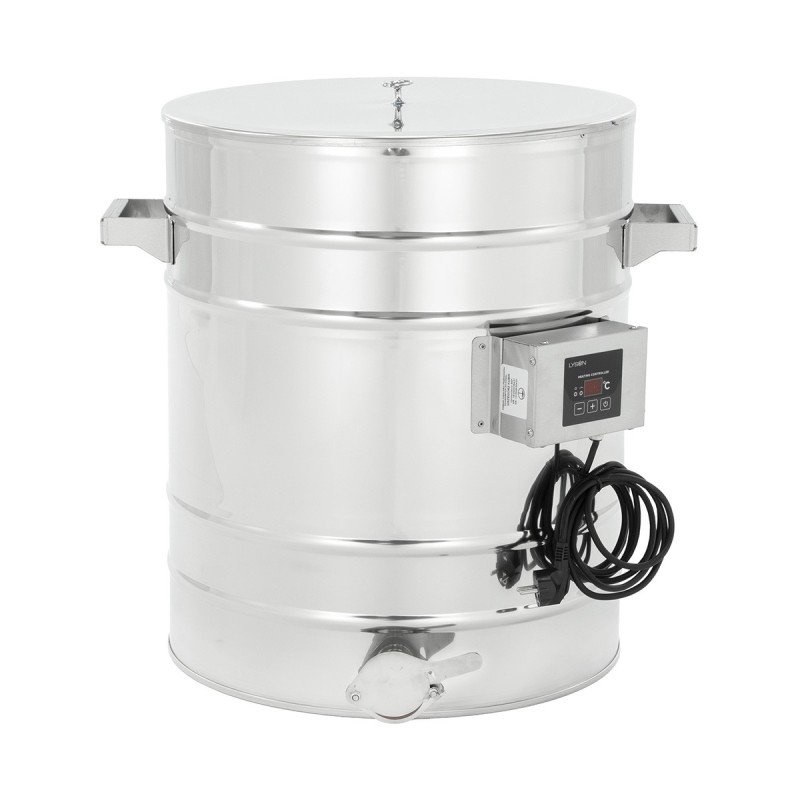
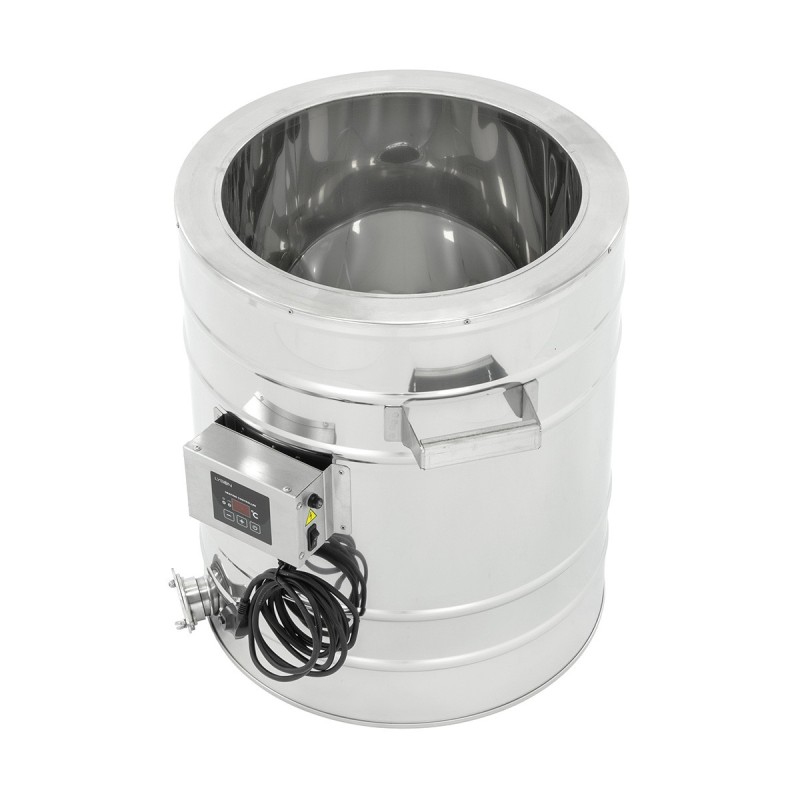
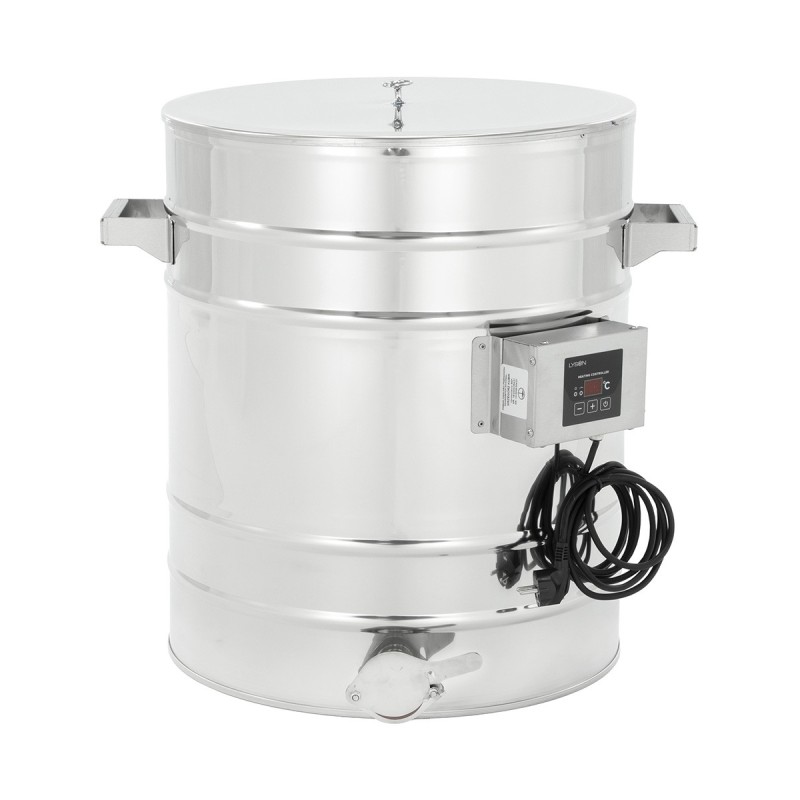
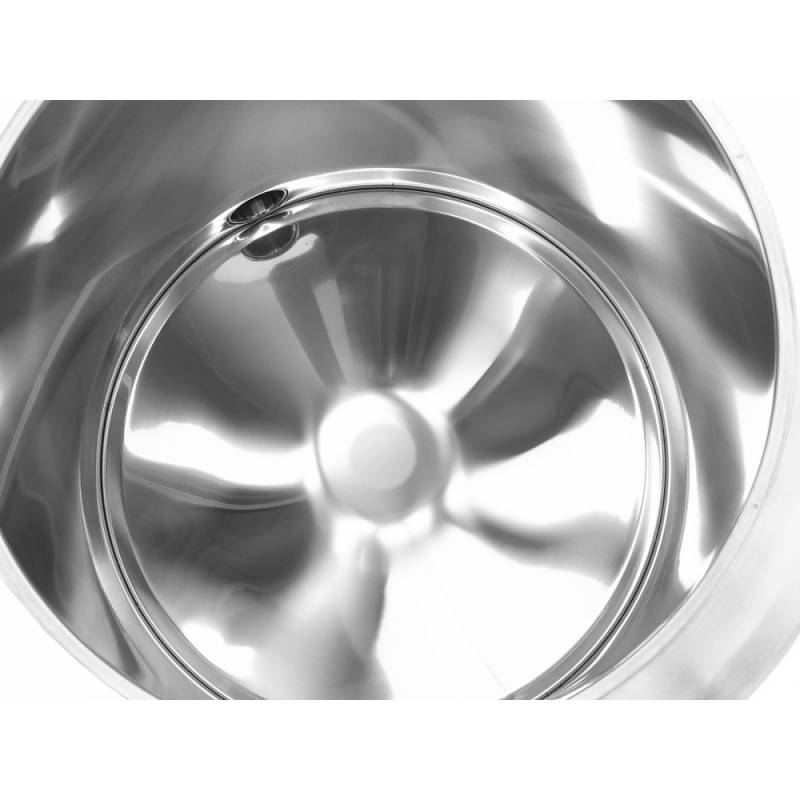
LYSON stainless steel honey tank with insulated double wall and heating in walls and base, to settle, condition and bottle from a single tank.
Two jobs in one tank: letting it settle and bringing it back to flow.
01 · THE TWO FUNCTIONS
As a settling tank, its job is to let air bubbles and light particles rise to the surface before bottling: that is what gives you a clean jar with no foam at the neck. As a heated tank, the 175 W spread across walls and base let you recover flow gradually when the honey is too dense or has begun to crystallise — and spread is not the same as concentrated: heating across the whole surface avoids the local overheating a point source produces.
02 · THE RANGE GOES TO 55, HONEY DOES NOT
This is the warning a heated tank needs most. The control spans 30 to 55 °C, but that is the range of the appliance, not a working setpoint. For reference: fine crystals begin to melt from around 28 °C and at 30 °C most honeys have already dropped a long way in viscosity. What decides the outcome is not the degree but the combination of temperature and time: every heating adds HMF and costs enzyme activity, and none of that comes back on cooling. Start low, give it time and raise only if the batch asks for it.
03 · IT WILL NOT FIX WET HONEY
Worth being blunt, because it is a common expectation: a honey tank does not prevent fermentation if the honey goes in wet. It settles, clarifies and organises your bottling, but it does not correct unripe honey and does not remove contaminants — filtering comes first, and moisture is checked with a refractometer before the tank is filled. If the batch goes in above a sensible limit, all you achieve is having the problem in a nicer vessel. In the same way, heat does not improve a batch that has already deteriorated.
04 · ORDERLY BOTTLING
The bottom outlet with a 6/4 stainless steel butterfly valve lets you regulate the filling flow. Before opening, homogenise gently if the process calls for it and let the foam settle at the top. Work with the tank steady and at a height that lets you place the container without straining, and leave room to operate the valve, take jars away and dismantle whatever needs cleaning. After each batch, drain and clean the outlet before honey crystallises inside it: it is the silliest breakdown and the most common.
05 · BEFORE YOU BUY
Capacity, power and temperature range are confirmed for reference 4043A. Allow for a 230 V socket, a surface able to carry the assembly full — 50 litres of honey weigh around 70 kg, plus the tank — and clear space to lift the lid and work the valve. If your available footprint is tight, ask us for the external measurement of the unit we ship before buying and we will take it with the piece in front of us.
| Brand / reference | LYSON · 4043A |
|---|---|
| Capacity | 50 l · about 70 kg of honey |
| Heating | Walls and base · 175 W |
| Control / power | 30-55 °C · 230 V |
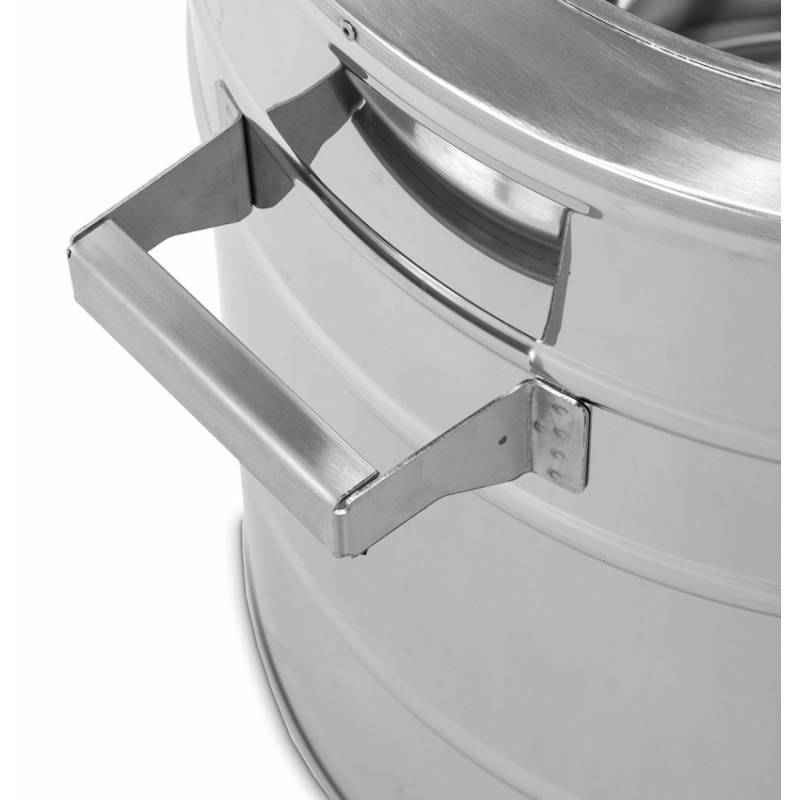
| Construction | Stainless steel, insulated double wall, lid and handles |
| Outlet | 6/4 stainless butterfly valve |
| Recommended use | Start low, around 28-30 °C, and allow time |
Data sheet
1 file available
Write your question
check_circle
check_circle