 Apipasta with vitamins 15kg
 Beecomplet® Spring 14Kg
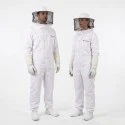 Beekeeper suit with round veil
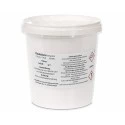 Oxalic acid 1kg
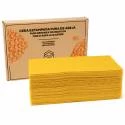 Beeswax Foundation 5kg
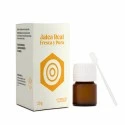 Fresh royal jelly 20g
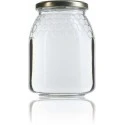 Classic honey jar 1kg comb-lines TO77 - Pack of 16 units
 Promotor L Apis 1 litre
- Out of stock

 Share in WhatsApp
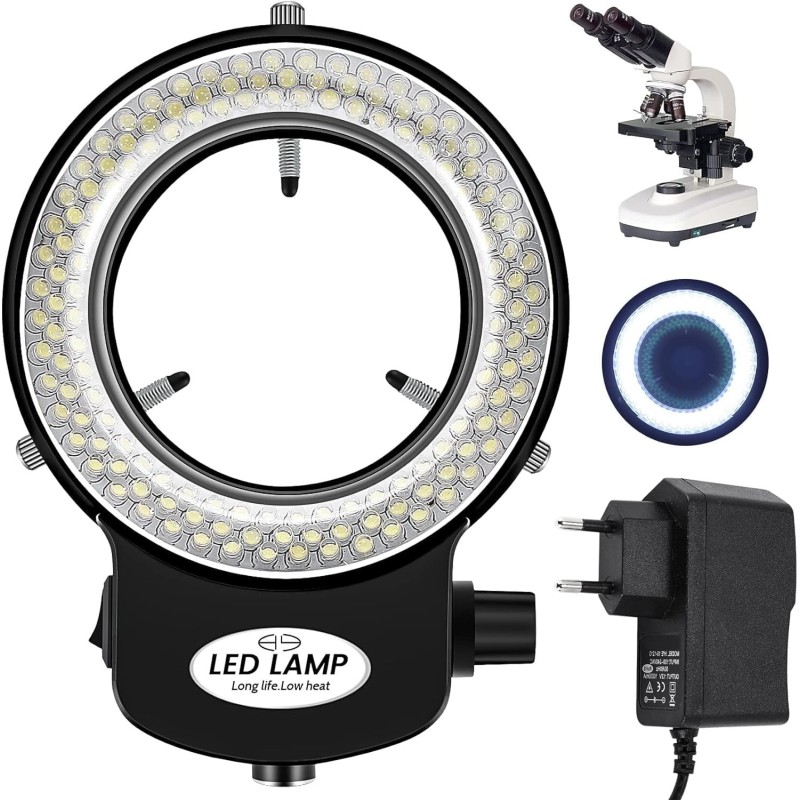
LED ring light for a stereo microscope, with 144 diodes, brightness adjustable from 0 to 100 %, neutral 6000 K light and an adapter ring of 62.5 mm inner diameter. Draws less than 3 W.
A ring lights from every side at once. That is why there is no shadow of the forceps across what you are looking at.
01 · WHY A RING AND NOT A LAMP
With a side lamp, everything that gets in the way — the forceps, the needle, your own hand — casts a shadow right onto the specimen. It is the thing that irritates most when working under magnification.
The ring surrounds the objective and lights from the whole perimeter: the 144 LEDs give an enveloping, shadow-free light. And at under 3 W it does not heat the specimen — something the old halogen illuminators certainly did.
02 · WHICH MICROSCOPE IT IS FOR
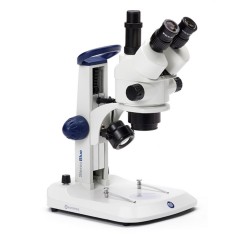
It mounts on a stereo microscope — the binocular loupe — which works at low magnification and with depth of field. That is where instrumental insemination is done, along with dissection to look for tracheal mite, examining larvae, or going through a sample for varroa.
What a stereo microscope does not do is counting nosema spores: that calls for a compound microscope at 400×. If nosema diagnosis is your aim, this ring is not the missing piece.
03 · ADJUSTABLE LIGHT IS NOT A LUXURY
The 0 to 100 % dial is what makes the whole thing usable. Transparent or translucent structures — a spermatheca, a duct, the mucus — show up better under moderate light: at full power they wash out and the contrast disappears.
The 6000 K is neutral daylight: it improves contrast without shifting colours, which matters when what you are looking at is identified by hue.
04 · MEASURE THE TUBE FIRST
The adapter ring has an inner diameter of 62.5 mm and an outer of 92.5 mm. It fits most stereo microscopes, but the measurement to check is the tube it has to go around.
Fitting needs no tools and it runs on 95-240 V, so it works on any supply. It weighs 191 g, light enough to hang off an objective.
05 · BEFORE YOU BUY
Measure your microscope's tube and check it is a stereo one: nosema needs different equipment.
| ✓ RIGHT FIT | Instrumental insemination, dissection and examining samples under a binocular loupe. |
| ✕ WRONG FIT | Counting nosema spores: that needs a compound microscope. |
| ⚠ NOT INCLUDED | The microscope. |
| Diodes | 144 high-brightness LEDs |
|---|---|
| Brightness | Adjustable 0 to 100 % by dial |
| Colour temperature | 6000 K, neutral daylight |
| Intensity | 30,000 to 40,000 lux |
| Inner diameter | 62.5 mm |
| Outer diameter | 92.5 mm |
| Size | 12.5 × 9.2 × 3.6 cm |
| Power | 95-240 V · under 3 W |
| Fitting | No tools |
| Weight | 191 g |
Write your question
check_circle
check_circle