 Apipasta with vitamins 15kg
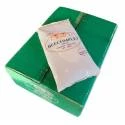 Beecomplet® Spring 14Kg
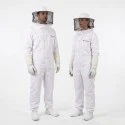 Beekeeper suit with round veil
 Oxalic acid 1kg
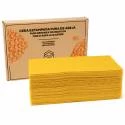 Beeswax Foundation 5kg
 Fresh royal jelly 20g
 Classic honey jar 1kg comb-lines TO77 - Pack of 16 units
 Promotor L Apis 1 litre
- To order

 Share in WhatsApp
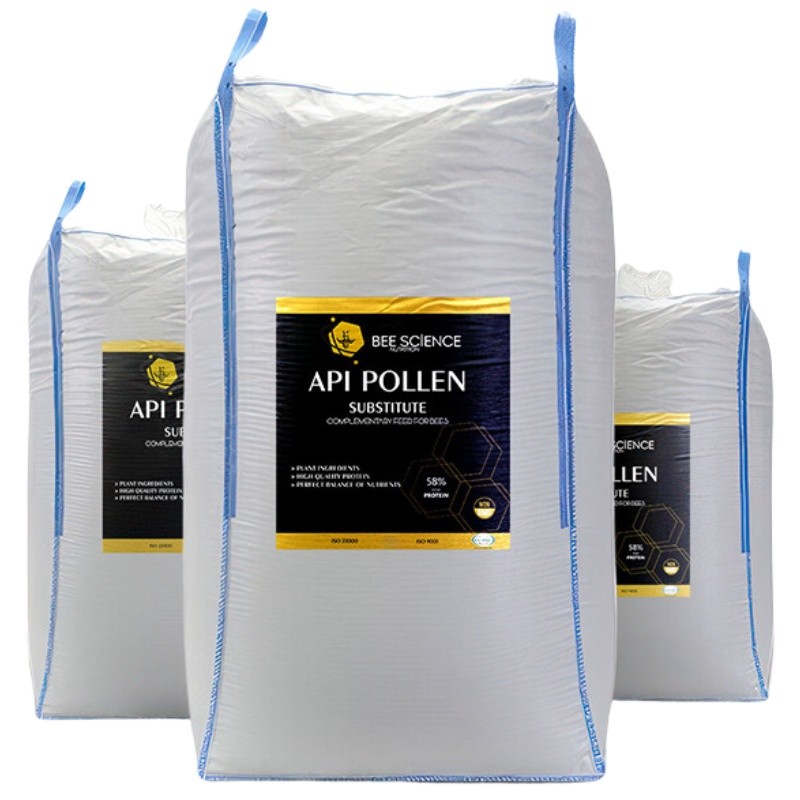
58 % CRUDE PROTEIN | 680 kg BIG BAG |
700 g PER HIVE, DRY | 5.7 kg OF PASTE PER KILO |
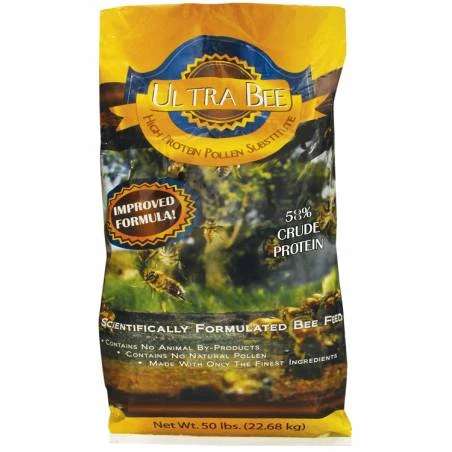
Powdered pollen substitute at 58 % crude protein, from soy and yeast: fed dry or worked into syrup as a paste.
58 % crude protein and no natural pollen, in a 680 kg big bag. With the ten essential amino acids, ten vitamins, a mineral complex and probiotic bacteria.
01 · NO POLLEN, AND THAT IS THE POINT
A substitute contains no natural pollen, and half the reason to use one is right there: pollen collected in someone else's apiary can carry that apiary's spores and viruses. A plant-based substitute closes that route. The other half is consistency: field pollen varies in protein and amino acids with the flora, and in a monoculture or a poor flow it can fall short exactly when the colony needs to raise brood.
02 · THE TWO WAYS TO FEED IT
As a powder: about 700 g per hive in a perforated container the bees can move through, sheltered from wind and damp. It only makes sense at flying temperatures. As a paste: 175 g of ApiPollen per 825 g of syrup, blended at no more than 40 °C, with the paste in a perforated bag over the frames — the route that reaches the nurse bees without them leaving. Hence the arithmetic: a kilo of powder gives 5.7 kg of paste.
03 · WHAT ELSE IS IN IT
The protein fraction is soy and yeast (89.72 % of the formula) and brings the ten essential amino acids — tryptophan, threonine, methionine, histidine, phenylalanine, arginine, isoleucine, valine, lysine and leucine — which is what decides whether a protein is any use: the one that runs short sets the ceiling. It also carries high-oleic oils, plant oils of calendula, chamomile, coriander, yarrow, lemongrass and artichoke, 1.28 % vitamins, a mineral complex and probiotic bacteria. Non-GMO raw materials.
04 · BEFORE YOU BUY
The 680 kg big bag covers 970 hives fed dry, or gives about 3,900 kg of paste on the maker's formula. Store between −5 and +24 °C, out of the sun and with the container closed; shelf life 12 months. And the protein rule: you supply it when pollen is not enough — late summer, early spring, monoculture — not all year round, and do not leave it in the hive when there is no brood.
| ✓ FITS | Monocultures, poor-pollen flows, queen rearing and rebuilding the fat body. |
| ⚠ DO NOT LEAVE IT | In the hive when there is no brood. And it does not replace syrup: it is protein, not carbohydrate. |
| LTA reference | APISACA700KG |
|---|---|
| Product | Powdered pollen substitute · complementary feed |
| Crude protein | 58 % |
| Protein source | Plant protein from soy and yeast (89.72 %) |
| Amino acids | Tryptophan, threonine, methionine, histidine, phenylalanine, arginine, isoleucine, valine, lysine and leucine |
| Vitamins | 1.28 % · calcium pantothenate, niacin, A, B1, B2, B6, B12, C, D3 and E |
| Minerals | 1 % · K, Mg, Zn, P, Na, Cu, Fe, Ca, Co and Mn |
| Other | High-oleic oils 6 % · plant oils 1.7 % (calendula, chamomile, coriander, yarrow, lemongrass, artichoke) · probiotic bacteria 0.1 % · citric acid 0.05 % |
| Contains no | Natural pollen · non-GMO raw materials |
| Dry dose | ≈ 700 g per hive |
| Paste formula | 175 g of powder per 825 g of syrup, max. 40 °C |
| Coverage | 970 hives dry · about 3,900 kg of paste |
| Packaging | 680 kg big bag |
| Storage | Between −5 and +24 °C, out of direct sun, container closed · 12 months |
1 file available
check_circle
check_circle