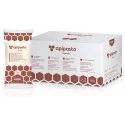
 Apipasta with vitamins 15kg
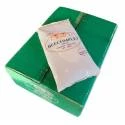 Beecomplet® Spring 14Kg
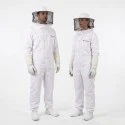 Beekeeper suit with round veil
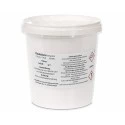 Oxalic acid 1kg
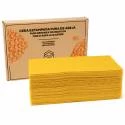 Beeswax Foundation 5kg
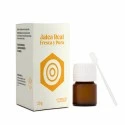 Fresh royal jelly 20g
 Classic honey jar 1kg comb-lines TO77 - Pack of 16 units
 Promotor L Apis 1 litre

 Share in WhatsApp
180 W 230 V | 80 × 50 × 83 CENTIMETRES |
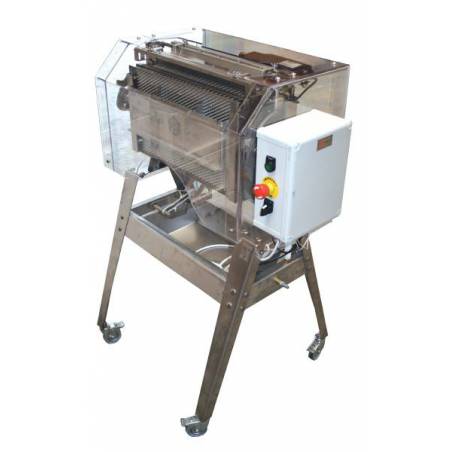
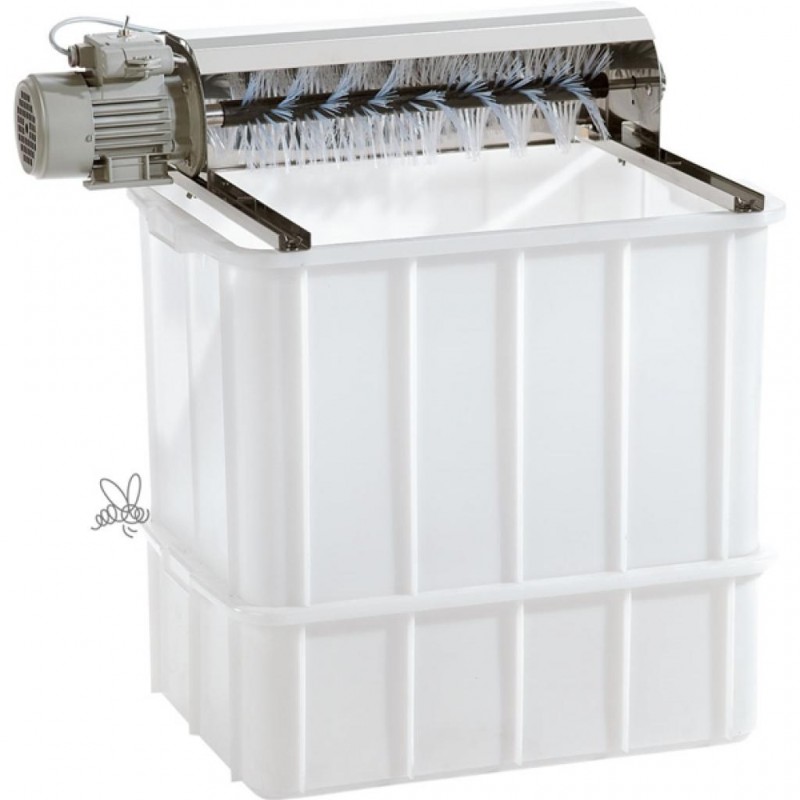
Electric rotating-brush uncapper: you present the frame by hand over a collection tray and the brush opens the cappings without cutting wax.
No knife and no heat: it breaks the seal and lets the honey out.
01 · BRUSH OR KNIFE
This is the comparison everyone arriving at this page is making. A knife slices a sheet of cappings and takes wax with it; the brush breaks the seal and leaves most of the wax on the comb. That has two practical consequences: what falls into the tray is far more honey and far less wax, so it drains sooner and gives less separation work — but you also recover less capping wax per harvest, which for anyone who sells it or trades it for foundation is income. Neither approach is better in the abstract: it depends on what you do with the wax afterwards.
02 · NO HEAT, NO HMF
An electric knife works with a heated blade — a figure around 49 °C is cited as a cutting reference — and with it comes a risk that simply does not exist here: overheating traces of honey, caramelising them and pushing up the batch's HMF. The brush is purely mechanical. If you work delicate honeys, if your process already adds heat elsewhere, or if your HMF gets measured, that difference is worth more than a few seconds per frame.
03 · THE OPERATOR SETS THE PACE
Hold the frame with both hands and bring the surface in gradually. The rate of advance depends on the relief of the comb, on the thickness of the cappings and on your own hand: there is no reliable time per frame without a trial on your own material. Too much contact removes more wax than necessary and punishes the comb, so on freshly drawn frames or new wax go especially gently. And a note that saves grief: the brush does not reach sunken areas well, so keep the uncapping fork to hand for those — the machine does not replace it.
04 · COLLECTION AND CLEANING
The motorised bar rests on two rails on the tray, in food-grade plastic, which collects cappings and drained honey. Empty the mix before it reaches the working area and always clean the brush with the unit unplugged. The frequency is not set by the clock: it depends on the honey and the wax, so check the build-up during the run rather than trusting an arbitrary interval. And keep the basics in mind — uncapping opens the cell so the honey can come out; it does not filter, does not clean and does not improve a defective honey.
05 · BEFORE YOU BUY
The page states general compatibility with Layens, Langstroth and Dadant, but it does not publish the working width between guides or an hourly throughput, so if your frames are home-made or an unusual size, confirm it first. The declared footprint is 80 × 50 × 83 cm: allow for that plus room to manoeuvre the frame on both sides. If it is going into a professional line, ask us as well for the real weight of the unit and the availability of the replacement brush, which is the part that wears.
| LTA reference | 5123000 |
|---|---|
| Drive | Electric · rotating brush |
| Power / voltage | 180 W / 230 V |
| Declared footprint | 80 × 50 × 83 cm |
| Tray | Food-grade plastic, with two rails |
| Compatibility | Layens, Langstroth and Dadant (general) |
| No heat | Mechanical — it does not warm the honey |
| Unconfirmed | Working width between guides, throughput/hour and real weight |
Write your question
check_circle
check_circle