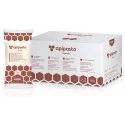
 Apipasta with vitamins 15kg
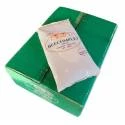 Beecomplet® Spring 14Kg
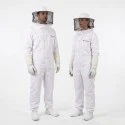 Beekeeper suit with round veil
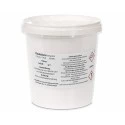 Oxalic acid 1kg
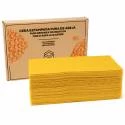 Beeswax Foundation 5kg
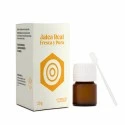 Fresh royal jelly 20g
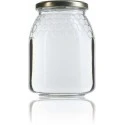 Classic honey jar 1kg comb-lines TO77 - Pack of 16 units
 Promotor L Apis 1 litre

 Share in WhatsApp
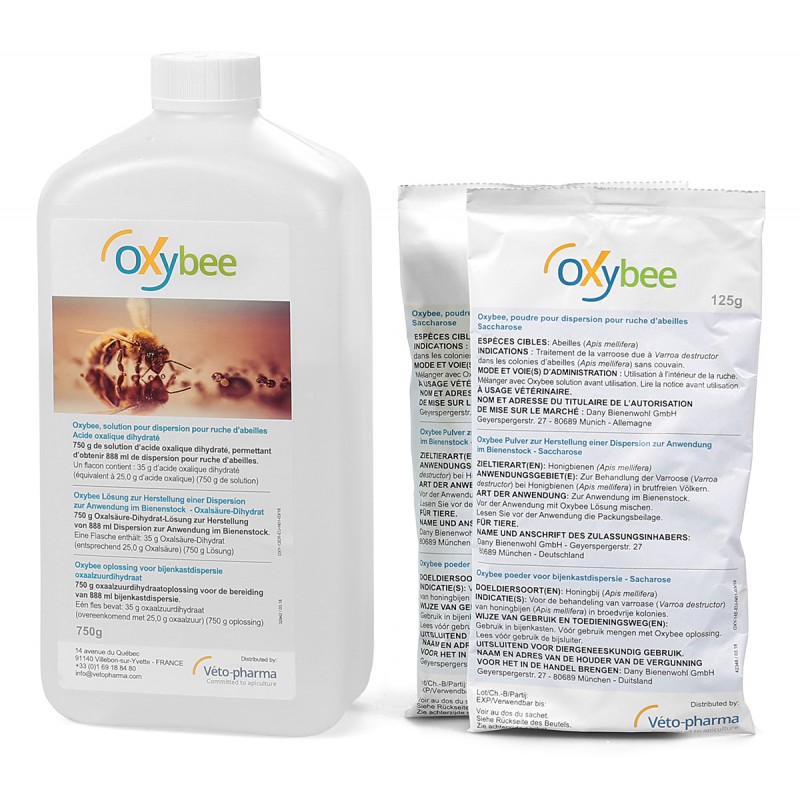
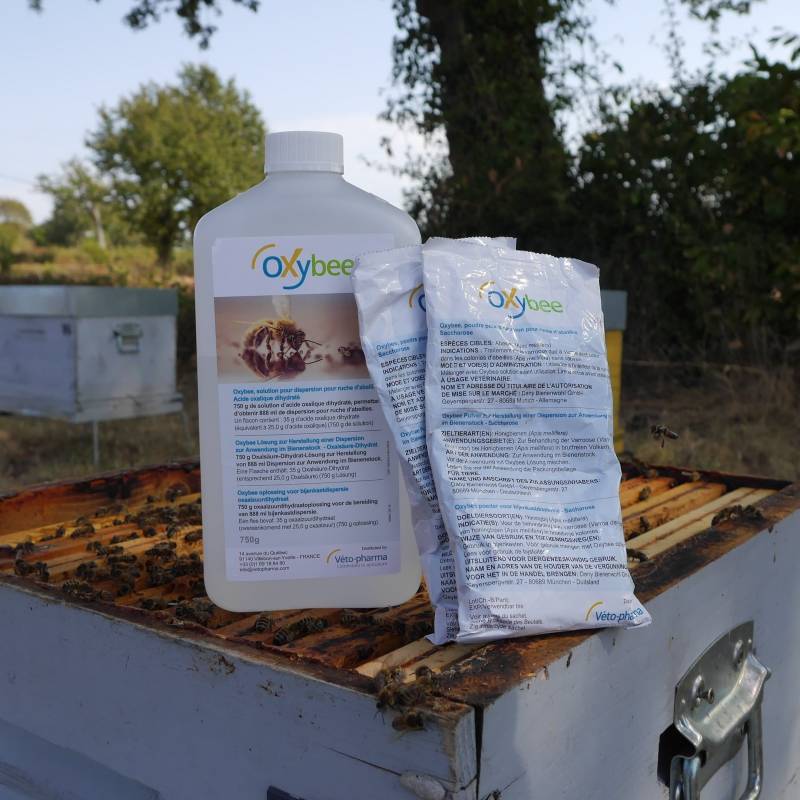
Oxybee is a veterinary medicine containing oxalic acid for trickling onto broodless colonies. The pack contains 750 g of solution and two 125 g sachets, yielding 1 kg of dispersion, equivalent to 888 ml, after mixing. The amount needed is calculated from the bee-occupied spaces between frames.
Veterinary medicine containing oxalic acid, glycerol, sucrose and essential oils of anise and eucalyptus, for trickling onto broodless colonies. The pack contains 750 g of solution and two 125 g sachets, yielding 1 kg of dispersion, equivalent to 888 ml. The manufacturer gives an indicative yield of about 30 colonies; calculate actual consumption from the occupied bee spaces and the leaflet dosage.
Oxalic acid does not reach mites inside capped brood. Oxybee is indicated for broodless colonies, and its product information specifies a single application per colony.
01 · PREPARING AND APPLYING IT
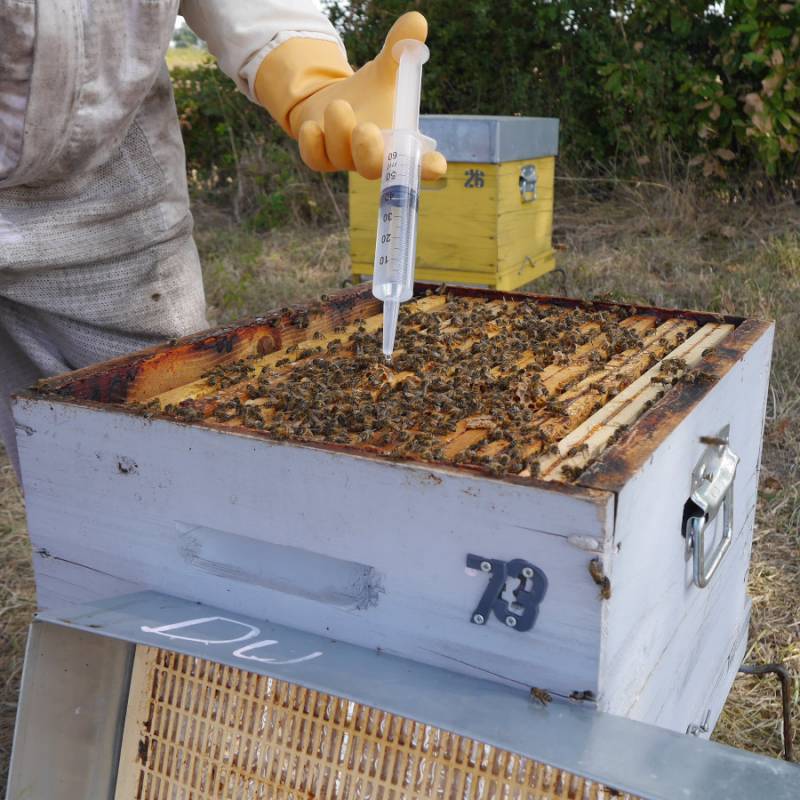
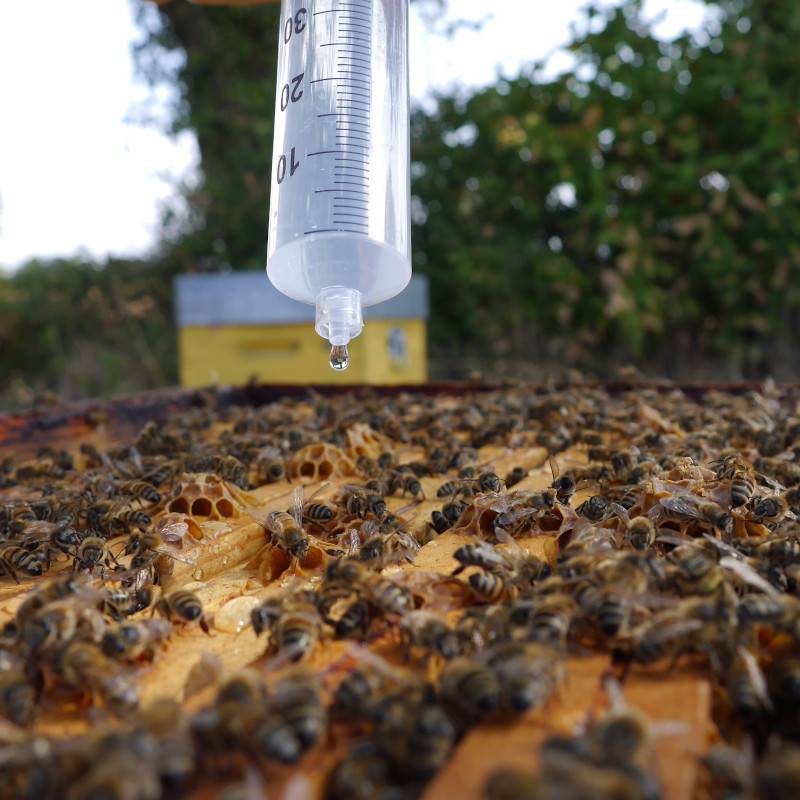
First, place the bottle containing 750 g of solution in water at 30–35 °C to warm it. Then open both 125 g sachets and pour their entire contents into the bottle. Close it and shake until the powder dissolves completely. Trickle onto the bees: 5–6 ml per occupied bee space, with a total maximum of 54 ml per colony. If the total would exceed this, divide the 54 ml among the occupied spaces as directed in the leaflet. Use a syringe or dosing gun, not included, and acid-resistant gloves, eye protection and protective clothing. Do not spray.
02 · THE BROODLESS WINDOW
The product information specifies a single application per colony, in the absence of brood. This window may coincide with a natural brood break or one planned within colony health management. Check that the colony is broodless before application; capped brood leaves mites beyond the treatment’s reach.
03 · TEMPERATURE
During application, the outside temperature must be at least 3 °C. The leaflet requires the dispersion to be applied warm, at 30–35 °C. These are two different measurements: the first is ambient temperature and the second is the product’s temperature. If the bottle was refrigerated, shake it and warm it again in water before use.
04 · WHAT TO EXPECT
The leaflet reports a very common increase in bee mortality in clinical trials. The withdrawal period for honey is zero days, but do not use it with honey supers in place or during honey flow. Once mixed, it keeps for one year at 2–8 °C. Record the mixing date and also observe the expiry date on the pack.
05 · BEFORE YOU BUY
No veterinary prescription required; if you need one for your holding records, ask and it goes with the order. We dispense it as a retail establishment for veterinary medicines, no. V-48-VC. In a Layens hive with open top bars the trickling is done without moving frames.
| ✓ FITS | Varroosis in broodless colonies, during a natural or planned brood break. |
| ✕ DOESN'T FIT | With brood, honey supers in place or during honey flow. |
| ⚠ NOT INCLUDED | Syringe or dosing gun. |
| Active substance | Oxalic acid dihydrate, 39.4 mg/ml in the final dispersion |
|---|---|
| Other components | Glycerine, sucrose and essential oils of anise and eucalyptus |
| Format | 750 g solution + 2 × 125 g sachets → 1 kg (888 ml) prepared |
| Application | Trickled over the bees, 5-6 ml per gap between frames |
| Maximum | 54 ml per hive |
| Treatments | One only per colony |
| Temperature | Product information: outside temperature ≥ 3 °C |
| Withdrawal | Honey: zero days · not with supers on or during a flow |
| Storage | After mixing: one year at 2–8 °C, also observing the pack expiry date |
| Prescription | Not subject to veterinary prescription |
| Reference | 586939 |
Consult the information authorised in Spain for Oxybee, including indications, contraindications, precautions and withdrawal periods. For use in another country, check the authorisation and product information applicable there.
Read the instructions for this medicine and, if in doubt, consult your veterinarian.
Data sheet
Specific References

No. The package leaflet says to trickle it directly onto the bees, in the spaces between occupied frames: 5–6 ml per space, up to a maximum of 54 ml per colony, with the dispersion warmed to 30–35 °C. That is the only route it covers, and there are no efficacy data for applying it through the entrance. It is applied only once, in broodless colonies.
Sorry, no results found.
Write your question
Oxybee is a veterinary medicine containing oxalic acid for trickling onto broodless colonies. The pack contains 750 g of solution and two 125 g sachets, yielding 1 kg of dispersion, equivalent to 888 ml, after mixing. The amount needed is calculated from the bee-occupied spaces between frames.
check_circle
check_circle