 Apipasta with vitamins 15kg
 Beecomplet® Spring 14Kg
 Beekeeper suit with round veil
 Oxalic acid 1kg
 Beeswax Foundation 5kg
 Fresh royal jelly 20g
 Classic honey jar 1kg comb-lines TO77 - Pack of 16 units
 Promotor L Apis 1 litre
- To order

 Share in WhatsApp
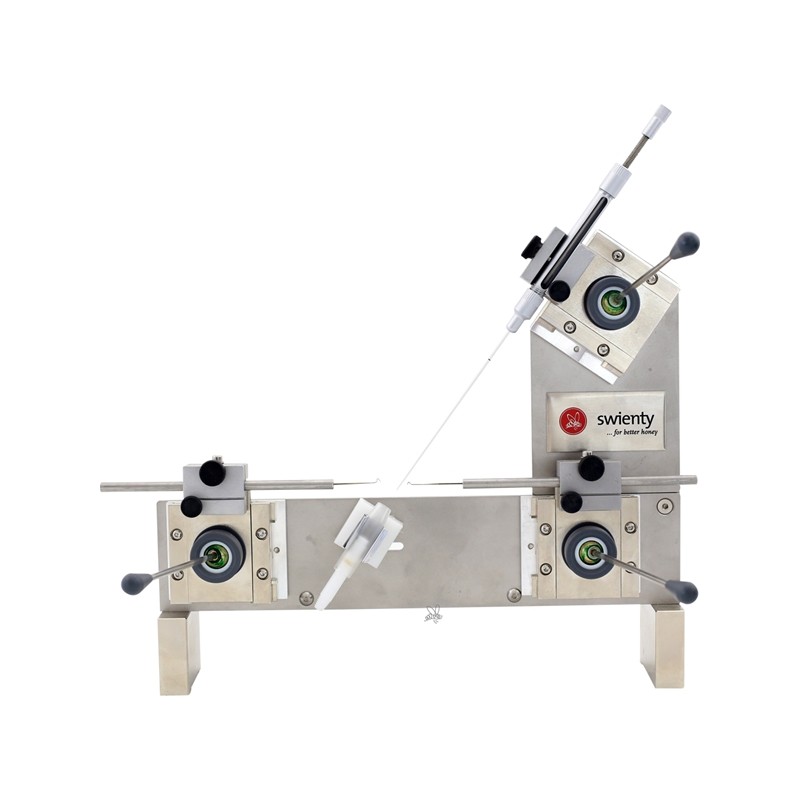
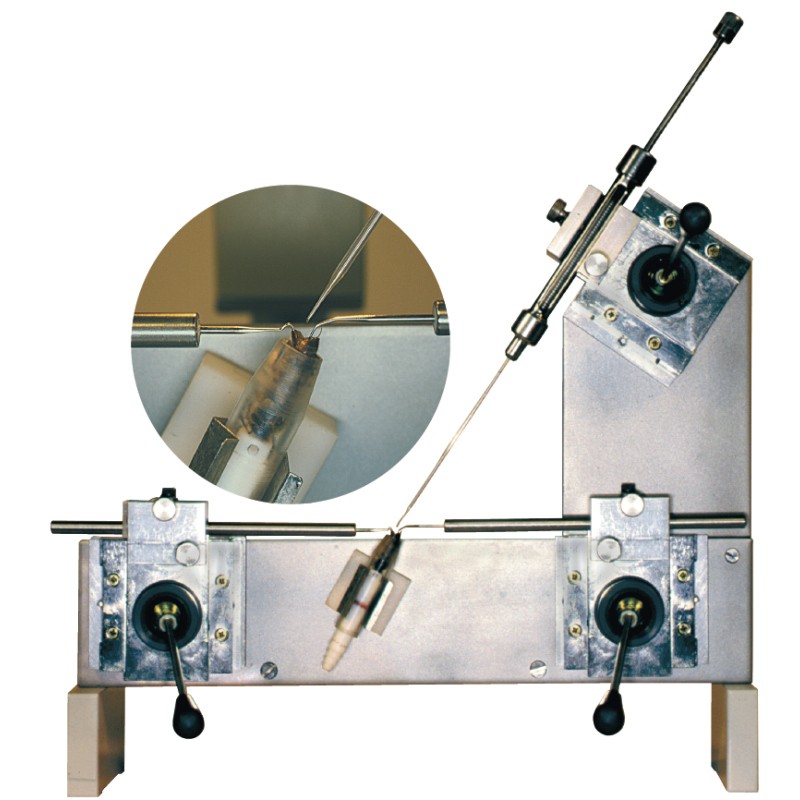
Swienty instrumental insemination unit with joystick micromanipulator and 10:1 reduction, in a wooden case with syringe and five glass needles.
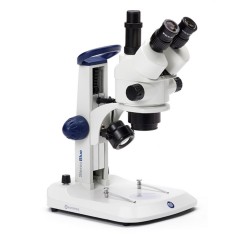
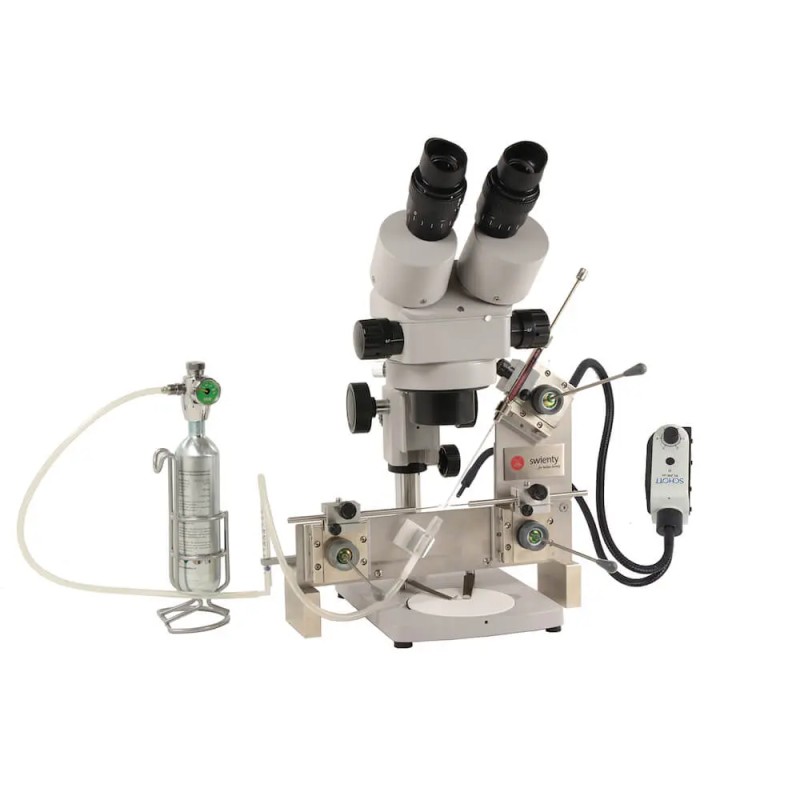
The unit is half the bill, and it is better to know that first. It does not include a stereo microscope, cold lighting or CO₂ equipment, and all three are needed to inseminate. In our range they add up to around €800 more. We say it first because it is what changes the decision.
01 · THE UNIT IS HALF THE BILL
To the unit you add the stereo microscope (around €574), a cold-light lamp (from about €30) and the CO₂ system (from about €156). Real entry is close to €4,000, not the €3,227 of the machine.
And our range carries complete Schley sets with CO₂ included at around €2,270, and the Schley station alone at €1,446. We would rather say so ourselves: if price is the criterion, this is not the option; if you already work with Swienty or want this manipulator, let us talk.
02 · 10:1 REDUCTION ON THE JOYSTICK
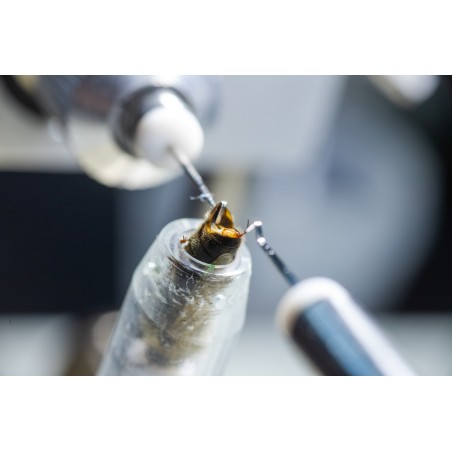
The ventral and sting hooks are moved by a joystick micromanipulator that reduces movement ten to one: your hand moves a centimetre and the hook travels a millimetre.
Without that reduction no human hand would do, because the structures involved are tenths of a millimetre. The layout also leaves your wrists resting on the table, which is the other half of the stability: tremor is the enemy.
03 · CO₂ IS PART OF THE METHOD
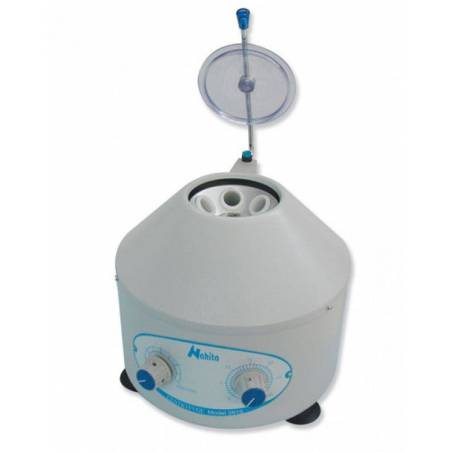
The queen holder carries a CO₂ valve that narcotises her and keeps her still through the operation. Without anaesthesia there is no insemination, so the gas equipment is not an extra: it is a part of the procedure.
The syringe enters the holder from the front, which shortens the movement and avoids repositioning the queen. It is a design detail you notice when you do several in a row.
04 · THIS IS LEARNT, NOT GUESSED
Instrumental insemination is a laboratory technique and the result depends above all on the operator. It does not come out of a manual: it is learnt with someone next to you and refined with practice.
We carry both an in-person course and an online course. If you are considering the equipment and have never inseminated, the sensible order is course first and unit after.
05 · GLASS CONSUMABLES
The kit brings five glass needles, and the tips are replaceable: it is consumable material and it is worth having spares before the rearing season starts. The syringe comes apart — rubber plunger and cylinder — to clean and sterilise.
Also included are the ventral and sting hooks and the queen holder, all in a wooden case. Tip cleaners, holding solution and glass spares are in our range separately.
06 · BEFORE YOU BUY
Microscope, light and CO₂ are not included. Budget the full setup.
| ✓ A GOOD FIT | Genetic selection and controlled queen rearing: micromanipulator with 10:1 reduction and CO₂ holder. |
| ⚠ NO MICROSCOPE, LIGHT OR CO₂ | All three go separately and add around €800. Real entry is close to €4,000. |
| ✕ NOT A UNIT TO START ALONE WITH | It is laboratory technique and the result depends on the operator. The course comes before the unit. |
| Type | Instrumental queen insemination unit |
|---|---|
| Micromanipulator | Joystick type, 10:1 reduction |
| Hooks | Ventral and sting |
| Syringe | With rubber plunger and cylinder, both removable |
| Needles | Five glass, replaceable tips |
| Queen holder | With CO₂ valve and front syringe entry |
| Ergonomics | Wrists resting on the table |
| Case | Wood |
| Not included | Stereo microscope, cold lighting and CO₂ equipment |
| Weight | 5 kg |
| Brand | Swienty, Denmark |
| Reference | 113700 |
check_circle
check_circle