 Apipasta with vitamins 15kg
 Beecomplet® Spring 14Kg
 Beekeeper suit with round veil
 Oxalic acid 1kg
 Beeswax Foundation 5kg
 Fresh royal jelly 20g
 Classic honey jar 1kg comb-lines TO77 - Pack of 16 units
 Promotor L Apis 1 litre

 Share in WhatsApp
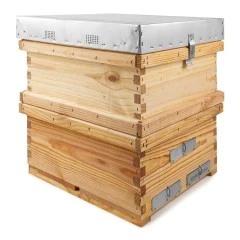
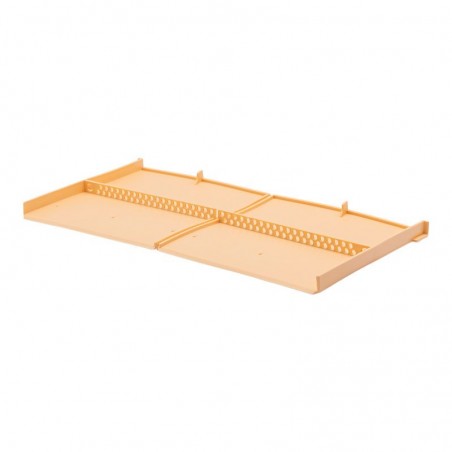
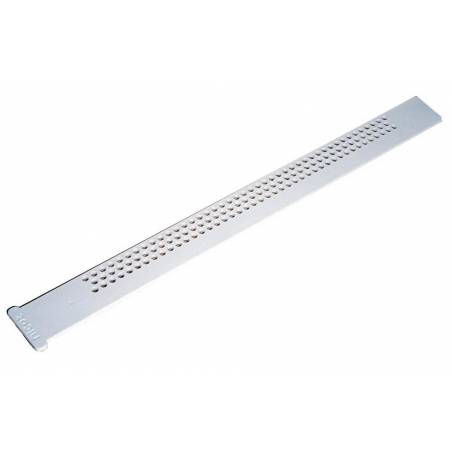
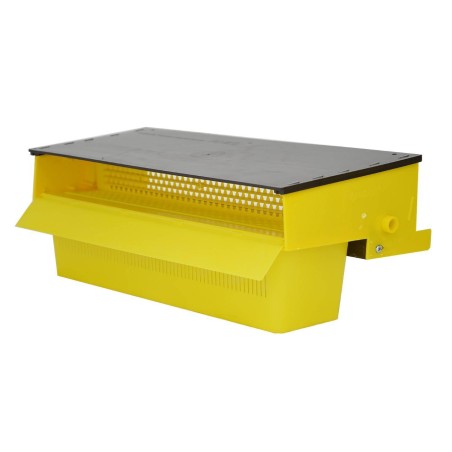
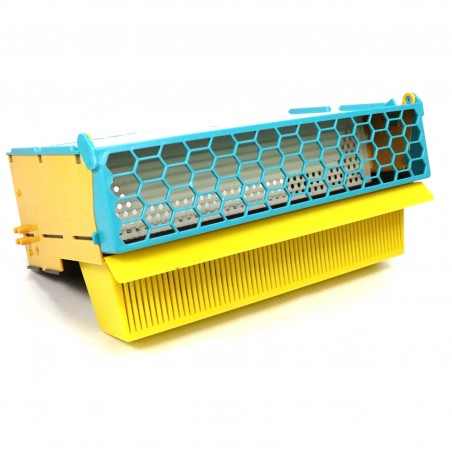
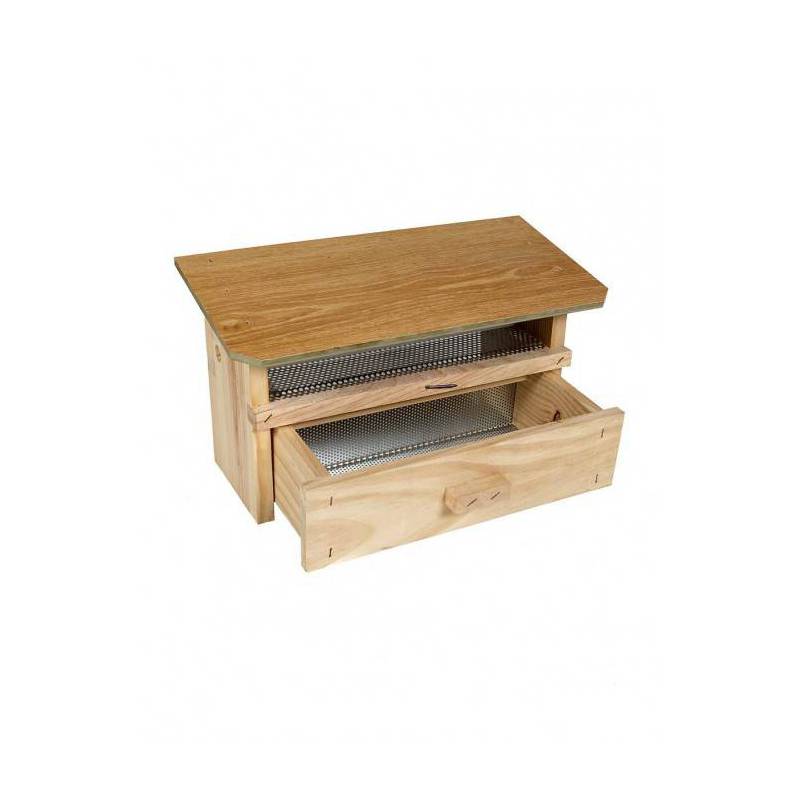
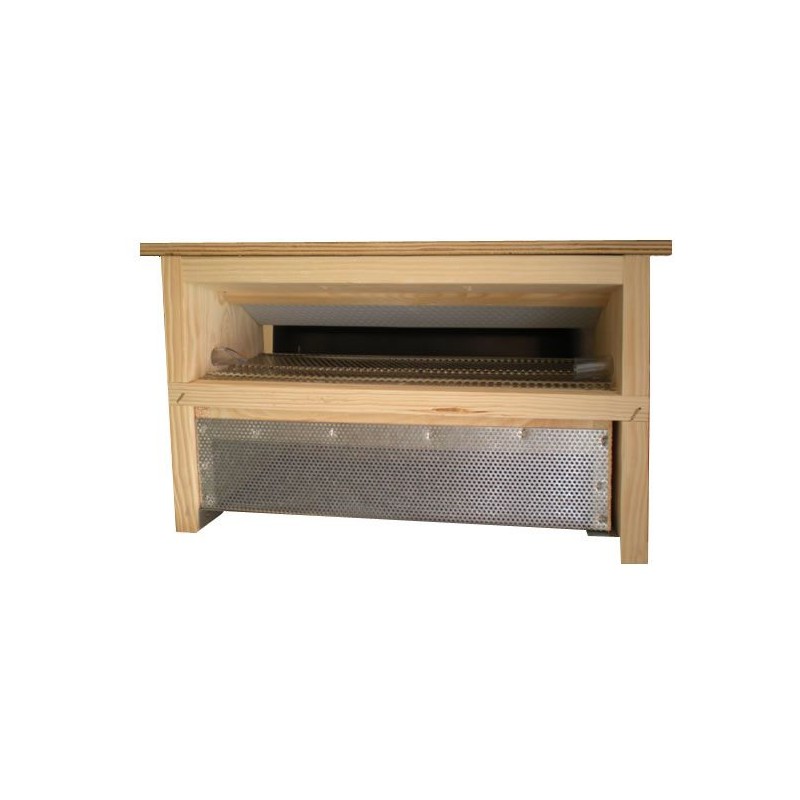
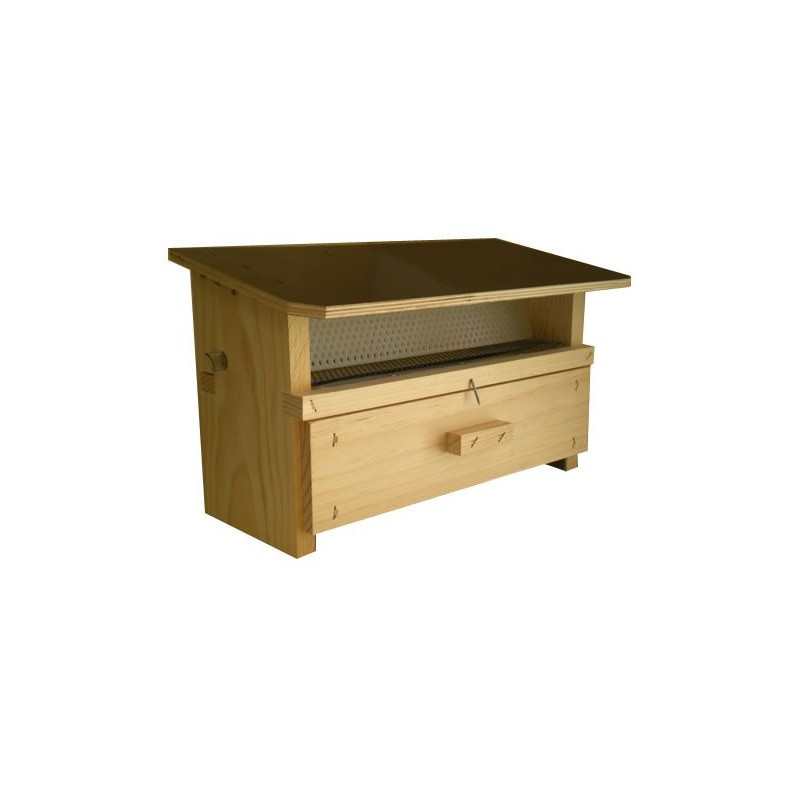
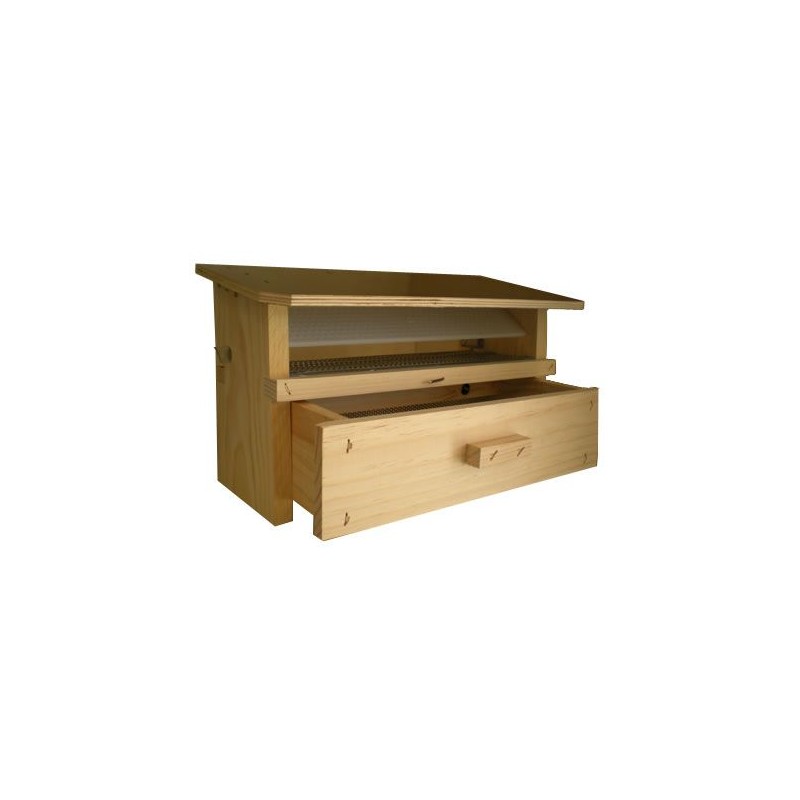
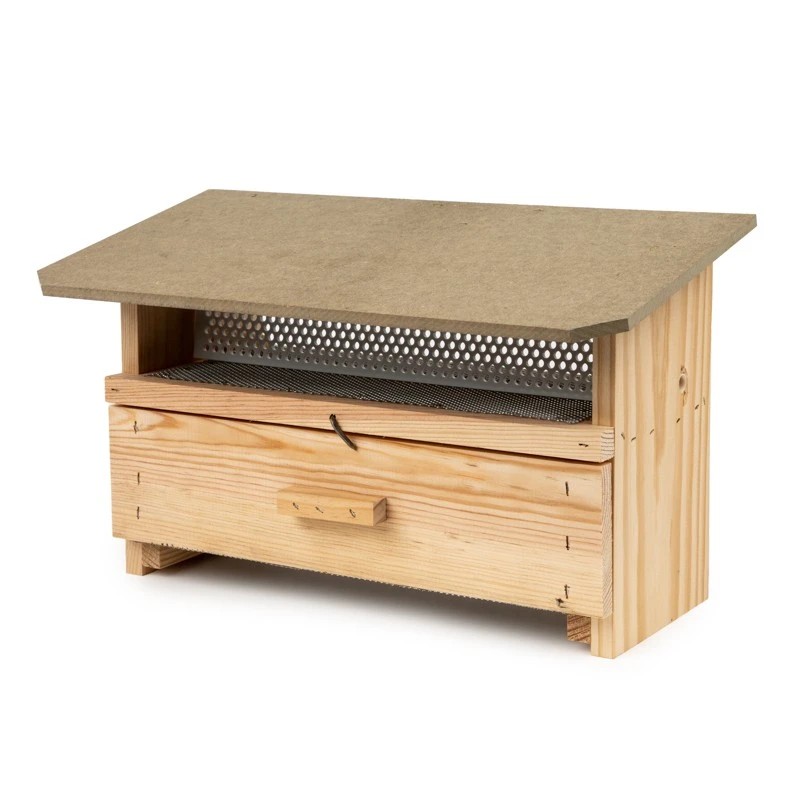
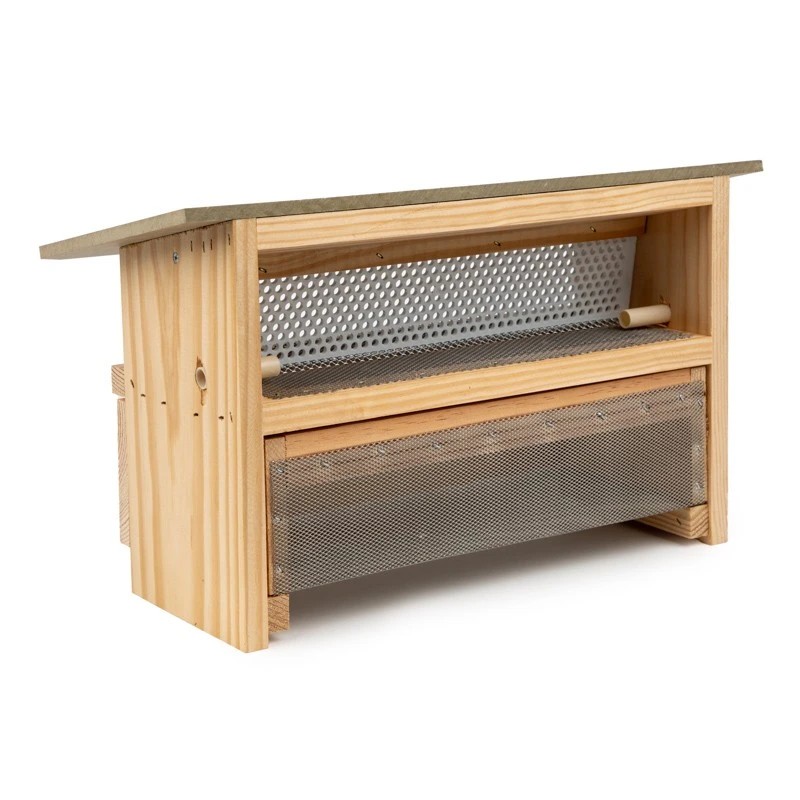
Wooden pollen trap with folding grid. Contains a wooden pollen tray and perforated galvanized steel plate. It also comes prepared with a slot to put into the beehive. Includes escape for drones. This trap consists of a 4.5 mm mesh grid, that is, wide enough for a worker to pass through and narrow enough to release the pollen balls stuck to the outer face of the hind legs. Under the vertical grid, a horizontal sieve with 3 mm mesh allows the pollen to pass into a box that collects it.
Front-mounted pine pollen trap with a hinged 4.5 mm grid, a 3 mm sieve, a ventilated collecting drawer and a drone escape. It measures 41 × 20 × 24 cm.
It is made for a migratory hive, and that is the first thing to check: on a fixed-site hive the landing board gets in the way.
01 · THE COMPATIBILITY
It fits well on Layens and on Langstroth or Dadant in their migratory version. On fixed-site hives it does not: the entrance is wider and the landing board sits in the way, so you would have to remove it and block the surplus entrance for the trap to seat. Nor does it mount directly on plastic floors with a built-in entrance. Before ordering, look at your entrance: that is what decides, more than the frame format. It is held with hooks, and comes with the slot for them.
02 · THE DOUBLE SCREEN
The 4.5 mm grid lets the forager through but rubs the pollen loads off her legs. Below it, the 3 mm sieve does the second screening: the pollen falls into the drawer and the coarser debris stays on top. That second screening is the difference between collecting clean pollen and collecting a mixture that ferments within two days.
03 · THE DRAWER
The drawer carries perforated galvanised steel sheet so the air moves, and the small roof keeps off dew and rain, which is what really spoils a collection. Even so, pollen is collected daily: fresh, with damp and heat, it degrades fast. If you are not going to freeze or dry it the same day, do not leave it in the drawer for more than two days, and never in the sun.
04 · THE HANDLING
Start with the grid half open for a day or two so the colony learns to pass through it, then work in runs rather than leaving it on all month. The drone escape prevents jams inside when the population is high. And the honest part of the maintenance: the grid is screwed on, so cleaning it takes a while — propolis dirties it and it has to come off to be washed. A coat of linseed oil now and then extends the life of the wood.
05 · BEFORE YOU BUY
It is a selection tool: when pollen of a colour you do not want in your batch starts coming in, you lift the grid and stop collecting.
| ✓ FITS | Migratory Layens, Langstroth and Dadant hives, with a narrow entrance and no landing board. |
| ✕ DOESN'T FIT | Fixed-site hives and plastic floors with a built-in entrance, unless you alter the entrance. |
| ⚠ NOT INCLUDED | Fixing hooks, drier or drying trays. |
| Material | Pine |
|---|---|
| Dimensions | 41 × 20 × 24 cm |
| Grid | Hinged, 4.5 mm aperture |
| Sieve | 3 mm mesh |
| Drawer | Wood with perforated galvanised steel sheet |
| Extras | Small roof and drone escape |
| Fixing | Slot for hooks |
| Reference | 010508 |
Data sheet

Wooden pollen trap with folding grid. Contains a wooden pollen tray and perforated galvanized steel plate. It also comes prepared with a slot to put into the beehive. Includes escape for drones. This trap consists of a 4.5 mm mesh grid, that is, wide enough for a worker to pass through and narrow enough to release the pollen balls stuck to the outer face of the hind legs. Under the vertical grid, a horizontal sieve with 3 mm mesh allows the pollen to pass into a box that collects it.
check_circle
check_circle