 Apipasta with vitamins 15kg
 Beecomplet® Spring 14Kg
 Beekeeper suit with round veil
 Oxalic acid 1kg
 Beeswax Foundation 5kg
 Fresh royal jelly 20g
 Classic honey jar 1kg comb-lines TO77 - Pack of 16 units
 Promotor L Apis 1 litre
- -€1.00

 Share in WhatsApp
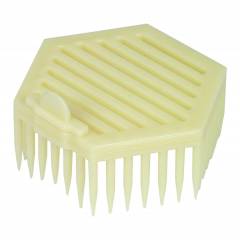
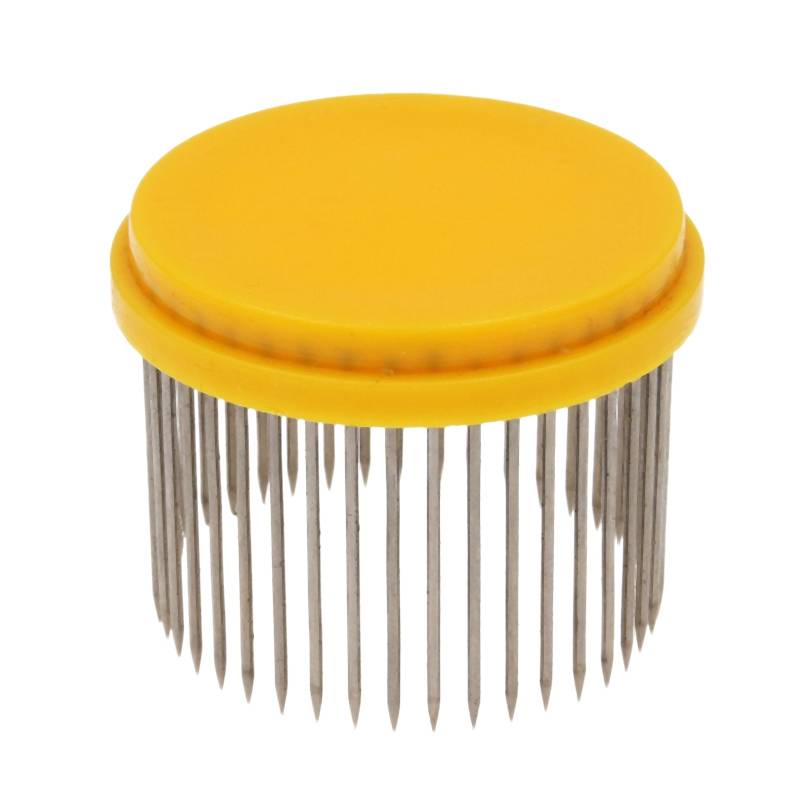
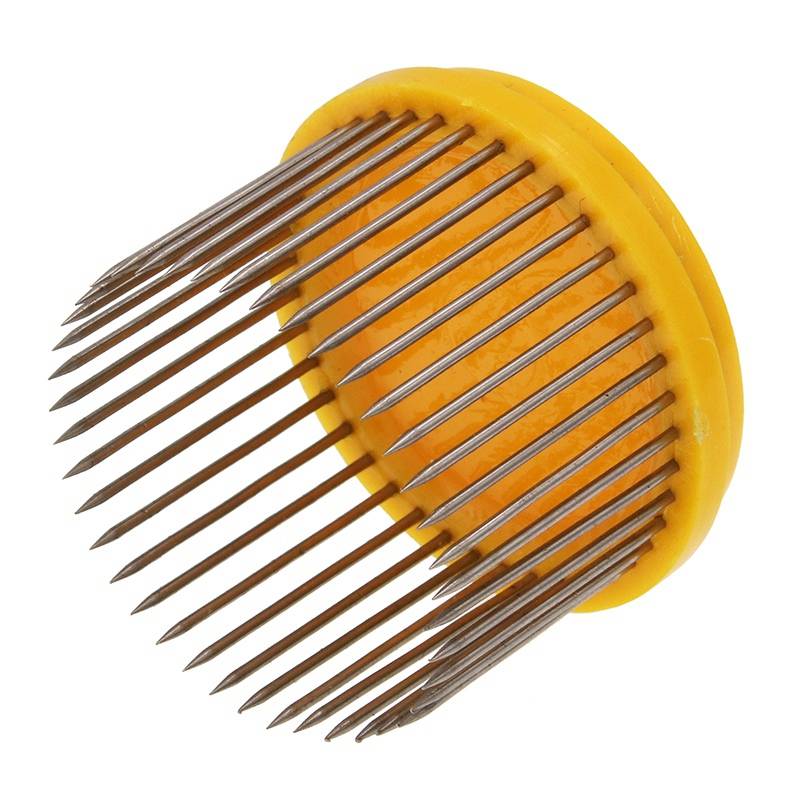
The spiked cage creates a small enclosure directly over the comb.
It can be used to protect a queen cell or to temporarily confine a queen to a specific area of the frame during an inspection, a controlled introduction or certain splitting operations.
01 · HANDLING
Choose a flat area of the comb and start by securing the perimeter. Insert the prongs evenly until there are no gaps through which the queen can escape, but without pressing the cage down against the wax. If you are confining a queen, check visually that she is inside and can move about; do not seal over an area laden with honey, as this will reduce the usable space too much.
02 · USE
For a queen cell, position the cage over it without rubbing or tilting it. To confine a queen, locate her first and work on an area of comb that you can see clearly. These are two distinct manoeuvres: improvising after securing the prongs increases the risk of damaging the wax, the cell or the queen.
03 · MAINTENANCE
The prongs are fine and work well only if they remain straight and parallel. Remove wax and propolis without prying, dry the tool and store it in a rigid container. Carrying it loose in your toolbox ends up bending the tips and makes it difficult for the cage to seat evenly on the comb.
04 · BEFORE YOU BUY
| ⚠ NOT INCLUDED | Acceptance depends on the colony. The cage facilitates gradual release or handling, but acceptance depends on whether the bees are genuinely orphaned, the condition of the colony, the queen, the colony’s own queen cells and the duration of confinement. It is not a transport cage and must not be left unattended. Mark the date and monitor progress according to the introduction or rearing method you are using. |
| Format | Cylindrical cage for fixing over comb |
|---|---|
| Prongs | Stainless steel, 1 mm in diameter |
| Height | 40 mm |
| Approximate outer diameter | 52 mm |
Data sheet

check_circle
check_circle