 Apipasta with vitamins 15kg
 Beecomplet® Spring 14Kg
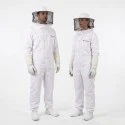 Beekeeper suit with round veil
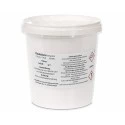 Oxalic acid 1kg
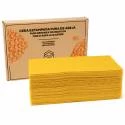 Beeswax Foundation 5kg
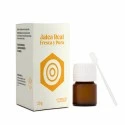 Fresh royal jelly 20g
 Classic honey jar 1kg comb-lines TO77 - Pack of 16 units
 Promotor L Apis 1 litre
- Made in 🇫🇷

 Share in WhatsApp
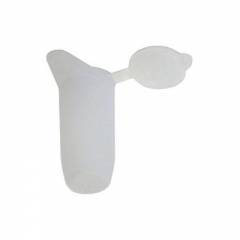
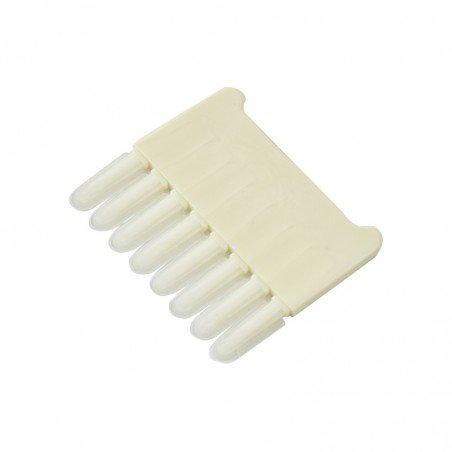
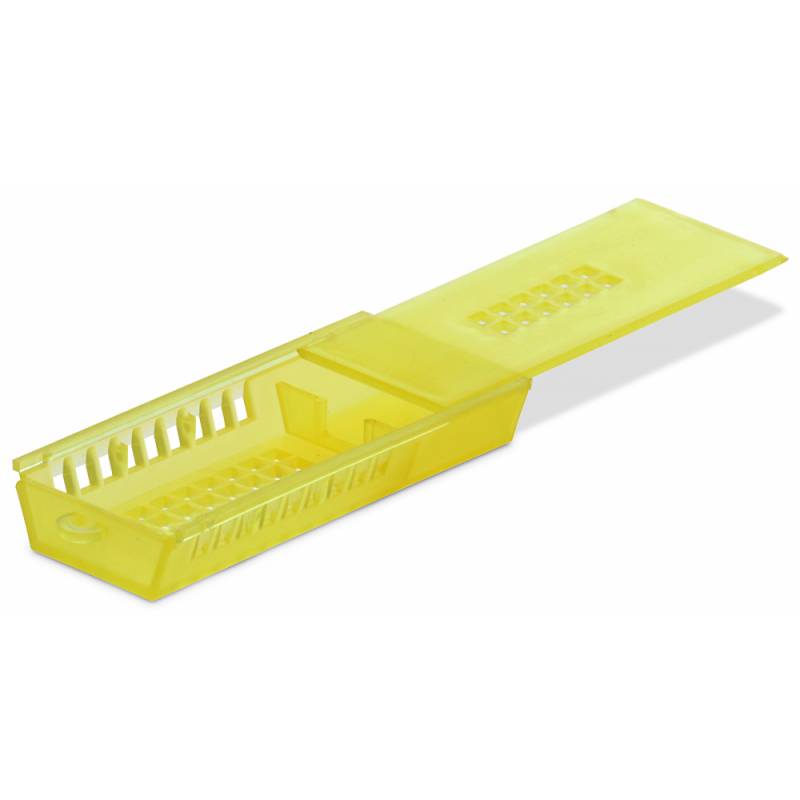
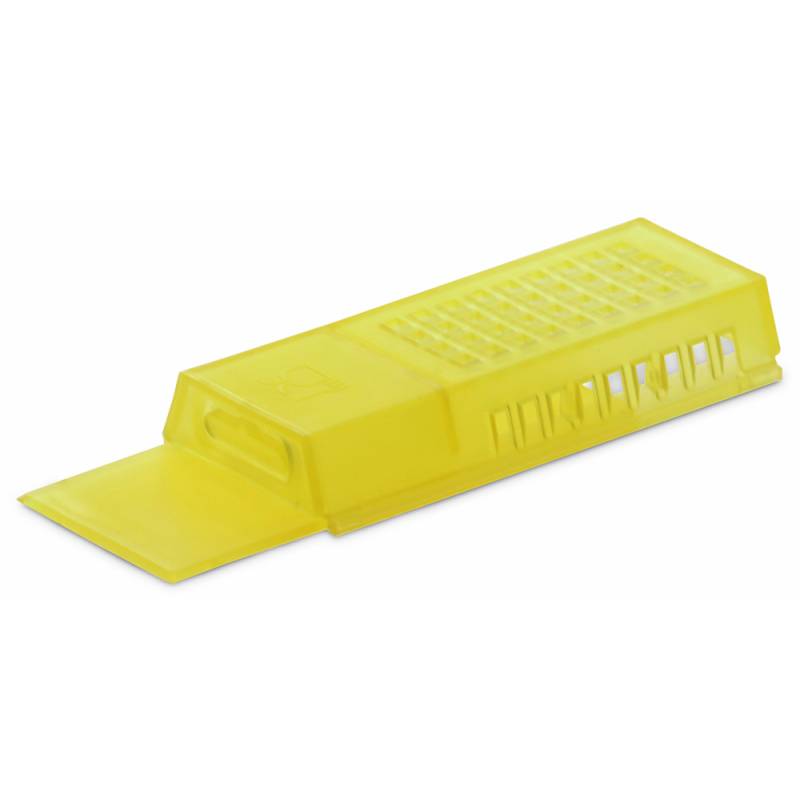
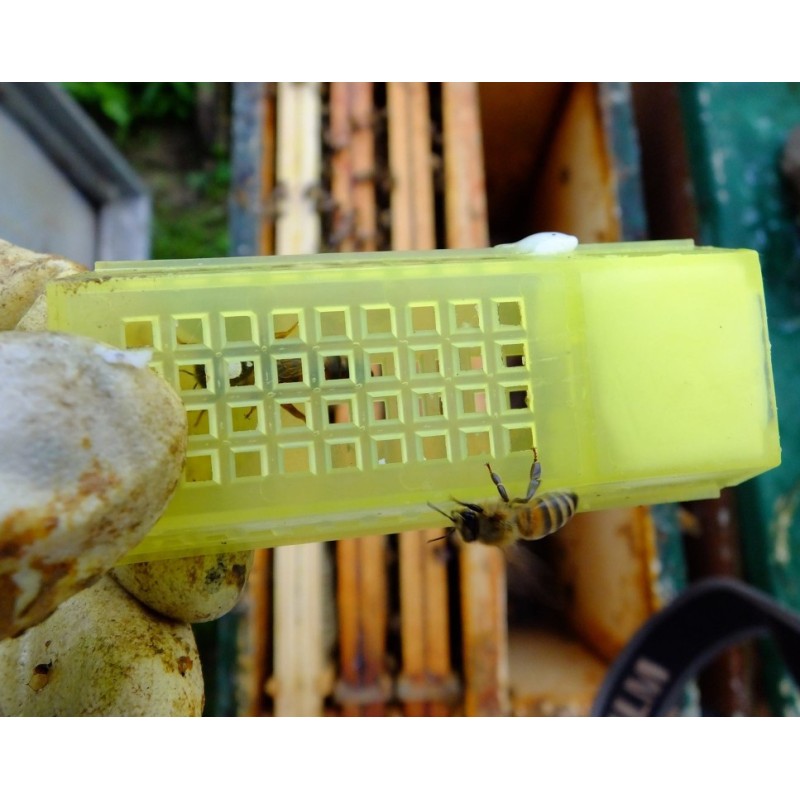
Yellow travelling and introduction cage from NICOT Plast France made of food grade plastic. It is also used for introducing new queens into the hive. It has a compartment for inserting candy. Dimensions: 37 x 13 x 80 mm. Weight: 9,5 g.
Moving a mated queen is the point where a lot of value can be lost: first the journey, then the introduction into a colony that may not want her.
This NICOT® cage, made in France by Nicotplast, is built for both jobs. It holds the queen with a few attendant bees and carries its own candy compartment.
01 · CONSTRUCTION
The body is clear plastic, so you can check the queen and her attendants at a glance without opening anything — in transit, and again while the cage sits in the hive. Ventilation windows keep air moving so the bees are not shut into a still, damp box.
02 · FEEDING
The candy compartment does two jobs. On the journey it feeds the queen and her escorts — for up to three weeks — and once inside the hive it is what gives you a slow release: the colony eats through the candy from the outside and the queen walks out on her own after 1–3 days, rather than all at once.
03 · INTRODUCTION
Snap off the breakable safety tab, then pierce the candy with a wire or a small nail so the bees have somewhere to start. Set the cage between two frames, normally upright, and do not smear it with honey. The receiving colony must be queenless and prepared: without that, neither the cage nor the candy will make a colony accept a queen.
04 · COMMON MISTAKES
Never leave the cage in direct sun or hard heat with bees inside. Do not wet the candy. Leave the colony alone for the first few days — if you find bees biting at the cage, she may be being rejected. And use the queen promptly; it is best not to keep her caged much beyond about 8 days. Afterwards the cage washes out under a pressure hose, disinfects and goes back into service.
05 · BEFORE YOU BUY
| ✓ FITS | Transporting and introducing mated queens. |
| ⚠ NOT INCLUDED | The candy: the cage arrives empty — you make it or buy it separately. |
| Manufacturer | Nicotplast (France) — NICOT® |
|---|---|
| Material | Clear food-grade plastic |
| Dimensions · weight | 37 × 13 × 80 mm · 9.5 g |
| Uses | Queen transport and introduction |
| Reusable | Yes — wash and disinfect |
Data sheet
1 file available

Yellow travelling and introduction cage from NICOT Plast France made of food grade plastic. It is also used for introducing new queens into the hive. It has a compartment for inserting candy. Dimensions: 37 x 13 x 80 mm. Weight: 9,5 g.
check_circle
check_circle