 Apipasta with vitamins 15kg
 Beecomplet® Spring 14Kg
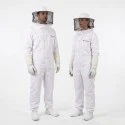 Beekeeper suit with round veil
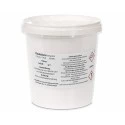 Oxalic acid 1kg
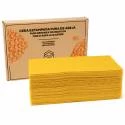 Beeswax Foundation 5kg
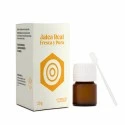 Fresh royal jelly 20g
 Classic honey jar 1kg comb-lines TO77 - Pack of 16 units
 Promotor L Apis 1 litre

 Share in WhatsApp
Buy it now and receive it between Tuesday, 6 October and Thursday, 8 October with Ontime
1.2x to 3.5x 4 INTERCHANGEABLE LENSES | 2 at a time LENSES IN THE BRACKETS |
23-32 cm WORKING DISTANCE AT 1.8x | 8-12 cm WORKING DISTANCE AT 3.5x |
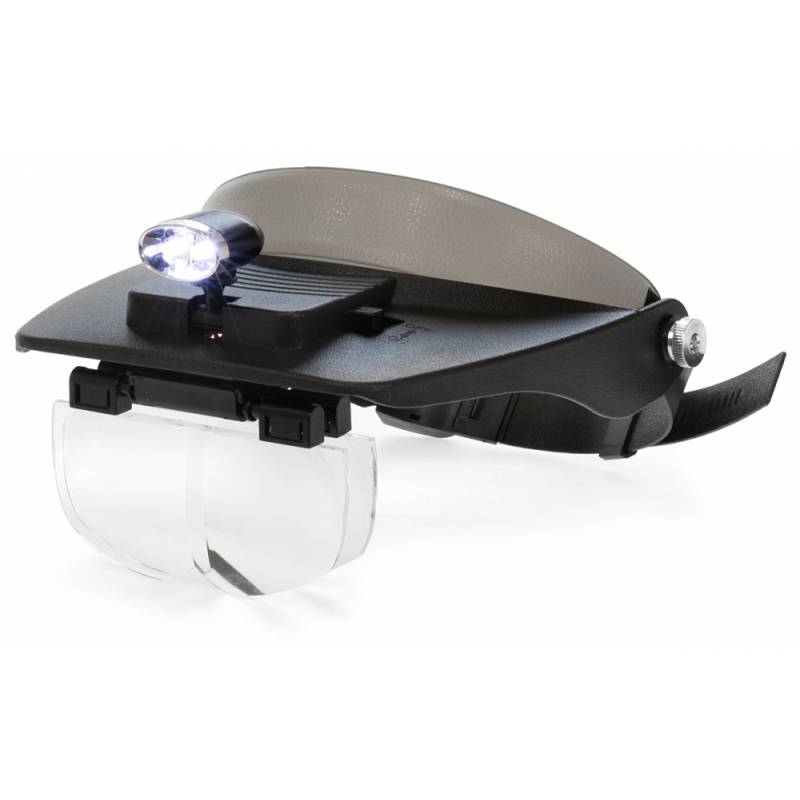
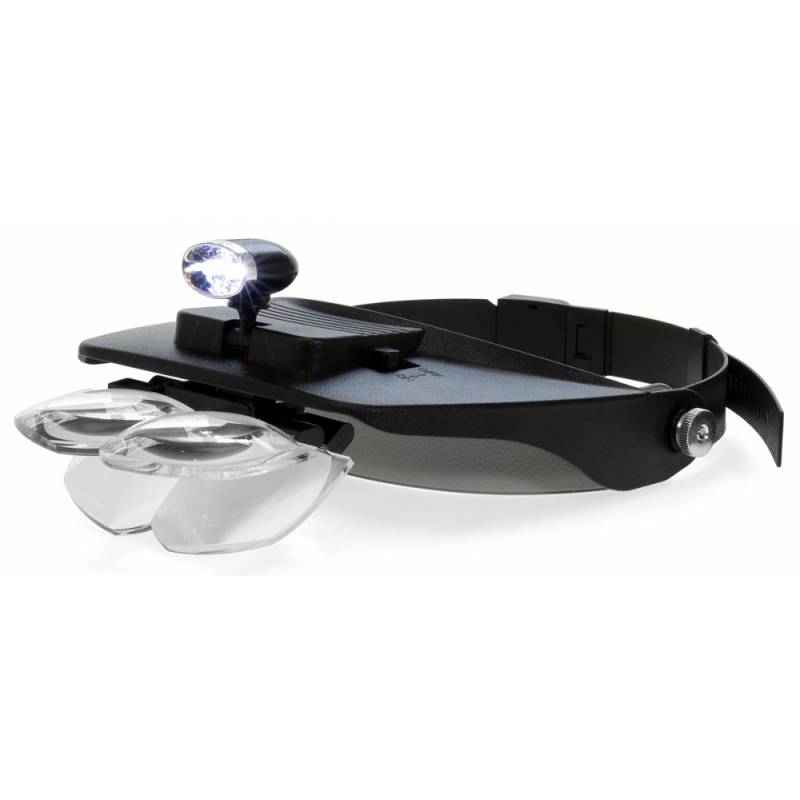
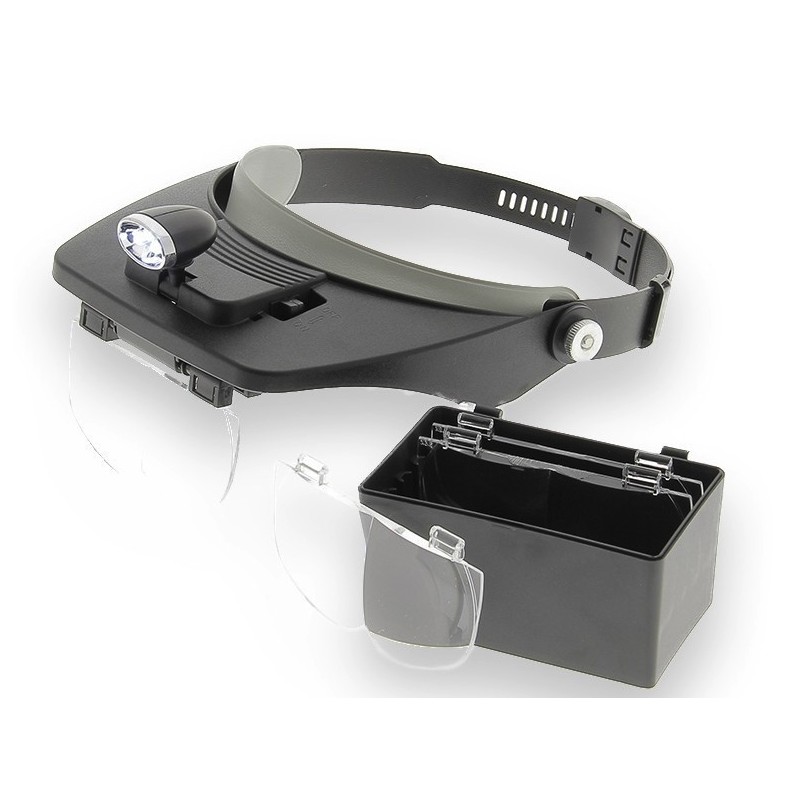
Headband magnifier with four interchangeable lens plates —1.2x, 1.8x, 2.5x and 3.5x— and an LED lamp on a swivelling arm. Both hands stay free.
The larva you graft is under 24 hours old and lies at the bottom of a cell, floating on jelly. What decides whether this tool works for you is not the top magnification but how close each lens forces you to bring your eye.
01 · TWO LENSES, ONE FLIPPED DOWN
The four plates swap by hand, but the visor holds two at once, each in its own bracket and each flipping separately. You carry the 1.8x and the 2.5x and drop only the one you need; flip both up and normal vision is back, without taking anything off your head or putting the frame down. That separates a headband visor from a hand lens: going from hunting for young larvae to grafting costs nothing but a flick. The lamp sits on an arm that swivels vertically and sideways, so the light goes into the cell.
02 · WORKING DISTANCE
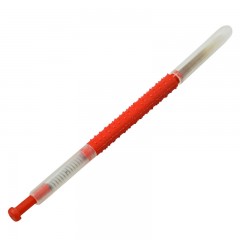
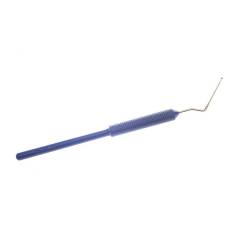
The stronger the lens, the closer you have to get. The published distances for this set are 52-62 cm at 1.2x, 23-32 cm at 1.8x, 15-25 cm at 2.5x and only 8-12 cm at 3.5x. That last figure is shorter than the grafting tool itself, which runs 11.5 to 19 cm depending on the model: with the strongest plate down there is no room for the tool or the frame. Graft at 1.8x or 2.5x; the 1.2x is for reading the whole frame rather than the larva, and the 3.5x for inspecting a cut queen cell on the bench.
03 · WHY THE LIGHT MATTERS
Grafting is done on a C-shaped larva floating on jelly, and what ruins it is drying out and chilling outside the colony; hence working in the shade, with humidity, and fast. The lamp protects the larva from nothing: what it does is let you see the bottom of the cell without tilting the frame towards the sun, the move everyone resorts to when they cannot see.
04 · BEFORE YOU BUY
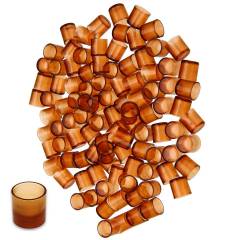
This is the tool in the category that ties you to no system: it works grafting from comb, with wax or plastic cell cups, with a Nicot cupularve or a JZBZ bar. But it does not correct your sight and does not replace prescription glasses —it flips down in front of the face and is worn over them—, it is not a microscope, and on its own it will not improve acceptance: that comes down to larval age, nurse bees and the starter.
| ✓ FITS | Grafting and queen-cell checks with both hands busy, and anyone who already works in prescription glasses. |
| ✕ DOESN'T FIT | Anyone after vision correction, a bench microscope, or working at 3.5x with the grafting tool in hand. |
| Reference | QB02 |
|---|---|
| Type | Headband visor with flip-down lens plates |
| Magnification | 1.2x · 1.8x · 2.5x · 3.5x (4 plates) |
| Plates in the brackets | 2 at a time, each flipping separately |
| Working distances | 52-62 · 23-32 · 15-25 · 8-12 cm |
| Plate material | Acrylic |
| Lighting | LED lamp on a swivelling arm |
| Power | 2 × AAA 1.5 V batteries |
| Headband | Adjustable with a rear wheel |
| Weight | 200 g packed |
Data sheet

check_circle
check_circle