 Apipasta with vitamins 15kg
 Beecomplet® Spring 14Kg
 Beekeeper suit with round veil
 Oxalic acid 1kg
 Beeswax Foundation 5kg
 Fresh royal jelly 20g
 Classic honey jar 1kg comb-lines TO77 - Pack of 16 units
 Promotor L Apis 1 litre

 Share in WhatsApp
19 cm OVERALL LENGTH | 3.8 cm CRIMPING JAW |
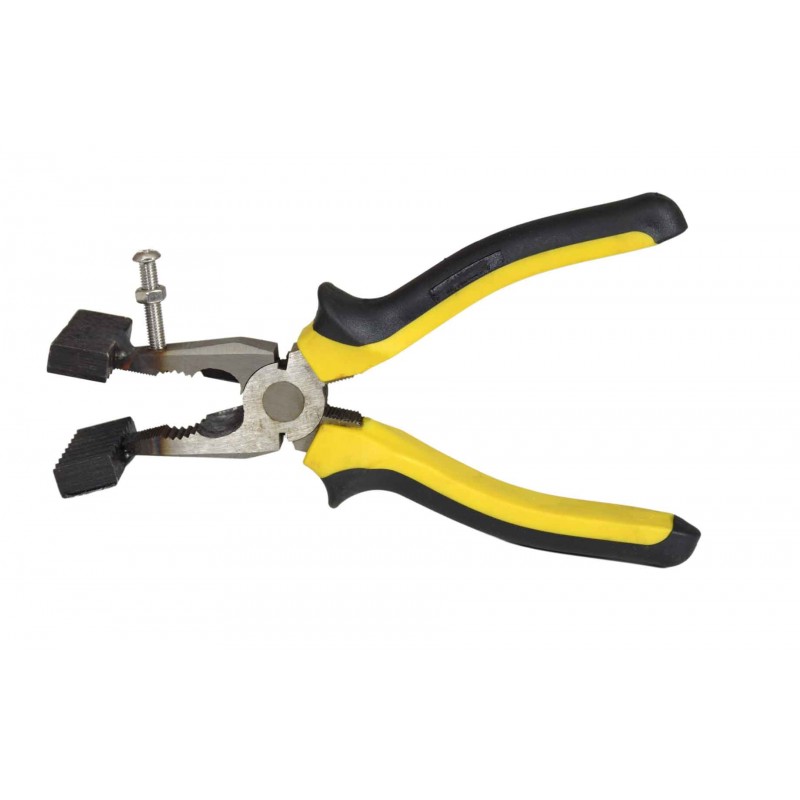
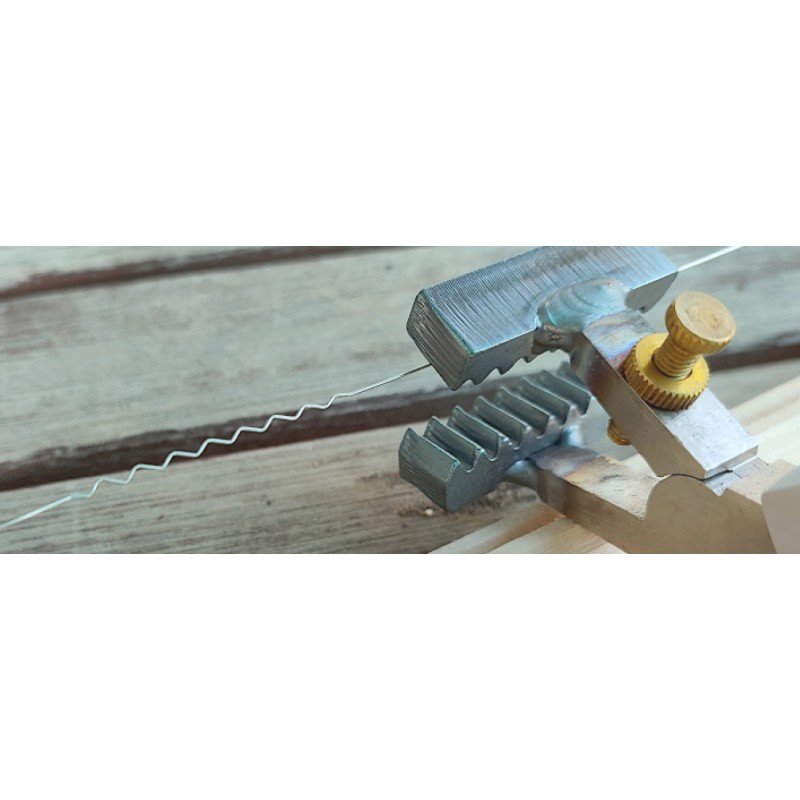
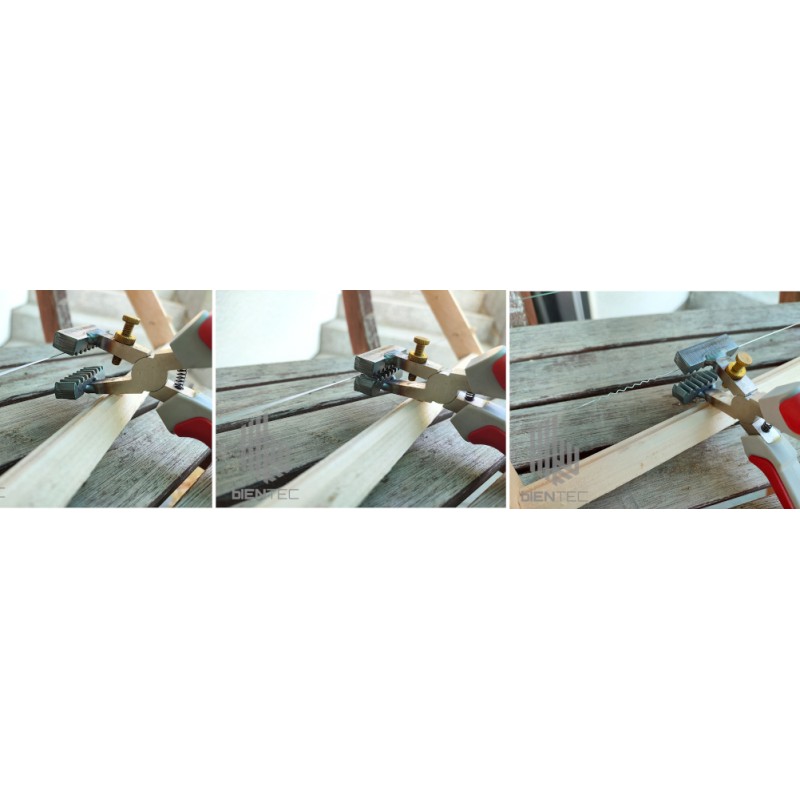
Crimping pliers with waved jaws that bring tension back to the wire of a frame already strung: each squeeze forms a wave that shortens the wire and pulls it taut.
Frame wire does not go slack all at once. It gives after melting out old comb and as the side bar timber dries. A slack wire stops holding the foundation: the comb bows, the embedded wire lifts away and the frame reaches extraction with no armature. These pliers put that right on the wire already in place.
01 · MECHANICS
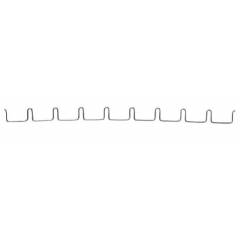
The wire is anchored at both ends and the span between the side bars is fixed: once strung, pulling on it takes up no slack. What the jaw does is change the path the wire takes. As it closes, the opposed teeth force the wire to zig-zag, and that wave needs more wire to cover the same span; the length the wave swallows comes out of the rest of the run, which is left taut. The teeth cover the whole jaw face, so one squeeze crimps the entire stretch it grips.
02 · ADJUSTMENT
The upper arm carries a screw with a lock nut acting as a mechanical stop: the less it protrudes, the further the jaws close, the deeper the wave and the more length it takes up. Set it on an offcut of wire and tighten the lock nut once you find the point. If the run is still slack, add a second squeeze a few centimetres along; there is no way back, because a wave already formed cannot be undone. And over-squeezing thin wire risks snapping it or pulling the side bars inwards.
03 · WHEN TO USE IT
The order is wire the frame, tension it by hand, then finish with the pliers; only then fit and embed the wax foundation. It earns its keep on reused frames: once the old comb is melted out the wire sags, and one squeeze per run saves re-wiring the whole frame. Work run by run, on the free span, away from the side bar eyelets. Since it acts on the wire and not on the woodwork, the format is irrelevant: the same tool serves National, Commercial, Langstroth or Dadant.
04 · BEFORE YOU BUY
It is not a tensioner to start from scratch: the wire has to be strung and already carrying some tension, because on a loose run the wave forms but pulls on nothing. It does not drill, wire or embed: one step of the build, not the kit. The screw changes the depth of the wave, not its pitch, and that is what suits it to different wire gauges: the maker positions it for heavier wire. And every crimp shortens the wire permanently, so the number of re-tensions per wire is limited.
| ✓ FITS | Frames already strung with wire, in any format: National, Commercial, Langstroth, Dadant or Layens. The screw suits it to the wire gauge; the maker positions it for heavier wire. |
| ✕ DOESN'T FIT | Fixed-comb hives without frames, plastic frames with moulded comb, and wire already embedded in wax: there the jaw tears the sheet instead of tensioning. |
| LTA reference | BR-11720 |
|---|---|
| Manufacturer reference | 11720 |
| Type | Crimping pliers for frame wire |
| Overall length | 19 cm approx. |
| Jaw width | 3.8 cm approx. |
| Weight | 280 g approx. |
| Adjustment | Stop screw with lock nut; sets the wave to the wire gauge |
| Works with | Any wired frame: National, Commercial, Langstroth, Dadant, Layens |
| Not included | Wire, frames or wax foundation |
Data sheet

check_circle
check_circle