 Apipasta with vitamins 15kg
 Beecomplet® Spring 14Kg
 Beekeeper suit with round veil
 Oxalic acid 1kg
 Beeswax Foundation 5kg
 Fresh royal jelly 20g
 Classic honey jar 1kg comb-lines TO77 - Pack of 16 units
 Promotor L Apis 1 litre

 Share in WhatsApp
11.5 cm HIGH, 6.4 × 5.1 FOOTPRINT, PER THE LABEL | 140 g OF WAX PER PIECE, PER LYSON: SEVEN PER KILO |
3×11 WICK RECOMMENDED BY LYSON | 1 DEMOULDING CUT: THE EARS COME OUT WHOLE |
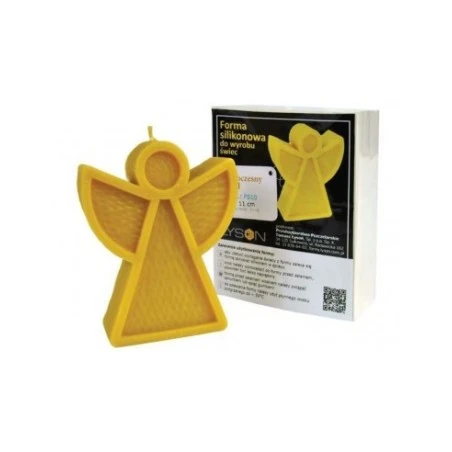
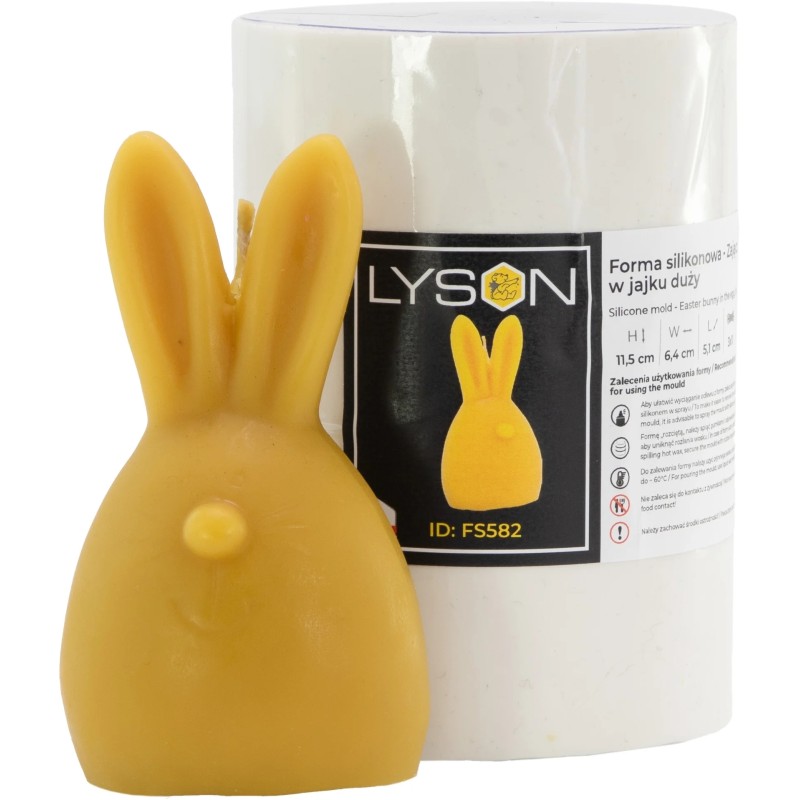
LYSON FS582 silicone mould for an Easter-bunny-in-egg candle, the large one: a figure 11.5 cm high, 6.4 wide and 5.1 deep per the LYSON label, with a cut to demould without breaking the ears. It takes about 140 g of wax per piece, some seven candles per kilo, and a 3×11 wick. The label warns it is not for food contact.
A bunny with ears does not come whole out of a closed mould; the cut opens on demoulding and the figure comes out with ears and egg texture intact.
01 · HOW TO USE IT
Close the cut with two or three rubber bands around the mould, centre the wick and pour the beeswax slowly, at 70-75 °C: it melts at 62-65 and darkens above 85. That way it reaches ears and tail still liquid. Let it cool without moving it, a few hours, and open along the cut. A little silicone release spray eases the first pours. Unbleached beeswax gives the golden tone of the photo without dye; it also takes vegetable waxes and paraffin.
02 · HOW MUCH WAX
LYSON gives about 140 g of wax per candle for the 11.5 × 6.4 × 5.1 cm figure, so a kilo of surplus wax gives some seven pieces and three kilos a score, which is the Easter run of a beekeeper’s shop. Weigh yours on the first pour: with your wax and your fill level, that is the right number.
03 · WHAT IT GOES WITH
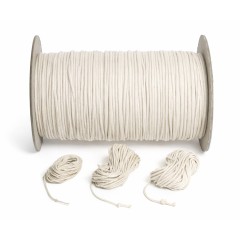
LYSON recommends a 3×11 wick; of ours, for a candle about 6 cm across, the ones with washer (867) or the square braid on a roll (1866). The mould is flexible silicone, washed in warm water and stored closed and unbent. It is not suitable for chocolate or food, says the label. From the same LYSON series, the reindeer with gifts (2555), the sleigh (2554) and the mouse with gift (2655).
04 · BEFORE YOU BUY
The mould is supplied on its own; wax, wick and bands come separately.
| ✓ FITS | Anyone selling beeswax candles in spring who wants an eye-catching Easter figure that demoulds whole. |
| ✕ DOESN’T FIT | Chocolate or baking: the label excludes food contact. |
| ⚠ NOT INCLUDED | Wax, wick or bands. |
| Reference | FS582 |
|---|---|
| Brand | LYSON |
| Figure | Easter bunny coming out of the egg, large |
| Candle size | 11.5 × 6.4 × 5.1 cm, per label |
| Wax per piece | About 140 g per LYSON; some 7 per kilo |
| Mould | Flexible silicone with demoulding cut |
| Pouring temperature | 70-75 °C for beeswax |
| Food contact | Not suitable, per label |
| Recommended wick | 3×11 per LYSON; not included |
| Related | Wicks 867, 1866; moulds 2555, 2554, 2655 |
Data sheet
Write your question
check_circle
check_circle