 Apipasta with vitamins 15kg
 Beecomplet® Spring 14Kg
 Beekeeper suit with round veil
 Oxalic acid 1kg
 Beeswax Foundation 5kg
 Fresh royal jelly 20g
 Classic honey jar 1kg comb-lines TO77 - Pack of 16 units
 Promotor L Apis 1 litre


 Share in WhatsApp
51.5 × 43 cm LANGSTROTH / DADANT US | 55 × 43 cm DADANT BLATT |
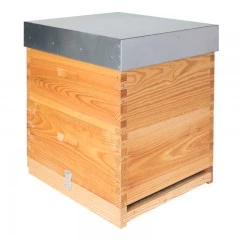
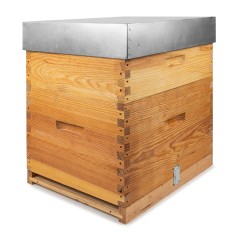
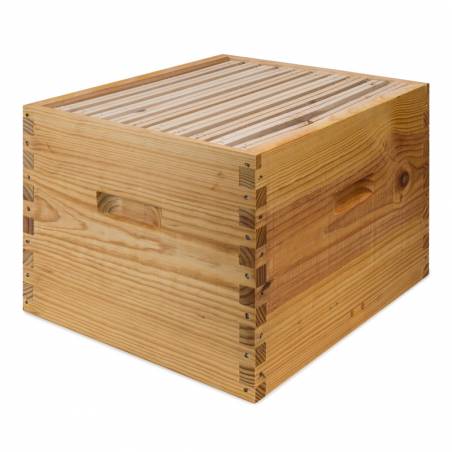
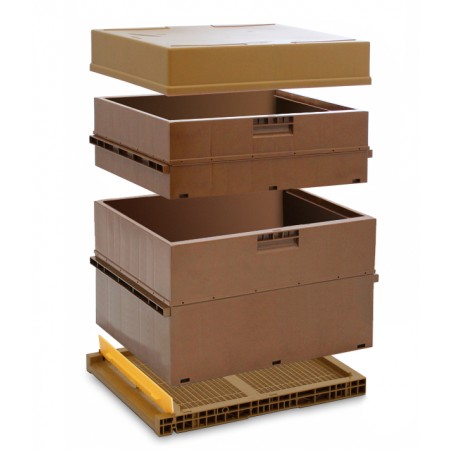
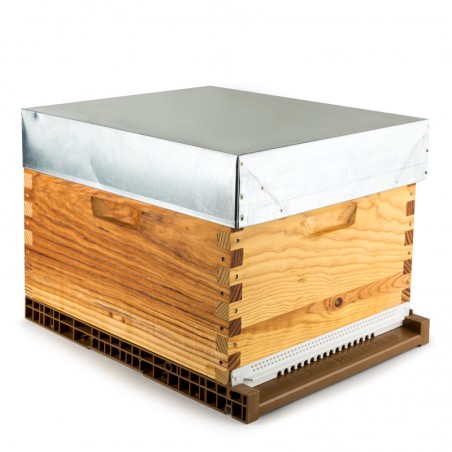
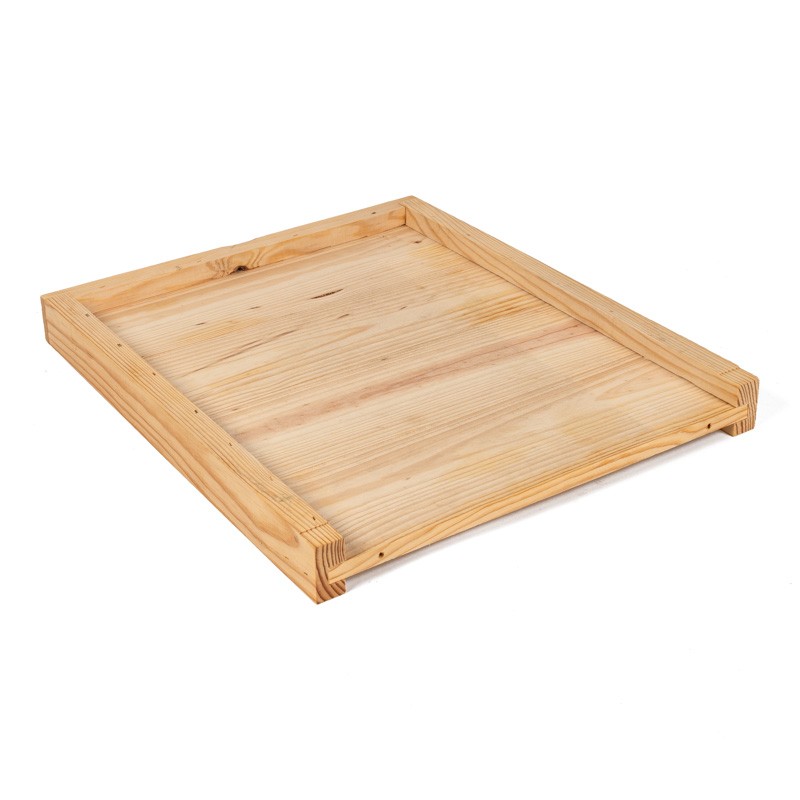
Pine floor for a fixed-floor Langstroth, Dadant US or Dadant Blatt hive, in which the brood box is nailed straight onto the base and the two work as a single piece.
Choose the size by your hive model. The entrance reducer is not included: it is bought separately.
01 · FIXED-FLOOR DESIGN
Unlike modern floors — open-mesh or removable — on a fixed floor the brood box is nailed to the base. The assembly gains rigidity and loses the gaps that let air and damp in, but floor and box stop being separate parts: to look at the bottom you have to turn the whole box over. This is old-school beekeeping — fewer parts, fewer things to fail and a distinctly lower price. It works well as a replacement when the old floor gives up and the box still has life in it.
02 · THE TWO SIZES
The Langstroth / Dadant US version is 51.5 × 43 × 5 cm with a removable landing board: the front extension comes off when you do not need it, or for stacking and transport without wasting space. The Dadant Blatt version is 55 × 43 × 5 cm with the landing board built in from the factory, fixed, ready for foragers to land on. The Blatt figures already include that extension; the US ones do not — hence the 3.5 cm difference between them. The floor weighs around 2.9 kg.
03 · SOLID FLOOR, NOT OPEN MESH
It is a solid floor: no mesh, no removable tray. It is not a screened bottom board, so you will not be able to monitor natural mite drop on a greased tray, and bottom ventilation in hot climates is minimal. In exchange, structural durability and fewer parts. If your varroa monitoring relies on mite drop, you will need another route for it — and the decision to treat belongs to your vet or animal health group, not to the number of mites you count.
04 · BEFORE YOU BUY
It comes in pine and without an entrance reducer: the entrance is formed by the front gap between box and floor, and you need a separate part to regulate it — wider during the flow, narrowed for wintering or against hornets. Before assembly, go over the boards: this is solid jointed timber, and a fine split in one board is sealed with wood glue before damp gets to work on it. If the floor will live outdoors, protect it before you nail the box on: linseed oil is transit protection, not a finish — you paint over it.
| ✓ FITS | Fixed-floor Langstroth, Dadant US or Dadant Blatt hives, depending on the size chosen. |
| ✕ NOT SCREENED | Solid floor: no mesh and no tray for counting mites. |
| ⚠ NO ENTRANCE BLOCK | The entrance reducer is bought separately — three models in accessories. |
| Material | Pine |
|---|---|
| Floor type | Fixed (box nailed to the floor) · solid, unventilated |
| Langstroth / Dadant US size | 51.5 × 43 × 5 cm — removable landing board, not included in the figure |
| Dadant Blatt size | 55 × 43 × 5 cm — built-in landing board, included in the figure |
| Approximate weight | 2.9 kg |
| Entrance reducer | Not included — sold separately |
| Varroa tray | No — this is not a screened bottom board |
Data sheet
Write your question