 Apipasta with vitamins 15kg
 Beecomplet® Spring 14Kg
 Beekeeper suit with round veil
 Oxalic acid 1kg
 Beeswax Foundation 5kg
 Fresh royal jelly 20g
 Classic honey jar 1kg comb-lines TO77 - Pack of 16 units
 Promotor L Apis 1 litre

 Share in WhatsApp
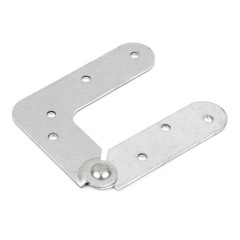
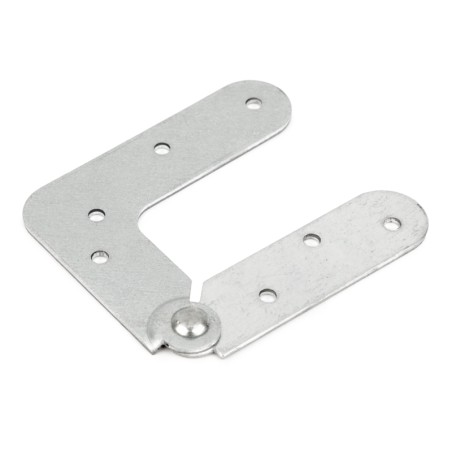
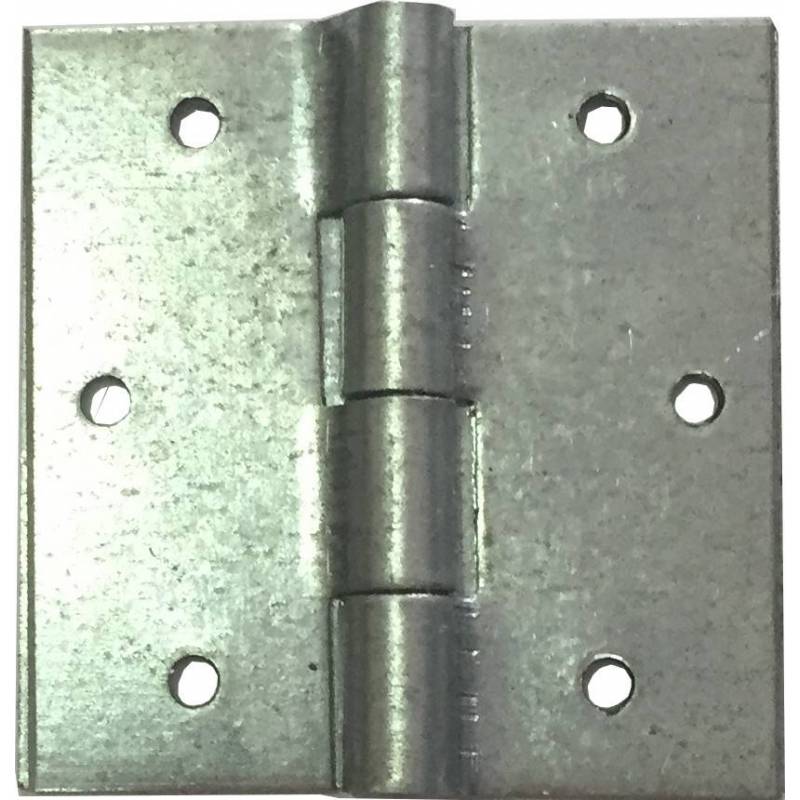
Galvanised steel rear hinge to join the lid to the hive body and open it like a door. Widely used on Layens.
It solves a small gesture you repeat all day: no longer hunting for somewhere to put the lid every time you open a hive.
01 · USE
Fitted at the rear, the lid swings back and stays there. No more propping it against the stand leg, on the mud or on top of the next hive — where it picks up grass, soil and the odd bee that gets crushed on closing. In wind, too, the lid does not blow away, which is when you really notice it.
02 · ASSEMBLY
It screws to the rear edge, half the leaf on the lid and half on the body, with the lid closed so both wings line up. Before drilling, check the timber is not soft: on a rotten edge the screw bites at first and pulls out by the third season. It is the part used both to repair a tired lid and to build your own boxes.
03 · MATERIAL
Galvanising is what separates this hinge from a hardware-shop one: it spends the whole winter getting wet and drying out without leaving the rust streak that stains the timber and eventually seizes the pin.
04 · BEFORE YOU BUY
A hinged lid usually takes two hinges: confirm how many you need before ordering.
| ✓ FITS | Wooden lids of any format; the usual use is Layens. Suitable for self-build. |
| ⚠ NOT INCLUDED | Screws. Choose the length to suit the thickness of your lid. |
| Material | Galvanised steel |
|---|---|
| Typical use | Rear of a hive lid, especially Layens |
| Function | Joins the lid and lets it swing open |
| Fitting | Screwed onto timber |
| Contents | Single hinge, no fixings |
Data sheet

check_circle
check_circle