 Apipasta with vitamins 15kg
 Beecomplet® Spring 14Kg
 Beekeeper suit with round veil
 Oxalic acid 1kg
 Beeswax Foundation 5kg
 Fresh royal jelly 20g
 Classic honey jar 1kg comb-lines TO77 - Pack of 16 units
 Promotor L Apis 1 litre

 Share in WhatsApp
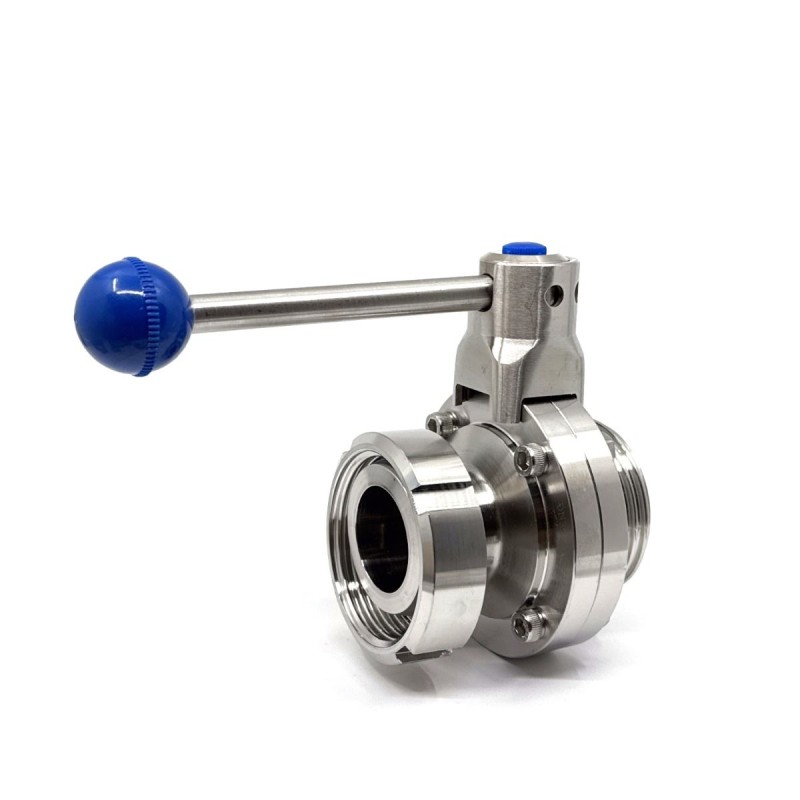
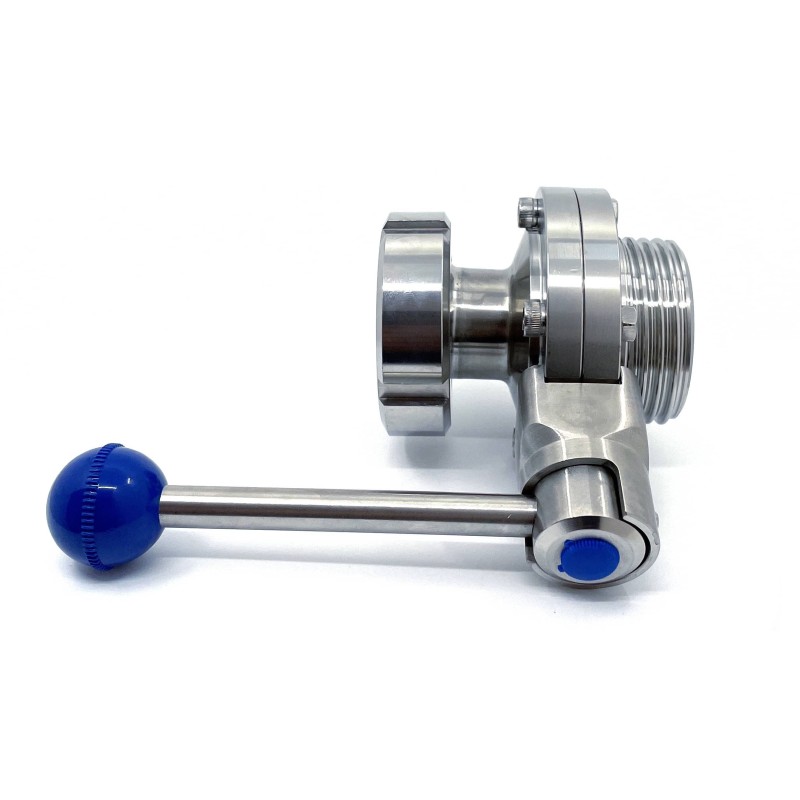
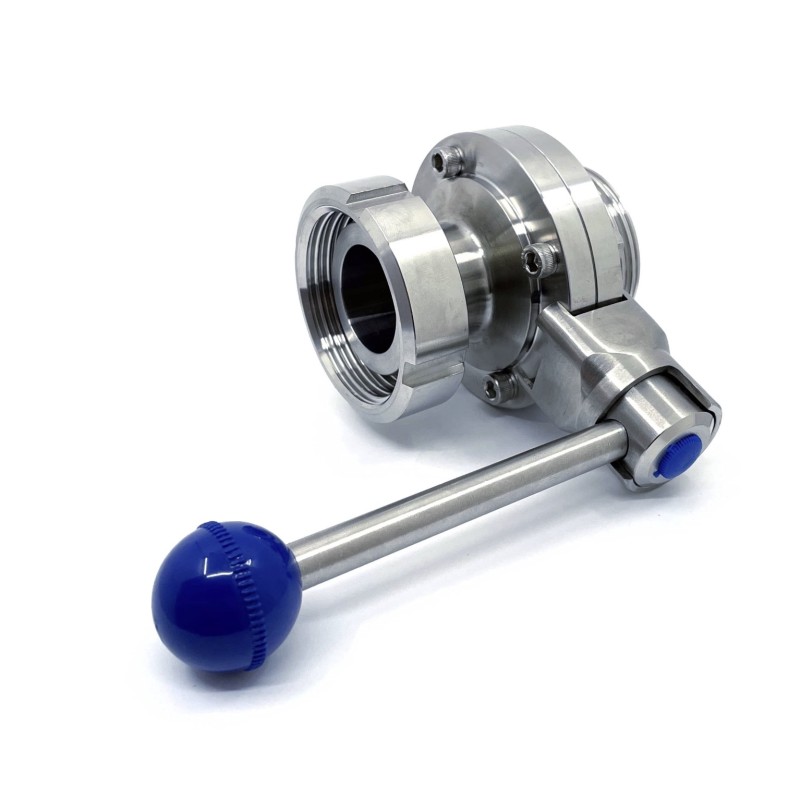
DIN–Clamp DN50 stainless butterfly valve with DIN threaded inlet and Clamp outlet for fast, hygienic, and professional honey transfer setups.
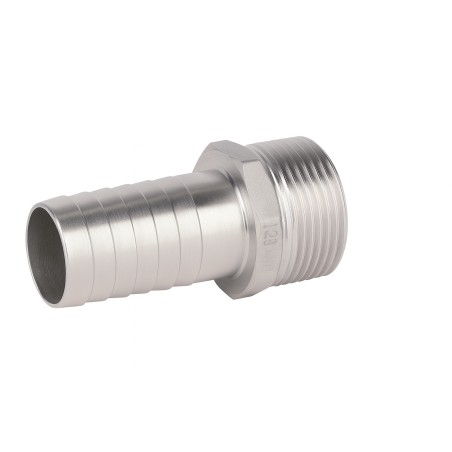
Stainless steel butterfly valve, DN50, with a threaded DIN 11851 male NV50 inlet and a Clamp outlet. Quarter-turn lever. Working range -20 to 140 °C.
DN50 is not the size of an ordinary honey line. That one is inch and a half. Check which you have before ordering.
01 · DN50 IS NOT INTERCHANGEABLE
An extractor tap, the usual hoses and ordinary honey-house gaskets are inch and a half, that is DN40. This valve is DN50, the size of higher-flow lines: large installations, continuous pumping, extraction plants.
It will not couple to a DN40 line without a reducer, so the first thing is to look at what diameter you have fitted. If your circuit is inch and a half, this is not your valve.
02 · WHY HYBRID
On one side it carries a DIN 11851 thread, the long-standing sanitary connection in Europe: it tightens by thread, holds pressure and does not work loose with vibration. On the other, a Clamp fitting, which opens and closes with a clamp band, with no tools.
That combination is what makes it useful: it lets you put a Clamp section into a DIN installation without rebuilding the circuit. And in honey, where everything crystallises, being able to open the line in seconds is the difference between cleaning it and not.
03 · THE 140 °C BELONG TO THE STEEL
The range of -20 to 140 °C is what the material takes, and it is meant for CIP cleaning with hot water without dismantling the circuit. That is what the figure covers.
It is not the working temperature of the product. Honey still cannot go past 40 °C without paying for it in HMF: the valve standing 140 changes none of that.
04 · THE QUARTER TURN AND THE SEAL
The quarter-turn lever is handled with gloves on and, above all, it is read from a distance: the position of the lever says whether it is open or shut. On a line with several valves, that avoids the expensive mistake.
And like every butterfly valve, the perimeter seal is the wearing part. When it starts to drip with the valve closed, it is the seal and not the valve: worth having a spare before the season.
05 · BEFORE YOU BUY
Measure your line. If it is inch and a half, you need DN40, not this one.
| ✓ RIGHT FIT | DN50 honey-house lines, joining a threaded DIN section to a Clamp section. |
| ✕ WRONG FIT | Inch-and-a-half circuits without a reducer. |
| ⚠ NOT INCLUDED | Clamp band, spare seal or adapters. |
| Reference | 20810036 |
|---|---|
| Material | Stainless steel — the maker declares it food grade |
| Nominal diameter | DN50 |
| Inlet | DIN 11851 thread, male NV50 |
| Outlet | Clamp fitting, with band |
| Operation | Quarter-turn lever |
| Temperature range | -20 to 140 °C — of the material, not the product |
| Intended for | Honey, syrups and viscous liquids |
| Wearing part | The perimeter seal |
| Weight | 0.5 kg |
DIN–Clamp DN50 stainless butterfly valve with DIN threaded inlet and Clamp outlet for fast, hygienic, and professional honey transfer setups.
check_circle
check_circle