 Apipasta with vitamins 15kg
 Beecomplet® Spring 14Kg
 Beekeeper suit with round veil
 Oxalic acid 1kg
 Beeswax Foundation 5kg
 Fresh royal jelly 20g
 Classic honey jar 1kg comb-lines TO77 - Pack of 16 units
 Promotor L Apis 1 litre

 Share in WhatsApp
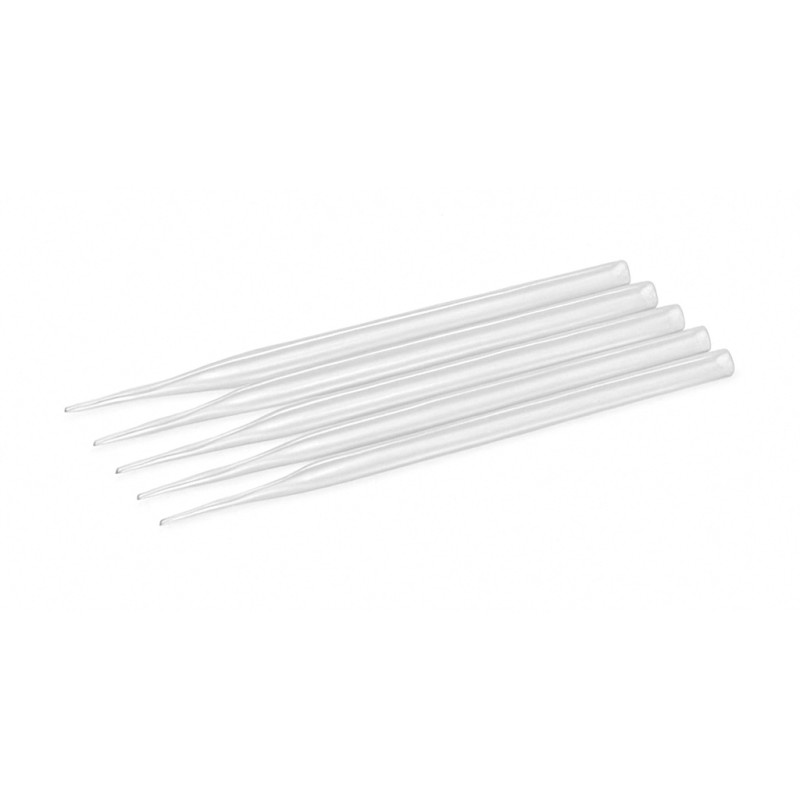
5 TIPS PER PACK, CONSUMABLE | 30 mm LONG: HANDLING ON A CROWDED BENCH |
Ø 1.5 MM OUTSIDE, FIRE-POLISHED | 50-100 µl HARBO CAPILLARIES IT JOINS |
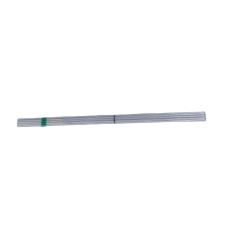
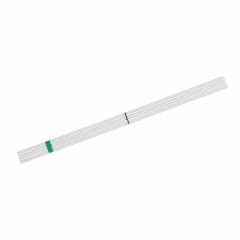
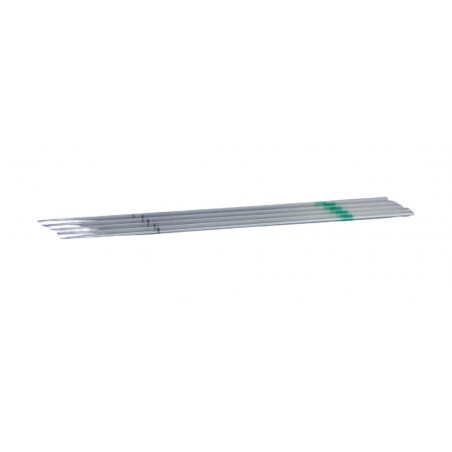
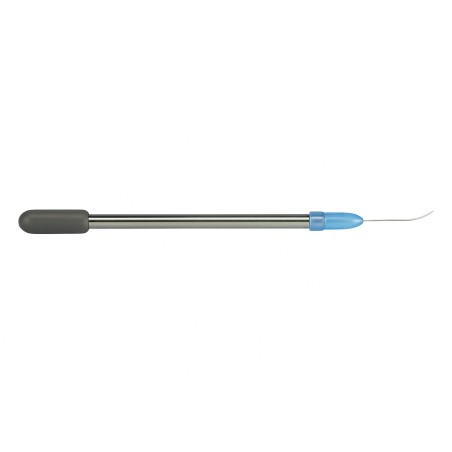
Pack of five HARBO glass tips (Schley 5.01): the delivery part of the HARBO system, the one that touches the queen and through which the semen enters the median oviduct. Glass fire-polished at both ends and drawn to a fine pipette tip, about 30 mm long and 1.5 mm outside diameter; it joins by latex to the 50 (2629) or 100 µl (3270) HARBO capillary. A consumable: five so the session does not stop.
The last millimetre decides the session: a fine, burr-free tip deposits the semen without tearing, and one broken mid-session should not stop you.
01 · WHY FINE AND POLISHED
The semen is deposited in the median oviduct with the queen immobilised and the hooks opening the chamber; the sperm migrate to the spermatheca on their own. A tip drawn like a Pasteur pipette lays the semen gently without pushing too far, and the fire-polished ends remove the cut edge: no burr to scratch the queen and no edge to bite the latex tube.
02 · WHERE IT FITS
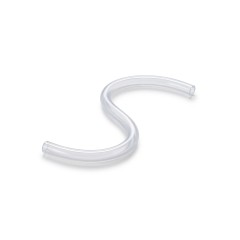
It is the native tip of the HARBO syringe (2214, 2630): it joins by a length of latex to the storage capillary holding the semen, the 50 µl (2629) or the 100 (3270), and the same tip serves both. It is not the Schley system tip, which has another geometry and its own silicone tube (2349). The wire 870 cleans inside the tip.
03 · WHY SHORT
Between stereo microscope, queen holder, hooks and CO₂, a long tip vibrates and knocks. The 30 mm give rigidity and little leverage: it goes to the oviduct with a controlled gesture and comes out without catching anything. It is treated as a consumable and comes in five: spares on the bench before starting.
04 · BEFORE YOU BUY
Five tips are supplied; capillaries, latex, cleaning wire and syringe come separately.
| ✓ FITS | Anyone inseminating with a HARBO syringe restocking the delivery tip, the part changed most often. |
| ✕ DOESN’T FIT | Anyone working with the Schley system: another coupling geometry. |
| ⚠ NOT INCLUDED | Capillaries, latex or syringe. |
| Reference | 5.01 (Schley) |
|---|---|
| Function | Delivery tip of the HARBO system |
| Material | Glass, fire-polished at both ends, drawn to a fine tip |
| Dimensions | About 30 mm; 1.5 mm outside diameter |
| Coupling | Latex to the 50 µl (2629) or 100 µl (3270) HARBO capillary |
| Syringes | HARBO 2214, 2630; not Schley |
| Presentation | Pack of 5, consumable |
| Cleaning | Wire 870 |
| Weight | 0.1 kg |
Write your question
check_circle
check_circle