 Apipasta with vitamins 15kg
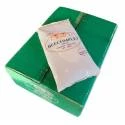 Beecomplet® Spring 14Kg
 Beekeeper suit with round veil
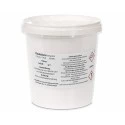 Oxalic acid 1kg
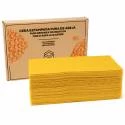 Beeswax Foundation 5kg
 Fresh royal jelly 20g
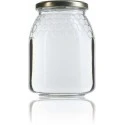 Classic honey jar 1kg comb-lines TO77 - Pack of 16 units
 Promotor L Apis 1 litre

 Share in WhatsApp
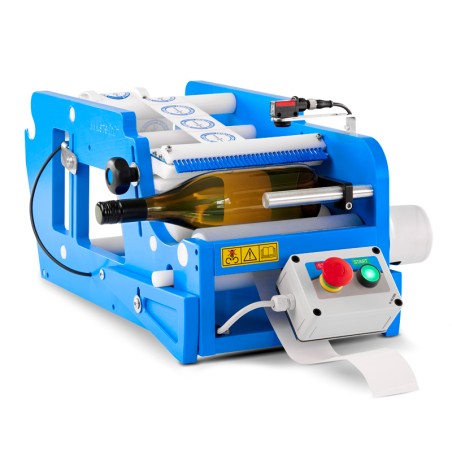
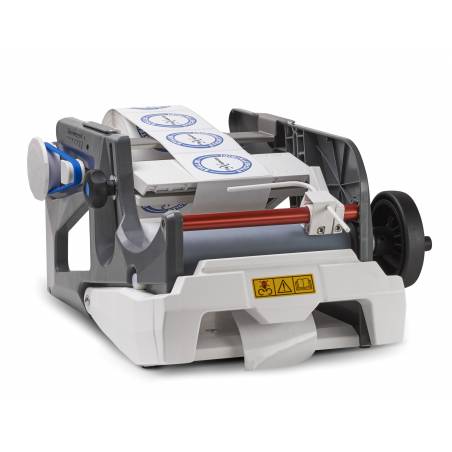
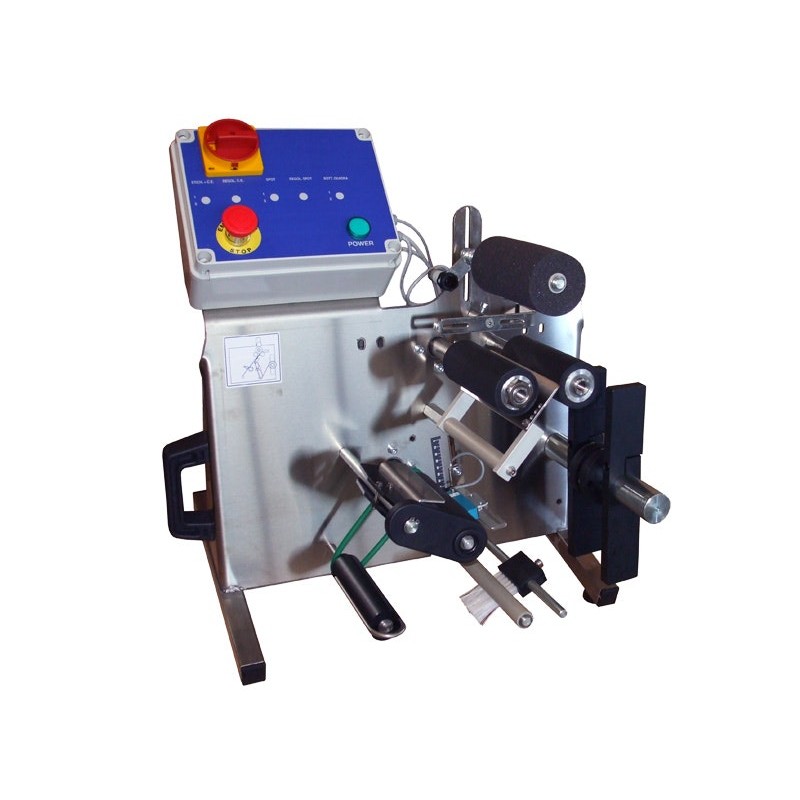
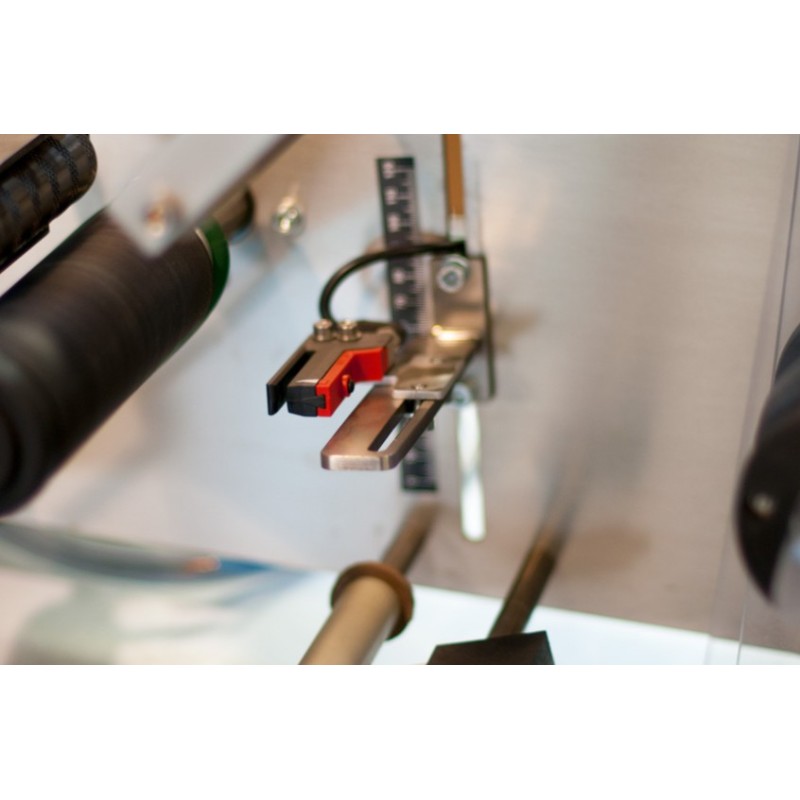
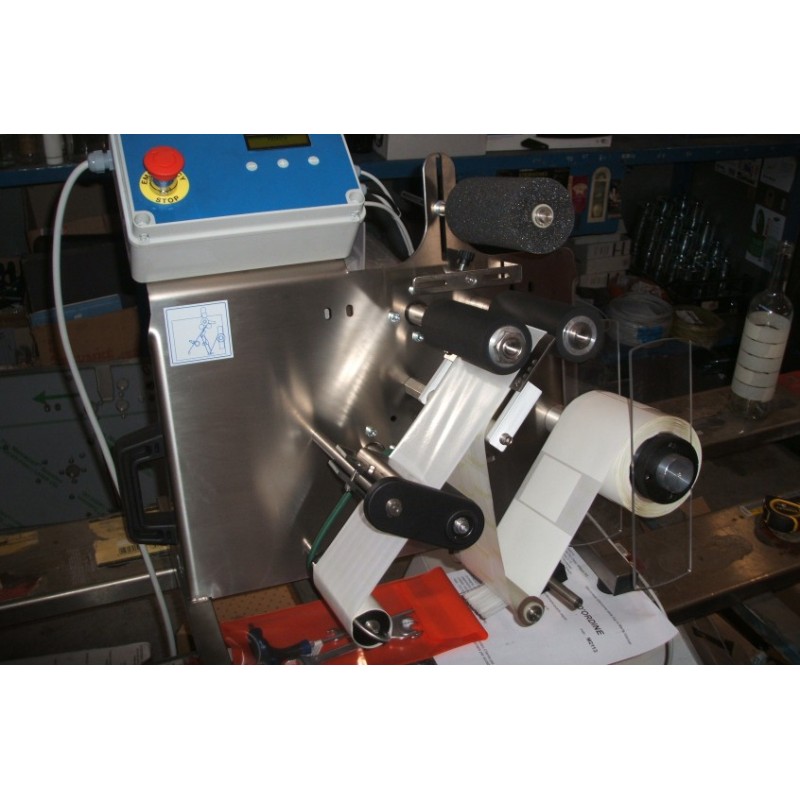
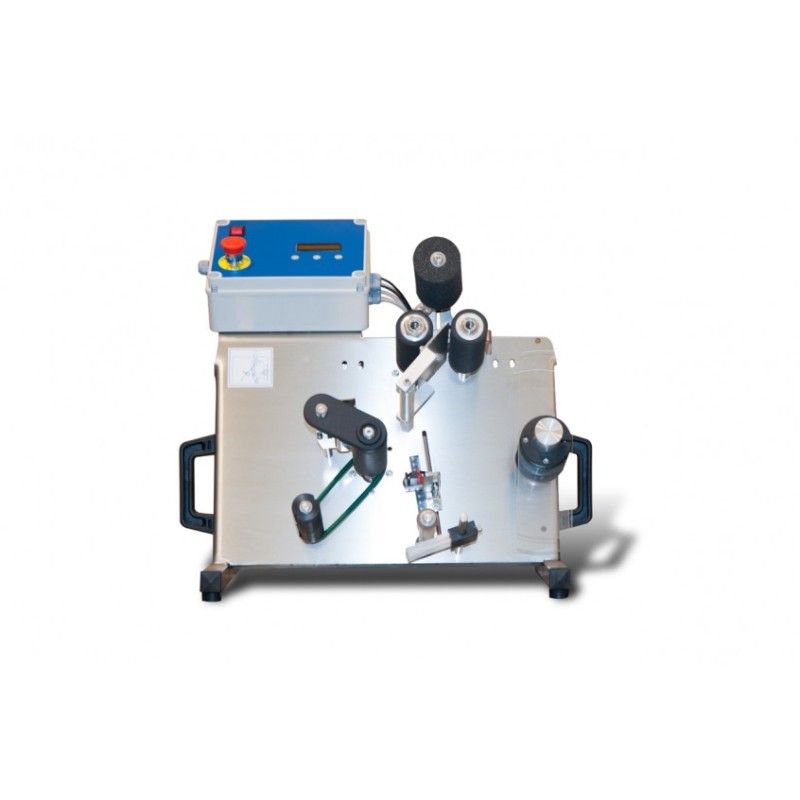
The EKO-10 is a semi-automatic adhesive labeler designed to improve efficiency in labeling glass jars and synthetic containers in your honey house. With this machine, you can apply both the main label and the back label in a single cycle quickly and accurately.
EKO10 semi-automatic labeller: 800 jars an hour, front and back label in the same cycle, and 40 decibels of noise.
Eight hundred jars an hour is not just any figure. It is exactly what the fastest filler in our range delivers in half-kilo jars. The EKO10 is neither oversized nor short: it is in step. Stainless steel frame, 40 kg and 0.2 kW of consumption.
01 · 800 JARS: EXACTLY THE FILLER
Sizing a labeller is easy once you look at what comes before it. If your filler does 800 jars an hour, a labeller rated at 800 is the one that fits: above that you are paying for capacity you will not use.
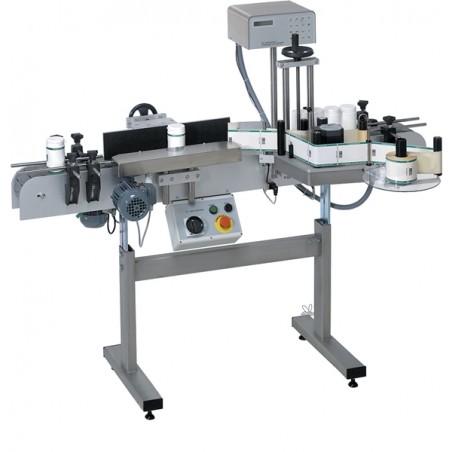
It is semi-automatic, so someone places the jar and takes it off. That is the price of it costing what it costs: the automatic line machine multiplies the figure by eight.
02 · MEASURE THE BODY, NOT THE CAP
The range is Ø 50 to Ø 120 mm, and it refers to the body of the jar, not the mouth. A jar with a TO63 finish can have a body well over 70 mm, and the cap tells you nothing about whether it fits.
Take your container, measure the diameter at its widest and compare it with that range. For square jars there is specific equipment, with sides from 35 to 100 mm.
03 · FRONT AND BACK IN ONE CYCLE
It applies both in the same cycle. On a jar carrying a front and a back label — which is nearly everything sold under a brand — that halves the handling compared with labelling in two passes.
Maximum label height is 140 mm, extendable to 190 as an option. It is a design figure: worth having in front of you before the label goes to the printer, not after.
04 · IT DOES NOT PRINT LOT OR DATE
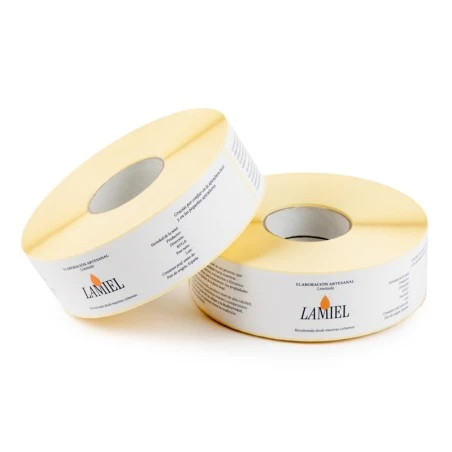
Honey is sold identifying the lot and the minimum durability, and this machine does not print them: they come from whoever makes the label, or from a separate unit. Line labellers do offer a printer as an option.
Knowing that avoids the surprise mid-season. If your label already leaves the printer with a space for the lot, stamping it is still a manual step.
05 · WHERE IT SITS ON THE LADDER
Our range has hand labellers from a little over two hundred euros, another semi-automatic at half what this one costs, and the automatic line machine above twenty-four thousand.
This one sits at the step of someone already bottling in series but not building a chained line. Tell us how many jars you do a year and in what container, and we will tell you which of the three steps is yours.
06 · BEFORE YOU BUY
Measure the body of the jar and the height of your label.
| ✓ A GOOD FIT | Rooms bottling in series: 800 jars an hour, front and back label in the same cycle. |
| ⚠ IT IS SEMI-AUTOMATIC | Someone places and removes the jar. The automatic line machine is another price step. |
| ✕ IT DOES NOT PRINT LOT OR DATE | It applies the label; lot and minimum durability come from the printer or another unit. |
| Type | Adhesive labeller, semi-automatic |
|---|---|
| Output | 800 jars an hour |
| Application | Front and back label in the same cycle |
| Cylindrical jar diameter | From 50 to 120 mm of body |
| Square jar | Sides from 35 to 100 mm, with specific equipment |
| Maximum label height | 140 mm · 190 mm as an option |
| Options | Stamping group and clear label |
| Frame | Stainless steel |
| Dimensions | 550 × 400 × 500 mm |
| Supply | 230 V · 50 Hz · 0.2 kW |
| Noise level | 40 decibels |
| Weight | 40 kg |
| Reference | EKO-10 |
The EKO-10 is a semi-automatic adhesive labeler designed to improve efficiency in labeling glass jars and synthetic containers in your honey house. With this machine, you can apply both the main label and the back label in a single cycle quickly and accurately.
check_circle
check_circle