 Apipasta with vitamins 15kg
 Beecomplet® Spring 14Kg
 Beekeeper suit with round veil
 Oxalic acid 1kg
 Beeswax Foundation 5kg
 Fresh royal jelly 20g
 Classic honey jar 1kg comb-lines TO77 - Pack of 16 units
 Promotor L Apis 1 litre
- To order

 Share in WhatsApp
4 mm PLATE THICKNESS | 140-150 °C WORKING TEMPERATURE |
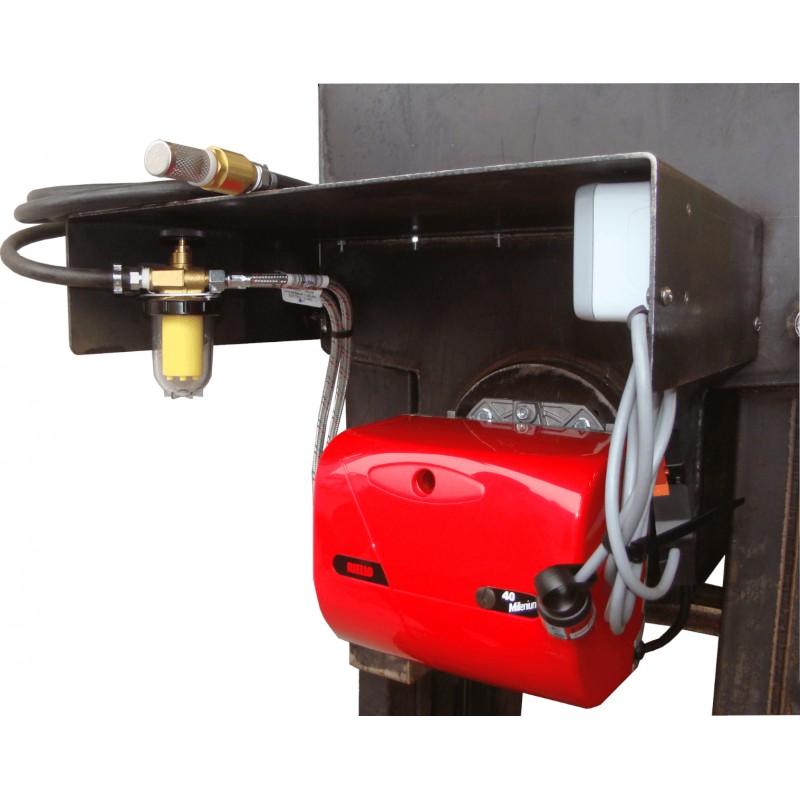
Diesel BURNER INCLUDED | 15+ years HIVE LIFESPAN |
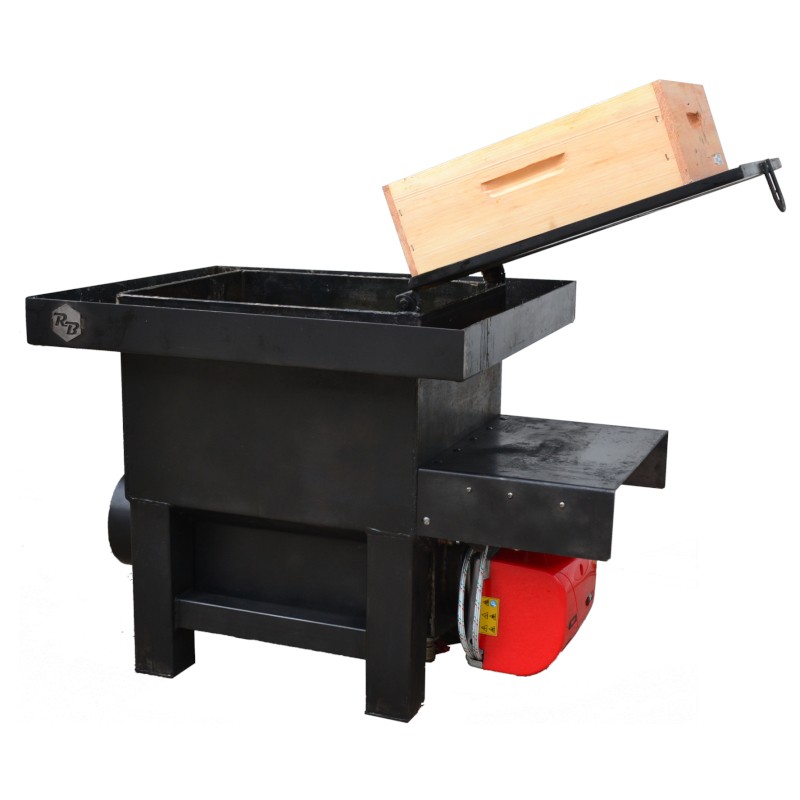
Carbon steel dipping tank in 4 mm plate, with a diesel burner included, for treating brood boxes, supers, floors and roofs by immersion in hot paraffin.
It is the kit behind the treatment that extends a hive's life the most —the timber comes out saturated from within, not painted on the outside— and the tool you sanitise woodenware with when a disease problem turns up.
01 · WHY A TANK
Paraffin dipping lives inside a narrow window. Below 130 °C the paraffin does not penetrate and stays on the surface; above 180 °C it starts to break down. The useful band is 140-150 °C, and it has to be held while cold pieces go in and out. That is what justifies the 4 mm plate: the mass of the steel keeps the temperature from collapsing every time you lower in a cold brood box.
02 · THE TWO JOBS
The first one is well known: at 140-150 °C, 5 to 10 minutes per piece until the bubbles stop —the sign that the wood is saturated— and a properly dipped hive lasts over 15 years against the usual 4-5 with paint. The second matters more than it looks: holding the bath at 150 °C for 10 minutes or more destroys Paenibacillus larvae spores, American foulbrood; below that temperature, or for less time, they survive. That is the reason to own a tank: woodenware has to be sanitised when the problem shows up, not when a slot opens in someone else's queue.
03 · THE WORKING DAY
Bringing the tank from cold up to temperature takes an hour and a half to two hours, so you do not fire it up for one box but for a full day. Everything is stripped down first and the pieces go through one after another, draining vertically on the side rest —that is what it is for— and cooling in the air. What drips back returns to the bath, so the real consumption per hive is lower than the initial charge suggests.
04 · LINSEED OIL TOO
The tank also takes hot linseed oil, for anyone who prefers a finish that still shows the grain. But linseed oil feeds the wood and repels water without sealing the pore, and it has no sanitary effect: if the goal is to disinfect, the treatment is paraffin.
05 · BEFORE YOU BUY
Two conditions that are not negotiable. The wood goes in dry, below 18 % moisture: any water left inside flashes off against paraffin at 140 °C, so store it two or three weeks under cover. And nothing plastic goes into the tank. Write to us before ordering to confirm internal dimensions and capacity: that is what decides whether your supers go in one at a time or two.
| ✓ FITS | Operations that renew woodenware in batches, and anyone who needs to sanitise wooden boxes and supers after a disease problem. |
| ✕ DOESN'T FIT | Treating a handful of hives a year, plastic equipment, and frames with wax or drawn comb on them. |
Thermometer always, and never unattended. Heating is by diesel burner, a direct flame under the plate: it can take the bottom past 180 °C without the bath showing it, and more so if the paraffin level is low. Top it up before it drops, not after.
Water, never. Not nearby and not to put a fire out: in hot paraffin it boils instantly and throws burning paraffin. Keep an extinguisher rated for fats and oils to hand.
With linseed oil, mind the rags. Cloths soaked in linseed oil heat up on their own as they oxidise and can catch fire without a flame: spread them out to dry or soak them in water before throwing them away.
| Reference | CUBACQUEMA |
|---|---|
| Material | Carbon steel |
| Plate thickness | 4 mm |
| Heating | Diesel burner, included |
| Draining | Side rest for dripping after the bath |
| Treatments | Paraffin or linseed oil |
| Working temperature | 140-150 °C with paraffin |
| Immersion | 5-10 min per piece, until the bubbles stop |
| Time to temperature | 1.5 to 2 h from cold |
| Weight | 60 kg |
check_circle
check_circle