 Apipasta with vitamins 15kg
 Beecomplet® Spring 14Kg
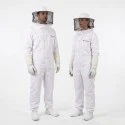 Beekeeper suit with round veil
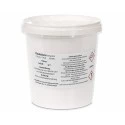 Oxalic acid 1kg
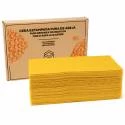 Beeswax Foundation 5kg
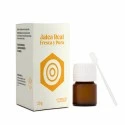 Fresh royal jelly 20g
 Classic honey jar 1kg comb-lines TO77 - Pack of 16 units
 Promotor L Apis 1 litre

 Share in WhatsApp
The BroodMinder-Cell Hub is the heart of the BroodMinder monitoring system, allowing you to monitor your hives in real-time, anytime, from anywhere. Designed to gather data from all your BroodMinder devices (such as hive scales and brood temperature sensors), this hub connects to the cellular network and sends live updates directly to your smartphone or computer via the BroodMinder Bees app and MyBroodMinder.com. If you’re looking to take control of your hive’s health without needing to physically visit the apiary every time, this hub offers the convenience and peace of mind of remote access.
Each apiary requires its own hub to gather and transmit data from the monitored hives in that location. If you have multiple apiaries with monitored hives, you will need one hub per apiary to consolidate the data.
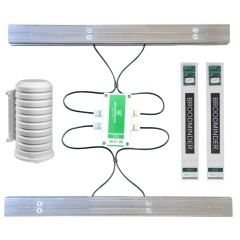
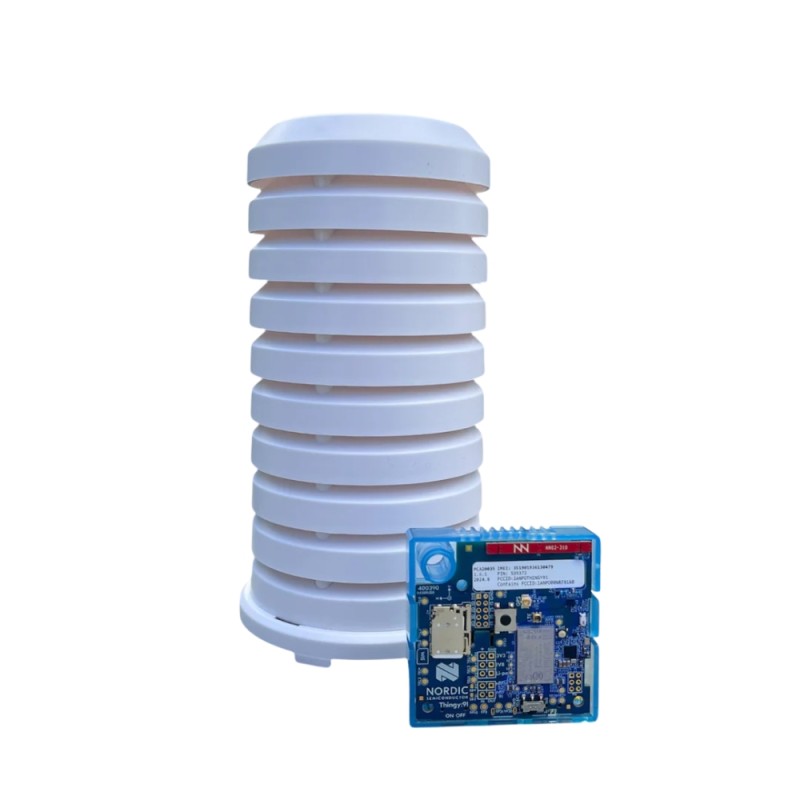
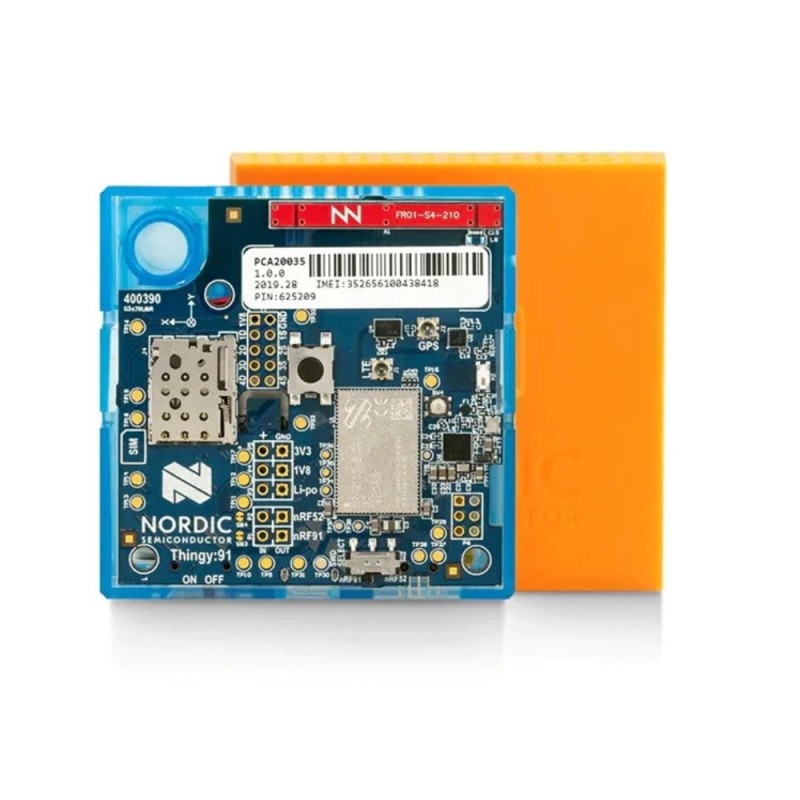
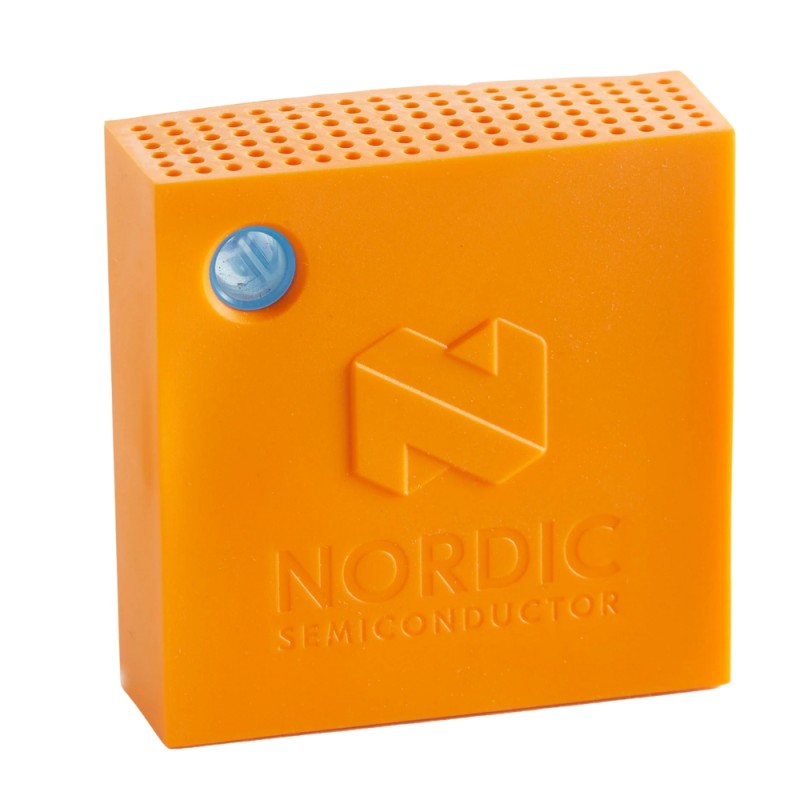
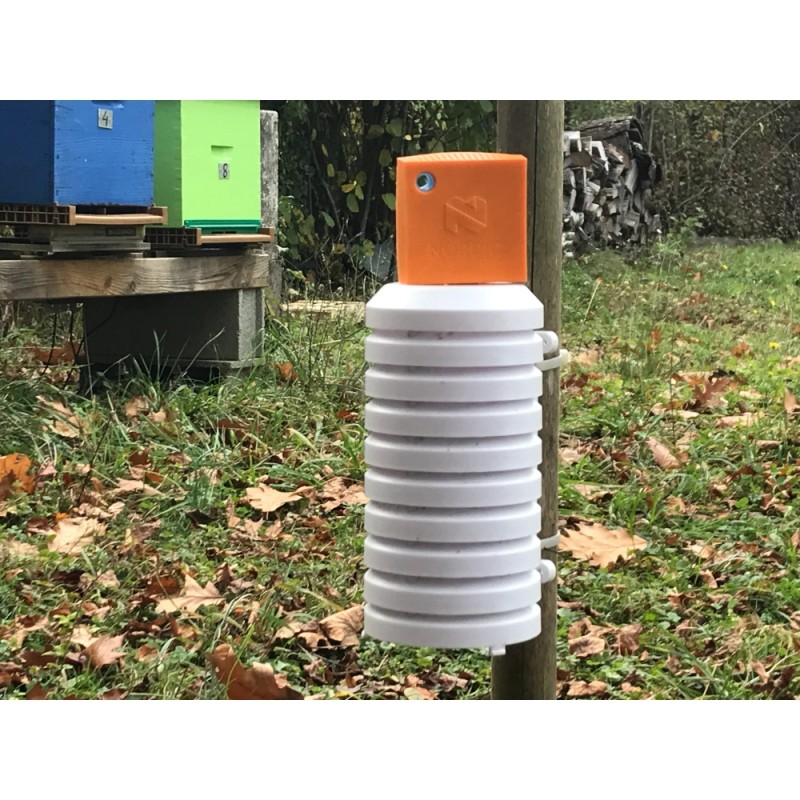
BroodMinder-Cell hub with built-in weather station. Collects data from the BroodMinder devices in your apiary and sends it over 4G to the app and the web. It also records ambient temperature, humidity and atmospheric pressure.
The hub on its own measures nothing. It is the part that transmits: the measuring is done by the scales and sensors, which are separate.
01 · WHAT ELSE YOU NEED
The hub is the bridge between the devices and your phone. Without at least one BroodMinder scale or one brood sensor fitted to a hive, there is nothing to send.
The maker's recommendation for representative data is to equip 3 or 4 hives in an apiary of 30-50. There is no need to instrument them all: you are after the apiary's trend, not the detail of every colony.
02 · WHAT THE WEIGHT CURVE TELLS YOU
A scale is not there to tell you how much honey you have, but to let you read the shape of the curve. The daytime rise marks nectar coming in; the night-time fall is the water the bees evaporate to ripen it.
And two signals show from a distance: a sharp drop of several kilos in broad daylight is a swarm that has left, and a curve that flattens for days means the flow is over. Those two decide whether you go to the apiary tomorrow or next week.
03 · BROOD NEST TEMPERATURE
A colony holds its brood nest at around 34.5 °C with remarkable precision, because larval development depends on it. A sensor placed in the nest records that stability.
When the temperature stops being regulated and drifts towards ambient, there is no longer brood to keep warm. It is an early, objective signal that something has happened inside, long before it shows from the outside.
04 · PRESSURE AND THE WEATHER
The station records ambient temperature, humidity and atmospheric pressure. The first two explain why a given day did or did not bring nectar in; the third is the one that tends to surprise.
Bees react to a falling barometer ahead of a storm and cut back foraging. Cross the weight curve with the pressure curve and a lot of flat days stop looking like a problem with the colony.
05 · IT DOES NOT REPLACE THE INSPECTION
This is telemetry, and its limit is worth stating plainly: it does not see varroa, it does not see foulbrood and it does not see the state of the queen. What it does is tell you which hive to go to first and save you wasted trips.
Used that way — to prioritise visits and to understand the season afterwards — it is a serious tool. Used as a substitute for opening the hive, it is not.
06 · BEFORE YOU BUY
The hub is half the system. Check which BroodMinder devices you have or plan to fit, and ask us about the terms of the 4G connection.
| ✓ RIGHT FIT | Following the trend of an instrumented apiary without travelling to it. |
| ✕ WRONG FIT | Buying it alone: with no scales or sensors it has nothing to send. |
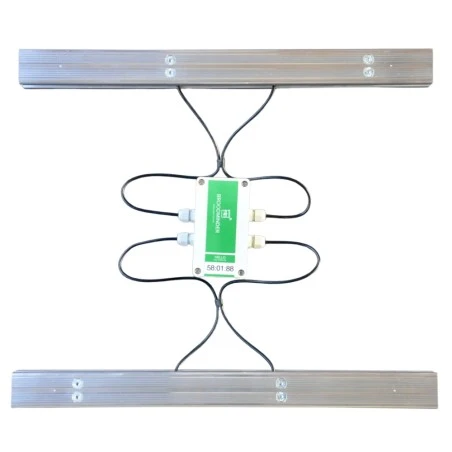
| ⚠ NOT INCLUDED | Scales, brood sensors or hive stand. |
| Reference | BRM_54_WEATHER |
|---|---|
| Function | Collect data from BroodMinder devices and transmit it |
| Connection | Automatic 4G, to the operator with the best coverage |
| Access | BroodMinder mobile app and website |
| Weather station | Temperature, humidity and atmospheric pressure |
| Devices required | BroodMinder scales and/or brood sensors |
| Recommended coverage | 3-4 hives equipped per 30-50 in the apiary |
| Weight | 300 g |
Specific References
The Hub 4G is the master key to remote monitoring. Inside this small box are years of work to tackle one of the biggest challenges in beekeeping monitoring: connectivity.
Beekeepers are experts at finding remote locations, making it a complex task to ensure a stable signal. We've spent three years optimizing the firmware of the T91 to minimize power consumption, connect to multiple networks and operators, and be as robust as possible.
And if you find yourself on the edge of coverage, we’ve worked to provide advanced metrics to help you optimize the signal and stay on the right side of the red line. ?
The BroodMinder-Cell Hub is the heart of the BroodMinder monitoring system, allowing you to monitor your hives in real-time, anytime, from anywhere. Designed to gather data from all your BroodMinder devices (such as hive scales and brood temperature sensors), this hub connects to the cellular network and sends live updates directly to your smartphone or computer via the BroodMinder Bees app and MyBroodMinder.com. If you’re looking to take control of your hive’s health without needing to physically visit the apiary every time, this hub offers the convenience and peace of mind of remote access.
Each apiary requires its own hub to gather and transmit data from the monitored hives in that location. If you have multiple apiaries with monitored hives, you will need one hub per apiary to consolidate the data.