 Apipasta with vitamins 15kg
 Beecomplet® Spring 14Kg
 Beekeeper suit with round veil
 Oxalic acid 1kg
 Beeswax Foundation 5kg
 Fresh royal jelly 20g
 Classic honey jar 1kg comb-lines TO77 - Pack of 16 units
 Promotor L Apis 1 litre

 Share in WhatsApp
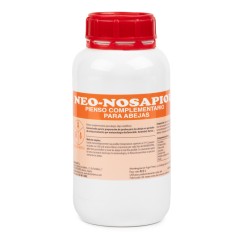
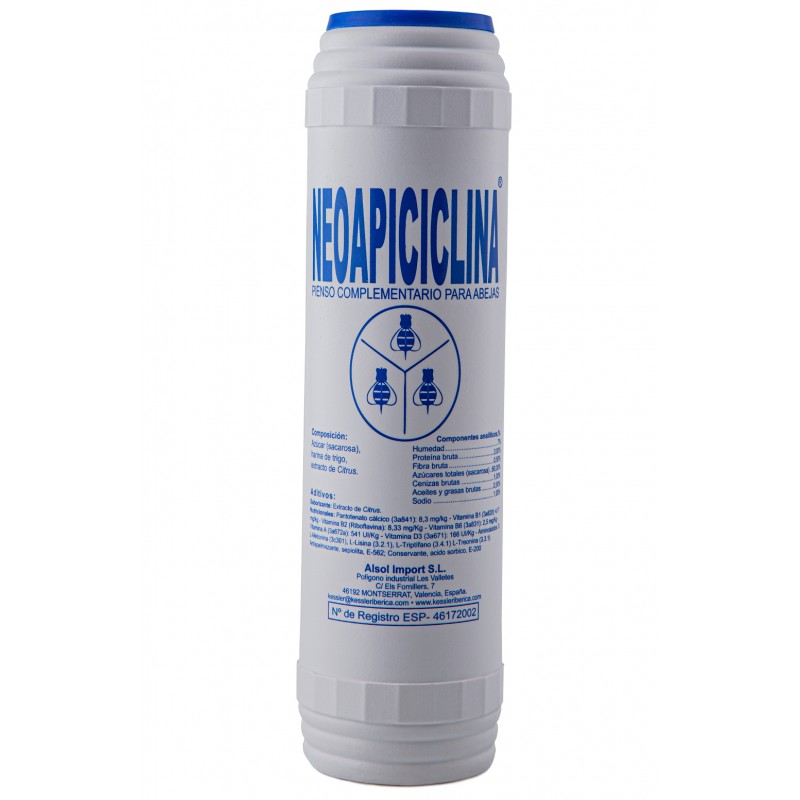
COMPLEMENTARY FEED | 500 g PACK |
Powder based on sugar, wheat flour, plant extracts and vitamins, dusted over the frames or added to syrup and candy at the times when the colony is under most strain.
It is feeding, not health care. Worth being clear from the start.
01 · WHAT IT ACTUALLY IS
Whatever the name suggests, there is no antibiotic or veterinary active here: it is a complementary feed for bees. The raw materials are sugar (sucrose) and wheat flour; the additives are a botanically defined natural product with plant extracts — 80 mg of flavonoids per 100 g, per the manufacturer — plus a vitamin complex (calcium pantothenate, B1, B2, B6, A and D3) and silicon dioxide as an anti-caking agent. Not being a medicine, it needs no prescription and does not go in the treatment record.
02 · WHEN IT MAKES SENSE
There are moments in the year when a colony spends more than comes in and the balance suffers: the start of brood rearing, before the flow is enough; a sudden halt in the flowering mid-build-up; and getting ready for winter. That is where a feed of this kind helps, the same way syrup or candy helps. What it is not is an answer to a health problem already declared — that has another route, further down.
03 · HOW IT IS APPLIED
Per the manufacturer's sheet, you dust about 20 g (two tablespoons) per hive over the frames and the bees, repeated three times at seven-day intervals to cover two full generations of open brood. It can also enrich syrup at three tablespoons per litre, making up only what the bees will take there and then; and candy, at the same rate per kilo. Two notes from people who use it: dusting with a single hole uncovered makes the job far cleaner, and brushing over the top bars afterwards keeps the frames from being left dusty.
04 · WHAT IT DOES NOT DO
This needs saying plainly, because the name misleads and we get enquiries along those lines: Neoapiciclina does not treat American or European foulbrood, does not treat varroosis, does not treat nosemosis and does not treat chalkbrood. It is not an antibiotic, it does not replace one and it must not be used as though it were. A well-fed colony rides out a lean spell better, but feeding is not treating, and trusting a clinical picture to a complementary feed only burns the time that actually matters.
SUSPECT FOULBROOD? REPORT IT
American and European foulbrood are notifiable diseases. Faced with suspicious brood — sunken or perforated cappings, discoloured larvae, an odd smell, ropy remains — the correct route is to call your vet, your health association or the competent authority, not to buy a supplement or reach for antibiotics on your own. Antibiotic use in hives requires veterinary prescription and has consequences for the honey.
05 · BEFORE YOU BUY
It comes in a 500 g pack, enough for several hives and several repeats. If you work in organic beekeeping, ask us first: we have been asked, and we would rather confirm in writing what the manufacturer's documentation says than assume it. And store it like any powdered feed — dry, closed and away from damp, which is what cakes the product and makes dusting awkward.
| LTA reference | 070113 |
|---|---|
| Legal category | Complementary feed for bees |
| Manufacturer | Kessler Ibérica |
| Pack | 500 g |
| Raw materials | Sugar (sucrose) and wheat flour |
| Additives | Plant extracts (80 mg flavonoids/100 g), vitamins and E551 |
| Vitamins | Calcium pantothenate, B1, B2, B6, A, D3 |
| Prescription | Not applicable — not a medicine |
| Organic beekeeping | Ask us and we will confirm it |
1 file available

check_circle
check_circle