 Apipasta with vitamins 15kg
 Beecomplet® Spring 14Kg
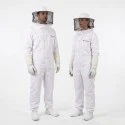 Beekeeper suit with round veil
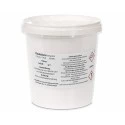 Oxalic acid 1kg
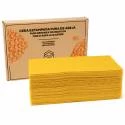 Beeswax Foundation 5kg
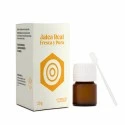 Fresh royal jelly 20g
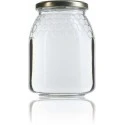 Classic honey jar 1kg comb-lines TO77 - Pack of 16 units
 Promotor L Apis 1 litre
- Out of stock

 Share in WhatsApp
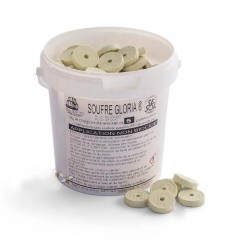
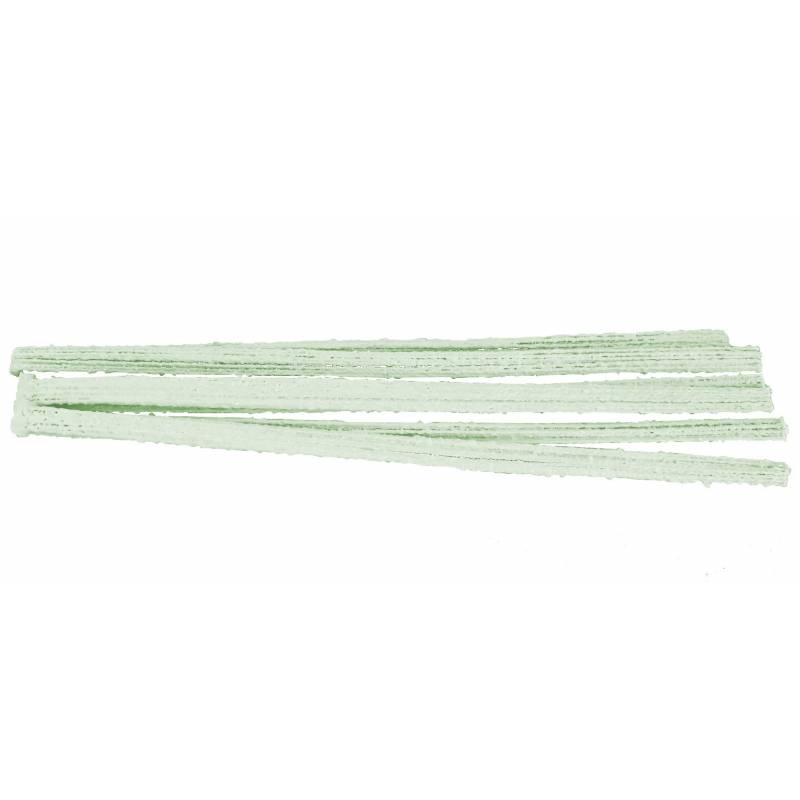
500 g ONE CONTINUOUS STRIP | 60-100 g PER m³ OF CHAMBER |
Pressed sulphur for disinfecting the combs and supers you have already extracted and are about to store. It is a storeroom treatment, never for a hive with bees.
The 500 g come as a continuous strip you cut to whatever length you need: what counts is the weight, not the number of pieces.
01 · HOW IT BURNS
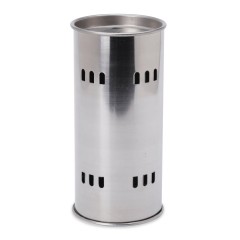
The strip burns fast and with a flame, so it lies flat in a metal or ceramic dish that can take fire, supported along its whole length and with clear space around it. And there is one rule that changes the outcome: the gas that does the work, sulphur dioxide, is heavier than air and sinks on its own. So the strip is lit at the top of the space — above the stack of supers, not below it — and then the chamber, drum or box is closed. Lighting it at the bottom leaves half the volume untreated.
02 · DOSE AND REPEAT
The working figure is 60-100 g per m³ of enclosed space. And here is what decides whether the treatment was worth anything: the smoke kills larvae and adults, but not eggs. Any eggs already laid hatch afterwards, so you must repeat after 10-14 days to catch those larvae, and every 2-3 weeks while the warmth lasts. Between treatments keep the material isolated — closed drum, bag, sealed chamber — or the moth lays again and you start over.
03 · WHAT IT TOUCHES
It is for extracted, empty combs, above all those that have held brood or pollen, which is what the moth is after. Never over capped or unextracted honey: sulphur changes its taste. And a fact hardly any datasheet gives: SO₂ is corrosive to metal parts, so frame wire, nails, fittings and metal floors show the wear of repeated treatments — take out what you can and expect it. Before returning combs to the hive, air them for at least 24 h.
PRECAUTIONS
Sulphur smoke is toxic and irritating to airways and eyes, and sulphur burns with a flame. Wear respiratory protection and gloves, light the strip from outside the closed space, do not go in until it has been ventilated, and keep children and animals away. Never inside a hive with bees, and never in a room without an air outlet.
04 · BEFORE YOU BUY
Sulphur does not replace what actually prevents the problem: a colony with its volume matched to its strength, pollen-bearing combs kept out of reach, and regular wax renewal. And if you have a freezer, cold breaks the whole cycle, eggs included, which sulphur does not. It is also used outside beekeeping, to cure barrels and disinfect fermentation vessels.
| ✓ FITS | A chamber, drum, sealed box or empty hive where you store extracted combs and supers. |
| ✕ DOES NOT FIT | Hives with bees, capped or unextracted honey, and rooms without ventilation. |
| LTA reference | 030106 |
|---|---|
| Format | 500 g box · continuous strip, cut to size |
| Guide dose | 60-100 g per m³ of enclosed space |
| Placement | Fireproof dish, in the upper part of the space |
| Repeat | After 10-14 days · every 2-3 weeks while it stays warm |
| On eggs | No effect: hence the repeat |
| Airing | At least 24 h before combs go back to the hive |
| Other uses | Curing barrels and disinfecting fermentation vessels |
1 file available

check_circle
check_circle