 Apipasta with vitamins 15kg
 Beecomplet® Spring 14Kg
 Beekeeper suit with round veil
 Oxalic acid 1kg
 Beeswax Foundation 5kg
 Fresh royal jelly 20g
 Classic honey jar 1kg comb-lines TO77 - Pack of 16 units
 Promotor L Apis 1 litre

 Share in WhatsApp
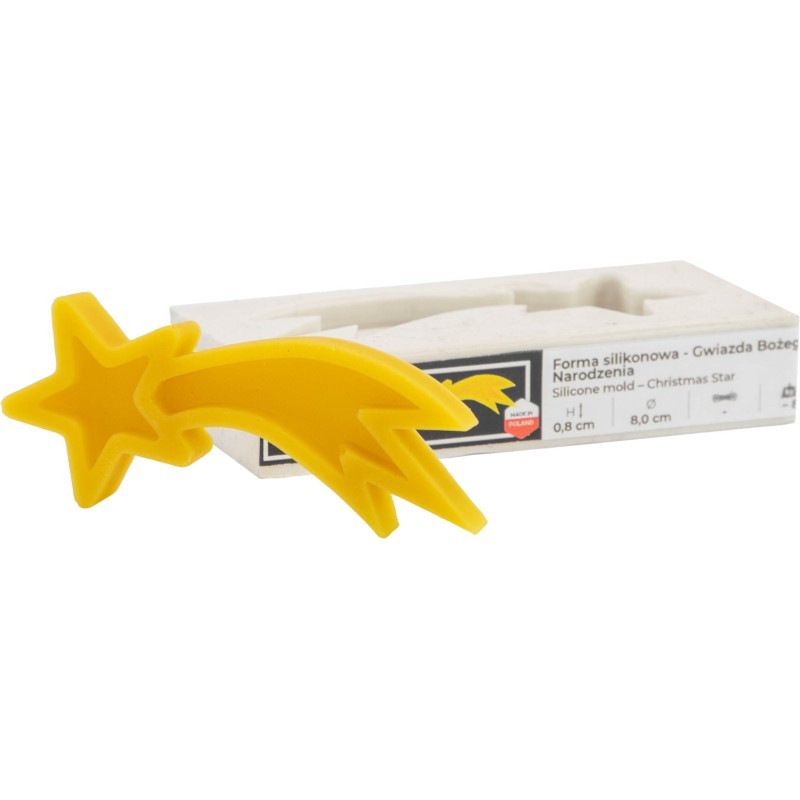
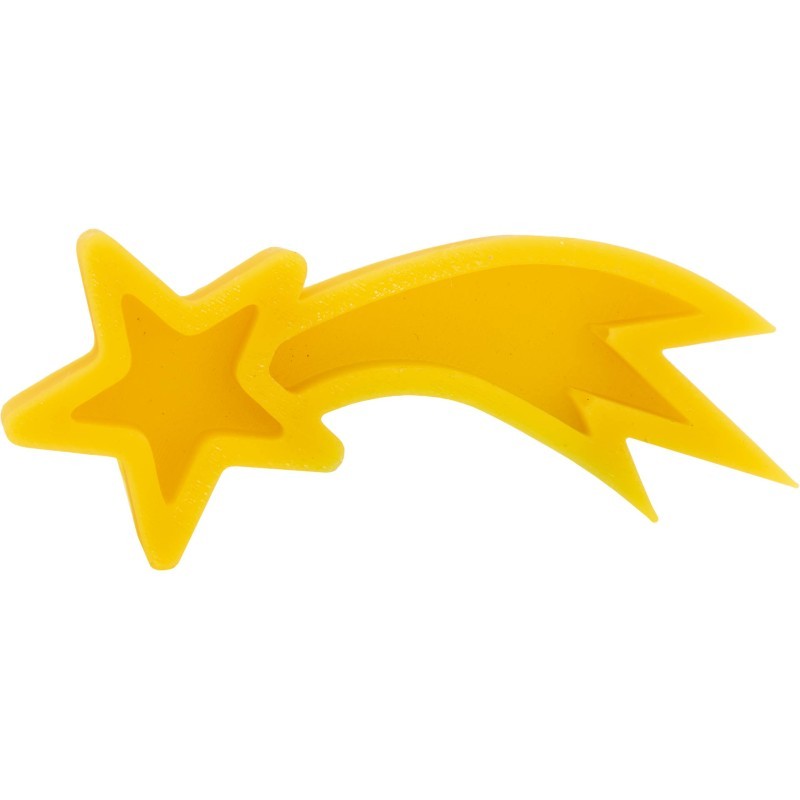
Silicone mould for a flat Christmas star with a tail: 8 cm long, 8 mm thick and about 8 g of wax.
The nativity star, with its comet tail, in a piece that uses very little wax: about 125 stars per kilo, going by LYSON’s grams.
01 · AN OPEN MOULD
According to the LYSON catalogue it is a mould without a slit: the cavity is open and filled from above, so there is no need to close it with rubber bands. LYSON assigns it no wick either, because at 8 mm thick it is not a candle: it is a decoration for the nativity stable, the table or a parcel.
02 · POURING AND UNMOULDING
Beeswax is poured at 70-75 °C: it melts at 62-65 and darkens above 85 °C. Fill to the brim in one go, let it cool without moving the mould and unmould cold, flexing the silicone outwards. The points of the tail are the thinnest part of the star and the first to snap if you pull.
03 · BEFORE YOU BUY
The mould comes on its own. It also takes soy, paraffin, ceramic plaster or resin, and a mould used with wax does not go back to the kitchen: LYSON does not intend it for food.
| ✓ FITS | Nativity decorations in batches: about 125 stars per kilo of wax. |
| ✕ DOESN'T FIT | Anyone after a candle: it has no wick and is 8 mm thick. |
| ⚠ NOT INCLUDED | Wax or release spray. |
| Reference | FS623 |
|---|---|
| Design | Christmas star with a tail |
| Finished piece | 8 cm long × 8 mm thick |
| Wax per piece | About 8 g, some 125 per kilo |
| Wick | No wick: a decorative piece |
| Mould type | No slit; filled from above, no bands |
| Pouring temperature | 70-75 °C |
| Material | Flexible silicone; not for food use |
Data sheet
Specific References
Write your question
check_circle
check_circle