 Apipasta with vitamins 15kg
 Beecomplet® Spring 14Kg
 Beekeeper suit with round veil
 Oxalic acid 1kg
 Beeswax Foundation 5kg
 Fresh royal jelly 20g
 Classic honey jar 1kg comb-lines TO77 - Pack of 16 units
 Promotor L Apis 1 litre

 Share in WhatsApp
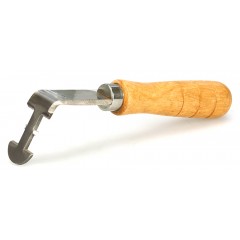
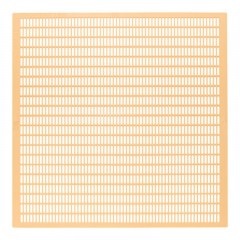
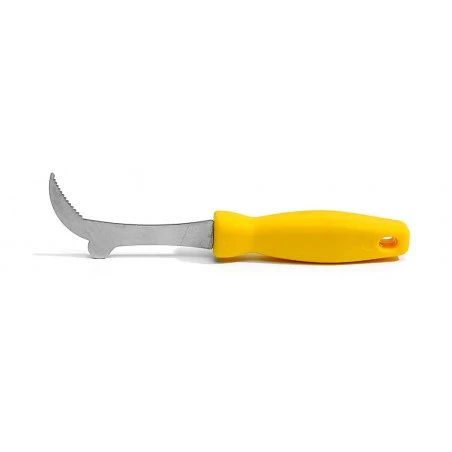
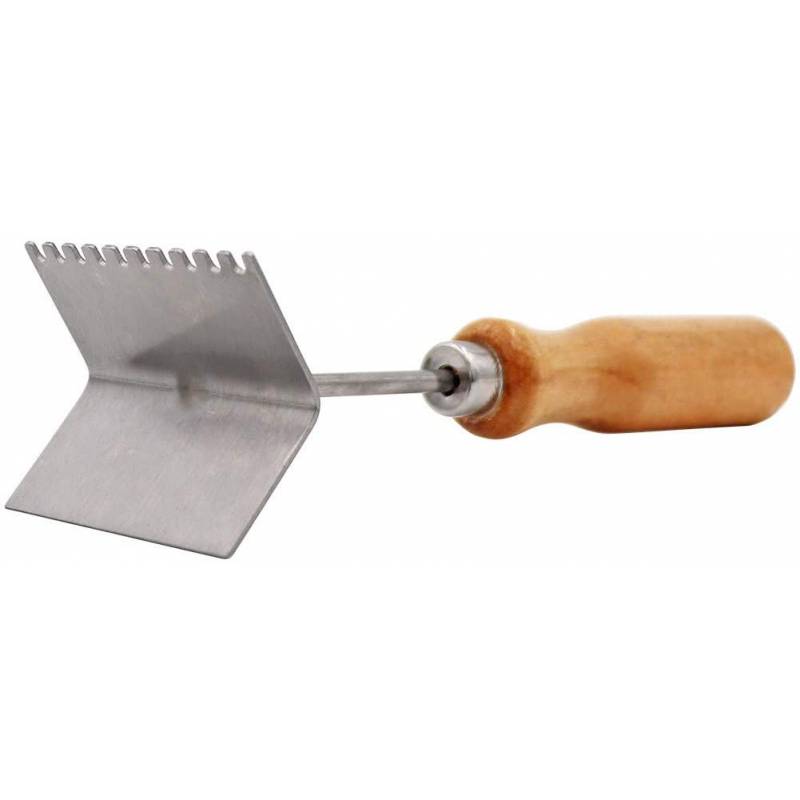
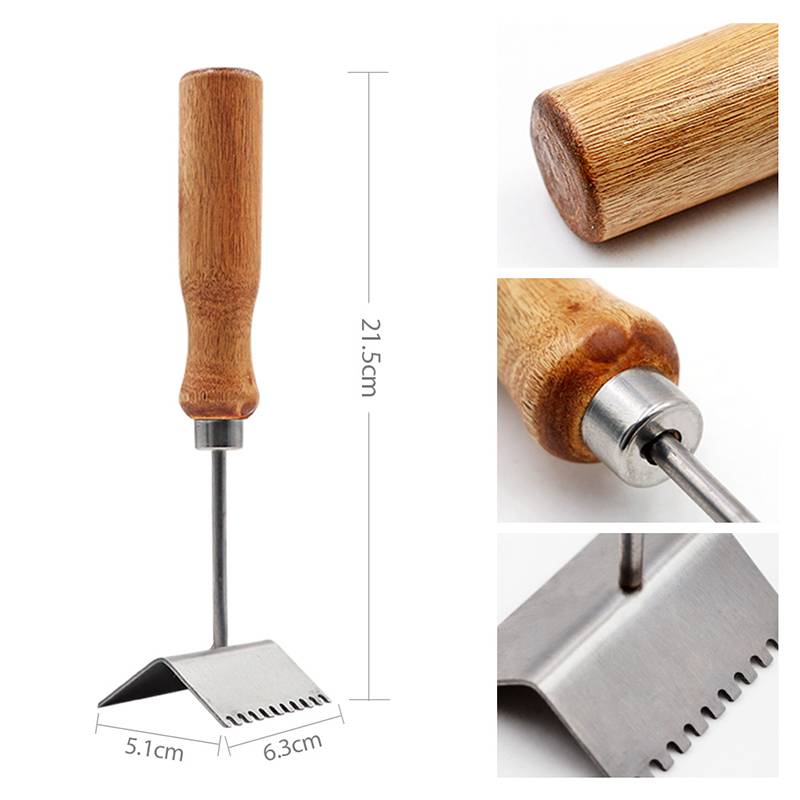
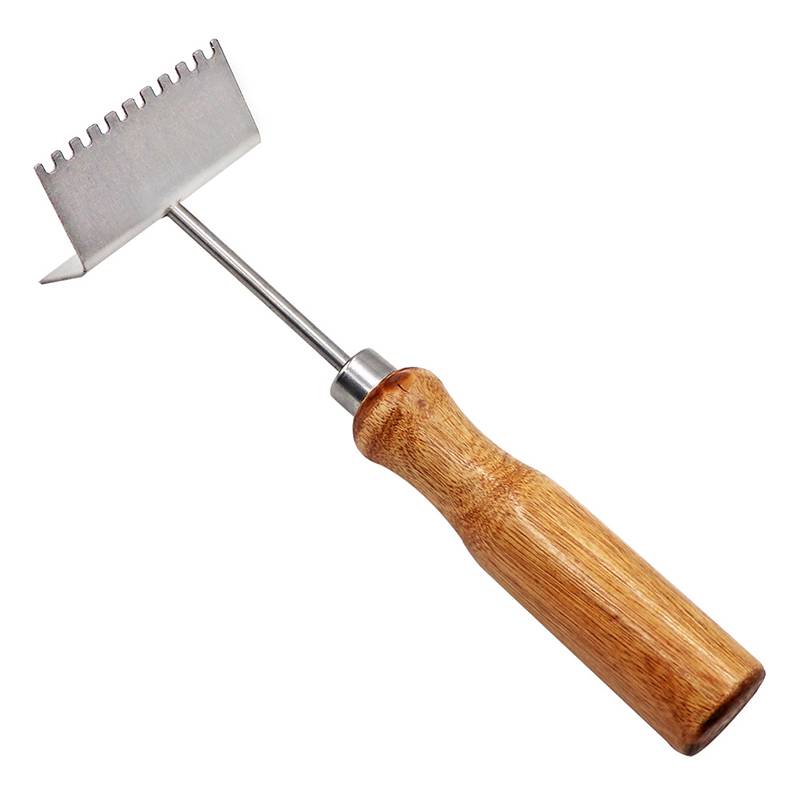
Stainless steel scraper with a wooden handle and a 6.2 cm blade, profiled to work between the wires of a metal queen excluder.
A dirty excluder stops being an excluder and becomes a stop. And you do not see it from outside: you notice it because the honey is not going up.
01 · WHY IT NEEDS CLEANING
An excluder works on a difference of millimetres: the worker gets through and the queen does not. Being a compulsory passage, the bees propolise it and wax builds up on the wires, so that gap keeps closing. Once it narrows enough, the workers cross less and less willingly — and the blame gets put on the flow.
02 · HOW TO SCRAPE IT
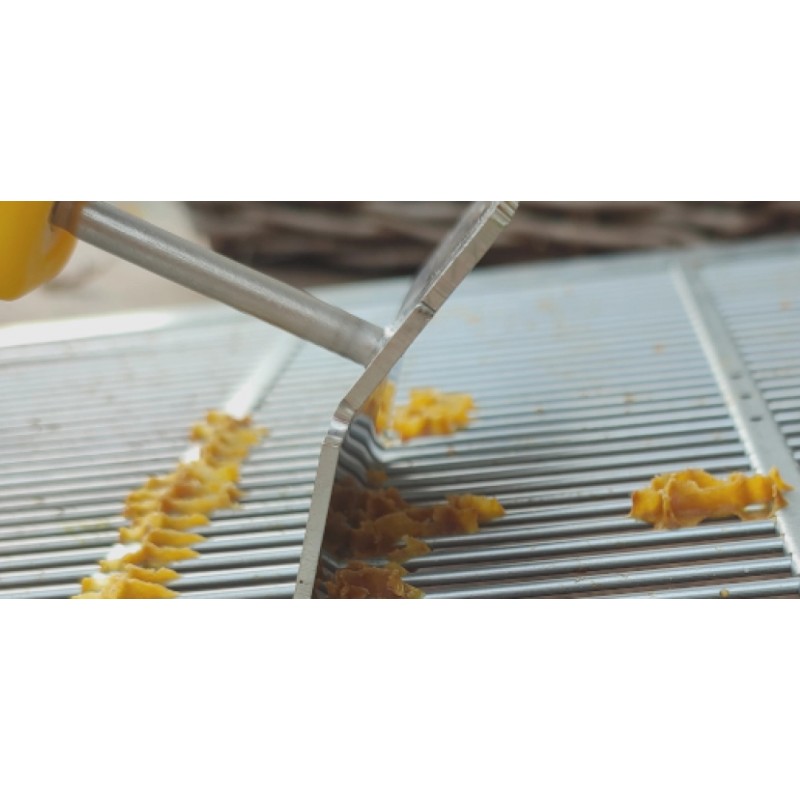
With the excluder cold and laid flat, drag along the line of the wires, never across them: crossways the blade spreads them and throws off the very gap you were protecting. The short blade goes between wire and wire without forcing. If the wax is soft from the sun, let it cool.
03 · METAL ONLY
On a plastic excluder the steel scores and deforms the slots, and once opened up they no longer do their job. For those there are plastic combs with teeth cut to the grid. Check what yours is made of before you start: it is a mistake with no way back.
04 · BEFORE YOU BUY
Its place is the end-of-season overhaul, with the excluders off the hives and on the bench.
| ✓ FITS | Metal queen excluders, whether wire or punched sheet. |
| ✕ DOESN'T FIT | Plastic excluders, which the steel scores and deforms. |
| Material | Stainless steel with wooden handle |
|---|---|
| Blade | 6.2 cm |
| Use | Cleaning metal queen excluders |
| Reference | CL02 |
Data sheet
check_circle
check_circle