 Apipasta with vitamins 15kg
 Beecomplet® Spring 14Kg
 Beekeeper suit with round veil
 Oxalic acid 1kg
 Beeswax Foundation 5kg
 Fresh royal jelly 20g
 Classic honey jar 1kg comb-lines TO77 - Pack of 16 units
 Promotor L Apis 1 litre

 Share in WhatsApp
900 L/h NOMINAL: ABOUT 1,250 KG/H OF FLUID HONEY | 370 W AT 230 V SINGLE-PHASE: ANY SOCKET IN THE HONEY HOUSE |
DRIVE VARIABLE SPEED: FROM TRANSFER TO FINE FILLING | 30 kg ON A WHEELED TROLLEY |
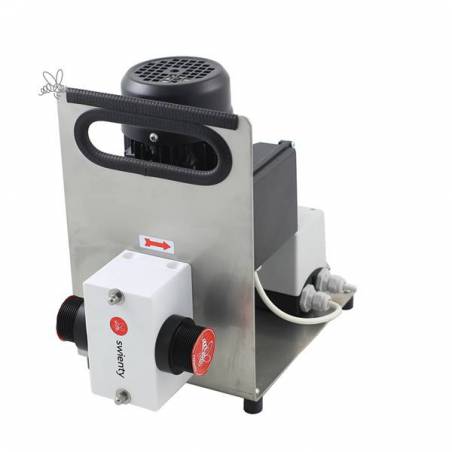
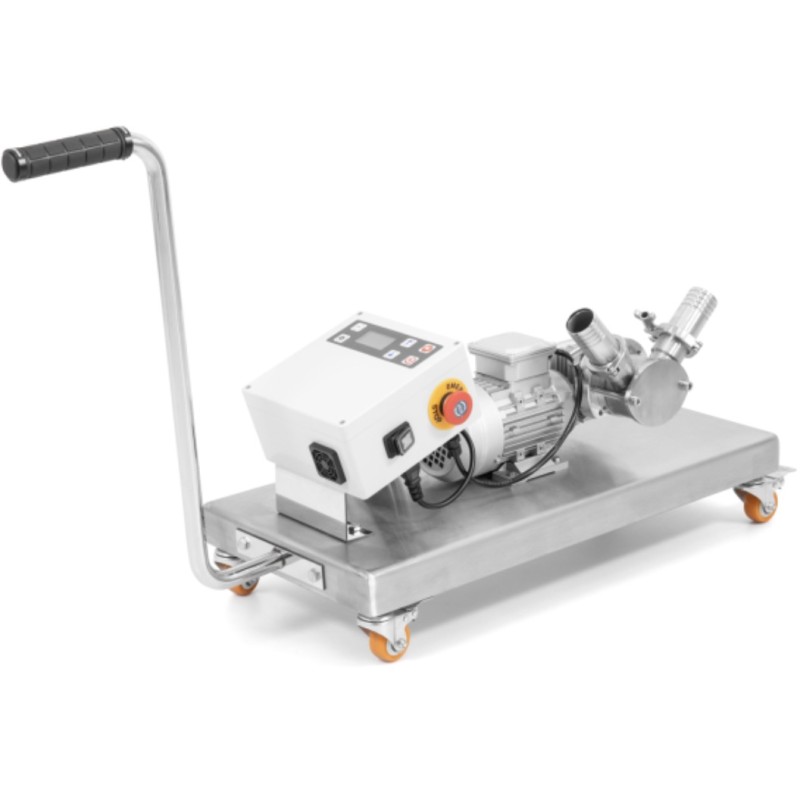
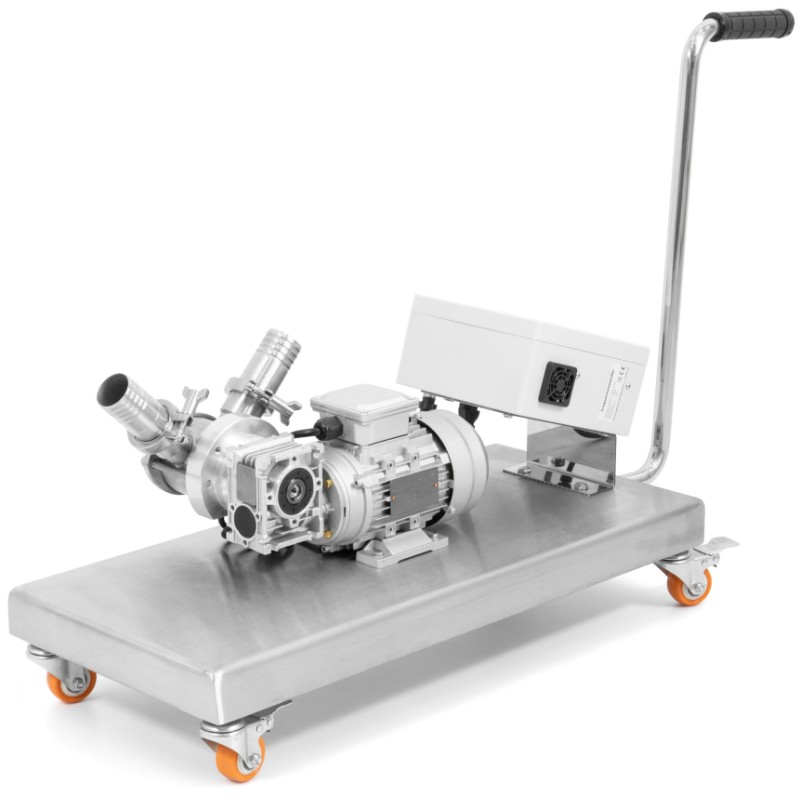
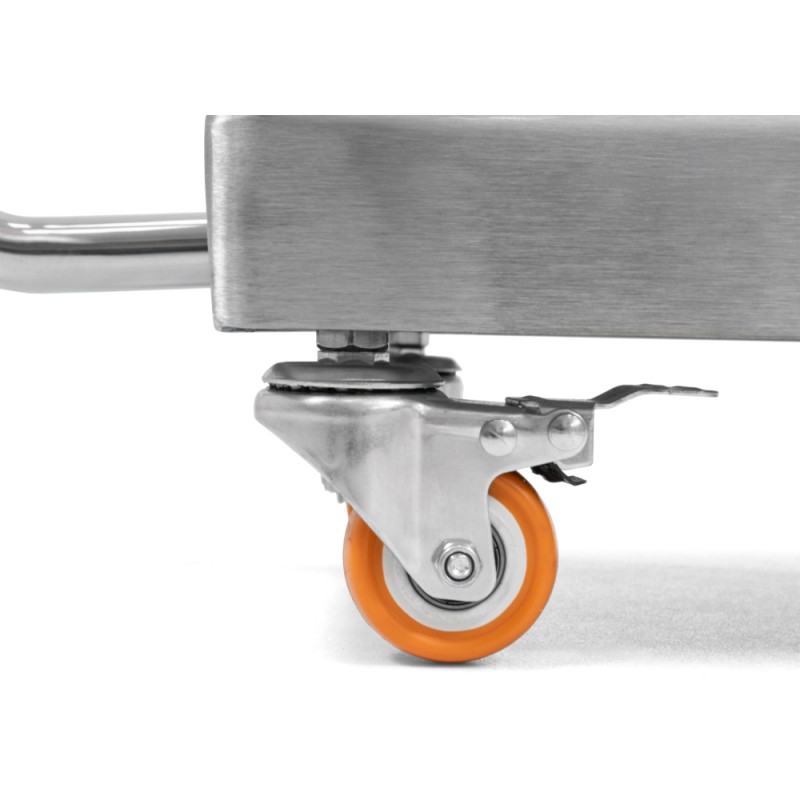
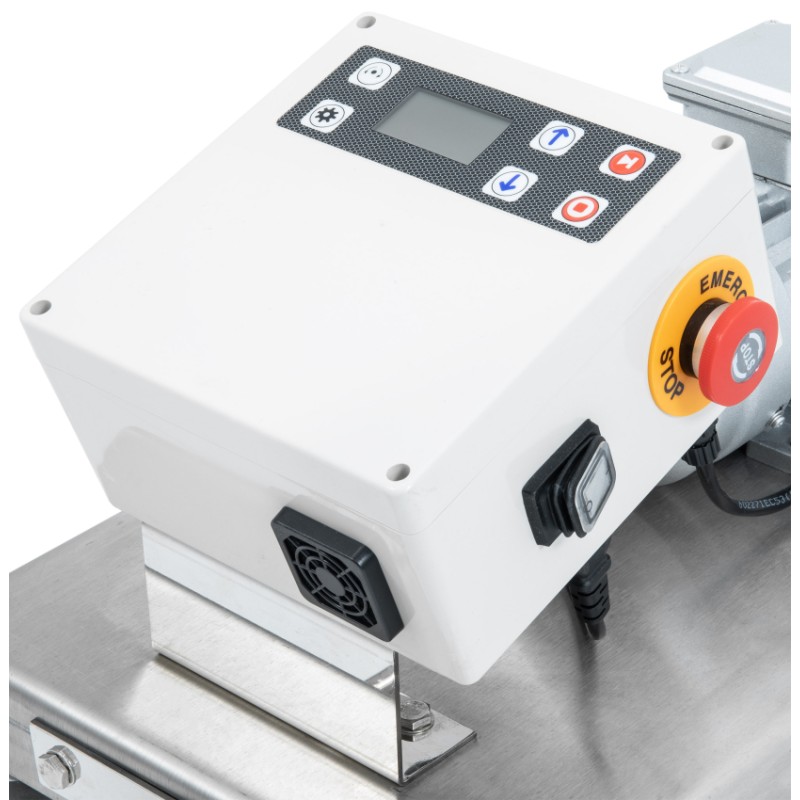
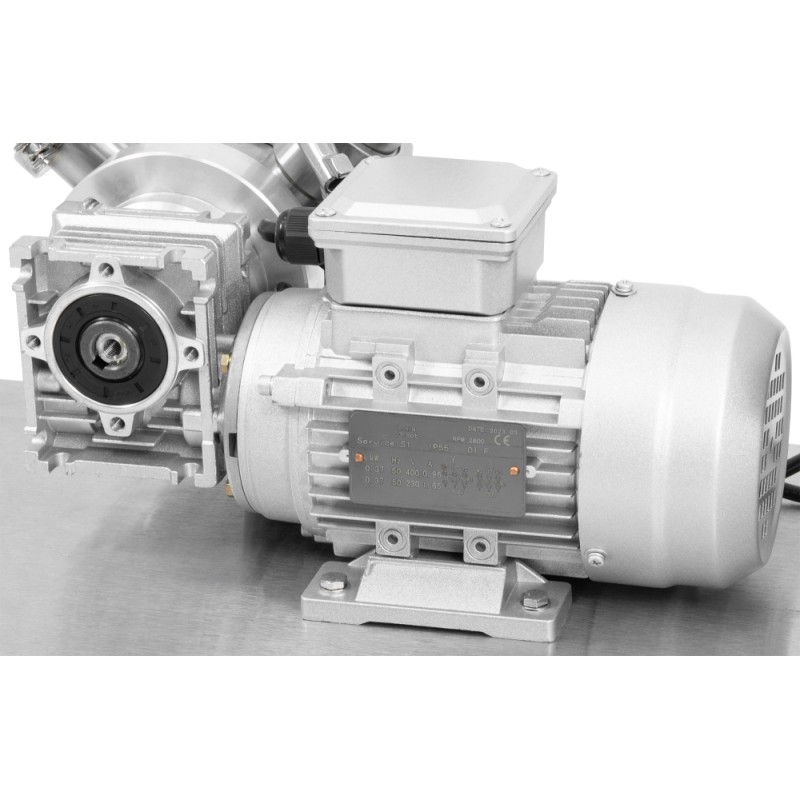
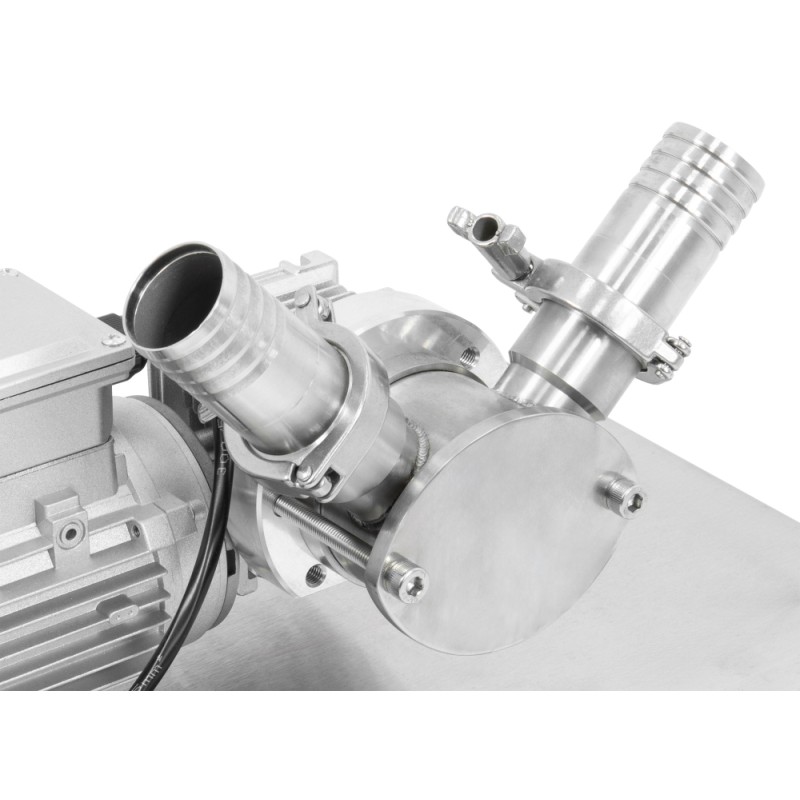
Vane pump of 900 L/h on a wheeled trolley, with a single-phase 370 W motor at 230 V and a control box with a variable-speed drive: at full speed it transfers between drums and tanks, and turned down it feeds a filler without aerating the honey. It weighs 30 kg. The same pump without the box is 2950.
Pumping honey is easy; pumping it without drawing in air and without burning the motor is what separates a useful pump from a gadget.
01 · WHAT IT MOVES AND WHAT IT DOES NOT
With liquid or warmed honey between 25 and 30 °C, freshly harvested multifloral, sunflower, orange blossom or eucalyptus, it moves the nominal 900 L/h, which at 1.4 kg per litre is in the order of 1,250 kg/h: a 300 kg drum in a good quarter of an hour. With thick but unset chestnut or heather it copes, more slowly. What it does not do is move set honey or honey below 18-20 °C: the 370 W motor falls short, the current rises and it burns out. Field rule: if the honey does not run by itself when you open the drum tap, warm it first.
02 · THE CONTROL BOX
The box carries a variable-speed drive: at full speed it transfers between drums and tanks; turning it down it feeds a filler without swamping the hopper, without foam and without aerating the honey. That is the whole difference with the fixed-speed twin (2950), which is the same pump, the same motor and the same trolley without the electronics. If you are going to feed a filler, the drive is not an extra, it is what does the job.
03 · HOW IT IS LOOKED AFTER
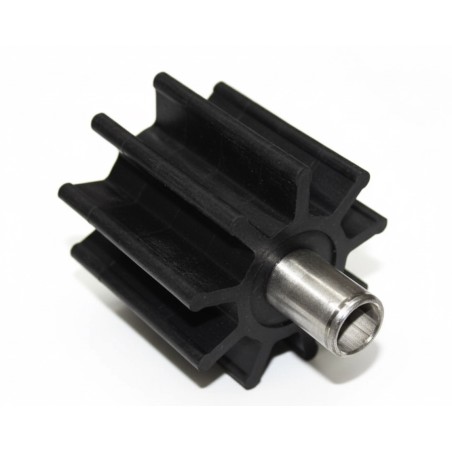
The vanes are rubber and wear: check them once a season and change them when flow drops. The pump must never turn without product, because the vanes rub the housing and burn out in seconds. At the end rinse with warm water and drain it, because honey setting inside blocks the rotor at the next start. And size it generously: a pump working at 30-60 % of its capacity lasts longer and treats honey better than one at its limit.
04 · WHAT IT GOES WITH
To empty 300 kg drums or IBC containers from the top, without relying on the tap, there is the submersible (3257). For a room with three-phase power moving hundreds of kilos a day and cappings too, the 1.5 kW flexible impeller with a DN 50 bore (3256). This one is on a wheeled trolley, so it moves from drum to tank and from there to the filler without dismantling anything.
05 · BEFORE YOU BUY
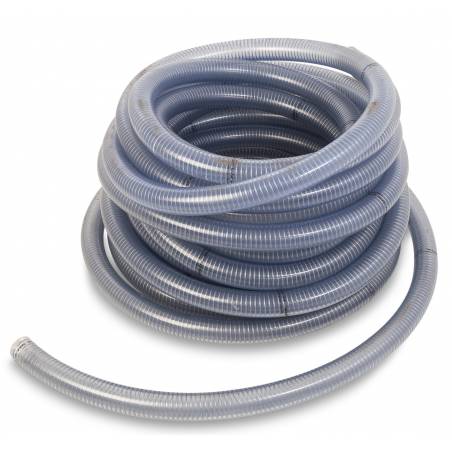
The pump is supplied on its trolley; hoses and fittings come separately.
| ✓ FITS | Honey houses transferring between drums that also feed a filler: the drive covers both uses. |
| ✕ DOESN’T FIT | Set honey or honey below 18-20 °C: warm it first. If you will never feed a filler, 2950 is the same pump for less. |
| ⚠ NOT INCLUDED | Hoses or fittings. |
| Reference | HP-124 |
|---|---|
| Type | Vane pump |
| Nominal flow | 900 L/h |
| Honey equivalent | In the order of 1,250 kg/h with fluid honey |
| Motor | 370 W, 230 V single-phase |
| Regulation | Control box with variable-speed drive |
| Mounting | Wheeled trolley |
| Weight | 30 kg |
| Honey temperature | 25-30 °C; not for set honey |
| Twin | HP-122 without the box (2950) |
| Alternatives | Three-phase 3256; submersible 3257 |
Write your question
check_circle
check_circle