 Apipasta with vitamins 15kg
 Beecomplet® Spring 14Kg
 Beekeeper suit with round veil
 Oxalic acid 1kg
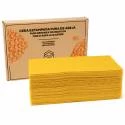 Beeswax Foundation 5kg
 Fresh royal jelly 20g
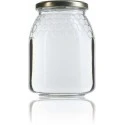 Classic honey jar 1kg comb-lines TO77 - Pack of 16 units
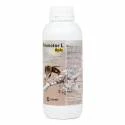 Promotor L Apis 1 litre

 Share in WhatsApp
2" MALE THREAD, INLET AND OUTLET | 1–200 μm RATING SET BY THE BAG |
0.25 m² FILTER AREA | 1.0 MPa MAXIMUM PRESSURE |
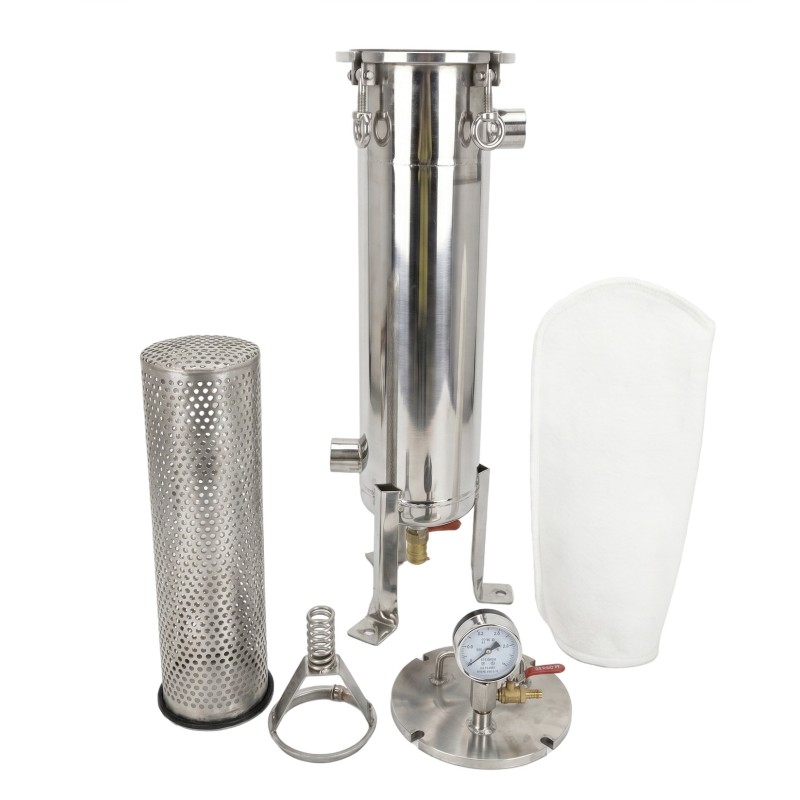
Stainless steel AISI 304 pressure bag filter for the final in-line filtering of your honey, with a gauge that tells you when to change the bag.
In the honey house the final filtering is where everything backs up: either you work with open sieves that clog and need watching, or you fit a closed filter that keeps up with the pump.
01 · INSTALLATION
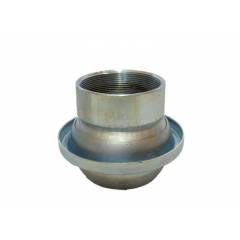
Inlet and outlet are two male 2" threads, and that is what decides which fitting you need: every part that screws onto the filter must have a female thread. It is the expensive mistake here, because ball couplings are sold in both versions and a male thread will not go onto another male.
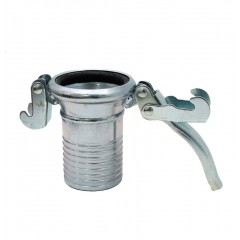
The usual set-up is a female 2" ball coupling on each port and, over the ball, a lever quick-release coupling so you can put the hose on and take it off without tools. Any other system works just as well —barbed tail with a hose clamp, flange— as long as the thread meeting the filter is female.
02 · HOW IT WORKS
Honey enters through the upper side port and drops inside the bag, held against the pressure by a perforated stainless basket. It passes through the fabric from the inside out —which is why the debris builds up inside the bag— and comes out clean through the lower side port. The gauge sits on the lid, reading the dirty side: when it shows 0.2 MPa above the initial working pressure, the bag is saturated and needs changing.
03 · MAINTENANCE
The lid closes with hinged swing bolts: you vent the pressure with the valve on the lid, open it, lift the bag out by its handle with the debris inside, drop in another and close. No dismantling pipework, no hunting for spanners, and what you take out never touches the honey downstream. For cleaning, the tap at the bottom drains the body.
04 · FILTRATION
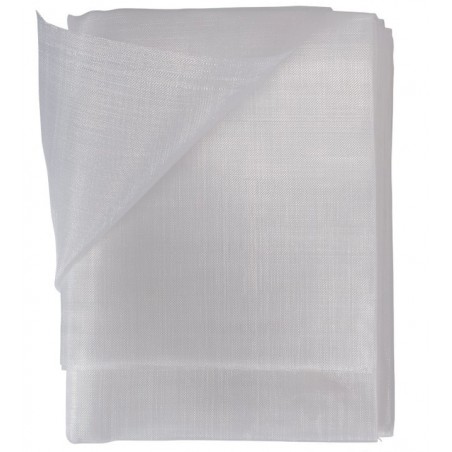
The same filter works from 1 to 200 μm depending on the bag you fit, over 0.25 m² of filter area. For honey, a coarse bag takes out wax fragments, bits of cappings and process particles without fighting the viscosity. The one fitted measures 105 × 350 mm, size 4 of the filter bag standard: it is a consumable and, being a standard size, you will find it at any industrial filtration supplier. The same housing does for mead and syrups.
05 · BEFORE YOU BUY
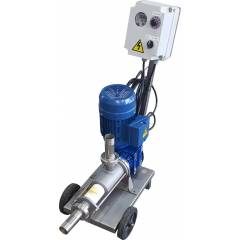
It works under pressure, so it needs a pump that can move viscous honey through the fabric, progressive cavity or equivalent. The figure of up to 10 t/h is measured with water: with dense honey the throughput is far slower, so do not size your honey house on it. The body takes 1.0 MPa: choose the pump so you never get there.
| ✓ FITS | Lines with a pressure pump and a female 2" threaded coupling. |
| ✕ DOESN'T FIT | Gravity draining from a honey tank, and any male-threaded ball coupling or fitting. |
| ⚠ NOT INCLUDED | Ball couplings, hose connectors or spare bags. |
⚠ LEGAL NOTICE
Below roughly 200 μm you start removing pollen, and since 14 June 2026 that has consequences on the label. Under Directive (EU) 2024/1438, “filtered honey” has ceased to exist as a presentation: if filtering removes a significant amount of pollen, the honey falls under honey for industrial use, which must carry the words “intended for cooking only” next to the name. For table honey, stay with coarse ratings.
| Material | Stainless steel AISI 304, polished finish |
|---|---|
| Housing | Ø 133 mm · 2 mm wall thickness |
| Inlet / outlet connections | Two male 2" threads — upper side inlet, lower side outlet |
| Drain and control | Drain tap at the bottom · vent valve and gauge on the lid |
| Filter element | One polypropylene (PP) bag over a perforated stainless basket |
| Filtration rating | 1–200 μm (set by the bag fitted) |
| Filter bag | 105 × 350 mm (size 4) |
| Filter area | 0.25 m² |
| Reference flow rate | Up to 10 t/h (measured with water) |
| Maximum working pressure | 1.0 MPa |
| Working temperature | 0–150 °C (stainless body) · the PP bag limits actual service to ~80–90 °C |
| Weight | 12 kg |
check_circle
check_circle