 Apipasta with vitamins 15kg
 Beecomplet® Spring 14Kg
 Beekeeper suit with round veil
 Oxalic acid 1kg
 Beeswax Foundation 5kg
 Fresh royal jelly 20g
 Classic honey jar 1kg comb-lines TO77 - Pack of 16 units
 Promotor L Apis 1 litre

 Share in WhatsApp
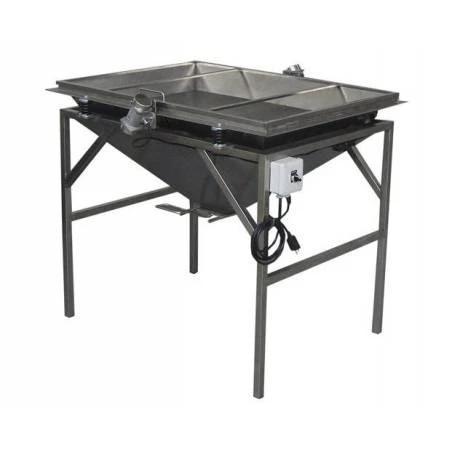
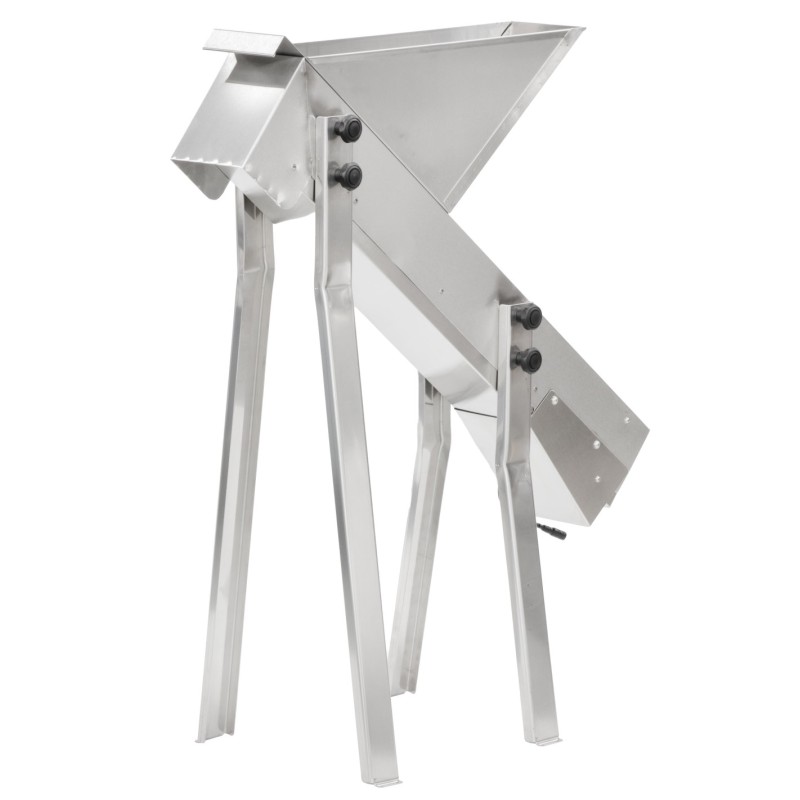
Collecting bee pollen is a fundamental activity in beekeeping, valued for its high nutritional content and growing demand as a natural supplement. However, the pollen collected contains impurities that must be removed before sale to ensure its quality and preservation. Elements such as dust, bee fragments (wings, legs), and plant residues can accelerate the deterioration of pollen and reduce its market acceptance. The MINIMA 230V pollen cleaner offers an efficient and practical solution for achieving precise cleaning, providing a pure and high-quality product.
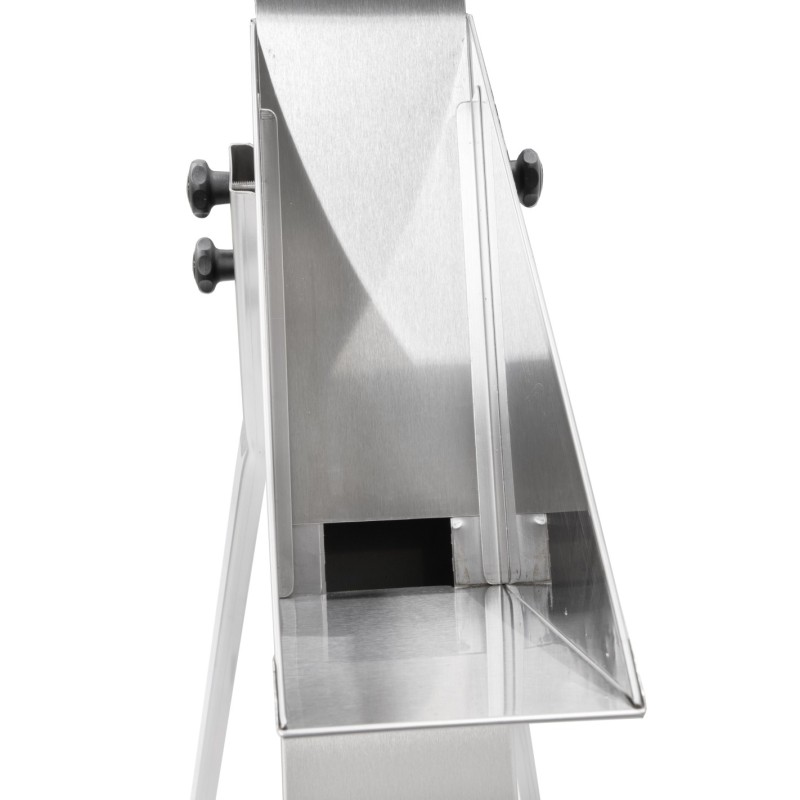
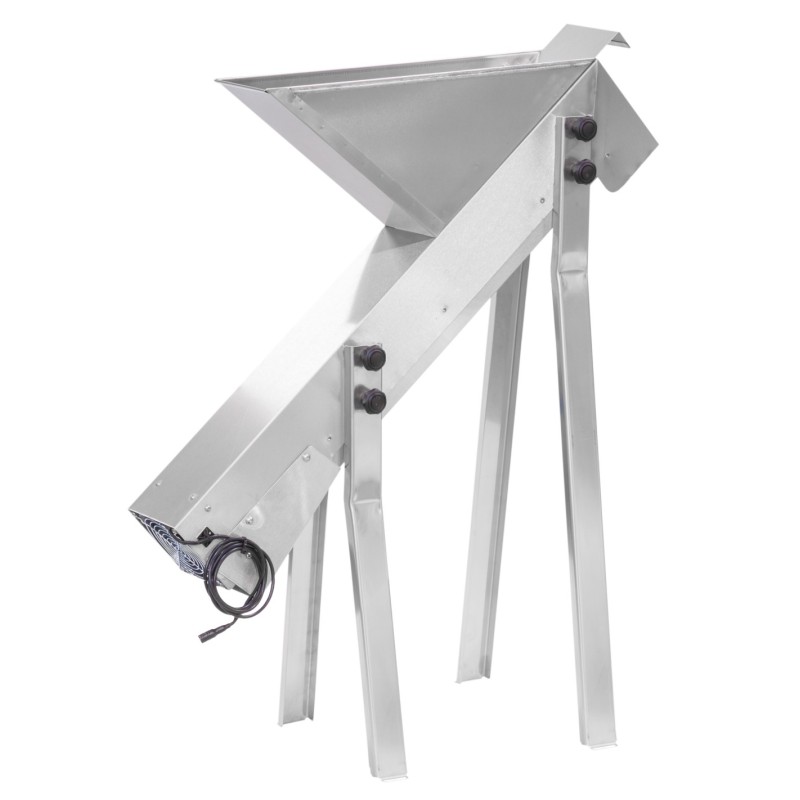
Stainless steel air-stream pollen cleaner: it separates dust, wings and plant debris from the pellets at a rate of 50 kg an hour.
It cleans with air, not with a sieve. The pollen pellet is heavy and falls; the light material is blown out. Both what it does well and its limit come from that.
01 · HOW IT CLEANS
The airflow is regulated so that the pollen pellet falls under its own weight while dust, fragments of bee — wings, legs — and plant debris are carried away.
And from that comes the honest limit too: it does not separate impurities that weigh the same as the pellet. That needs a sieve or a pass by hand.
02 · THE HOPPER AND THE CLOCK
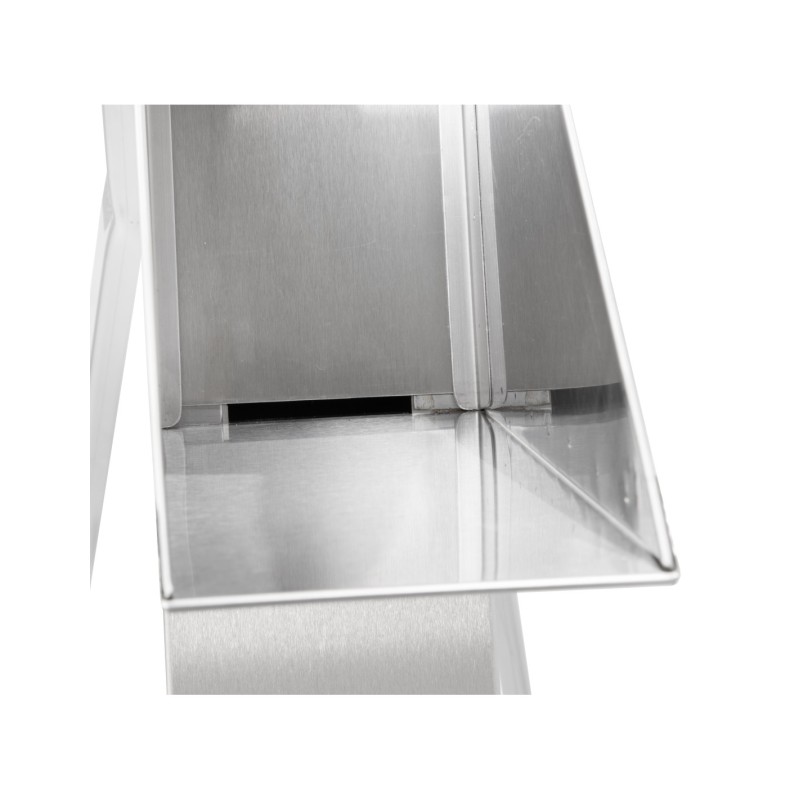
The hopper holds 6 litres, which in pollen comes to about 3.5 kg. At a capacity of 50 kg/h, that load empties in four minutes.
Worth doing the arithmetic before buying: this is a machine you keep feeding, not one you fill and walk away from. For small and medium batches it has room to spare; at industrial volumes the hopper is the bottleneck.
03 · BEFORE AND AFTER
The cleaner is one step in the process, not the process. Pollen is stabilised beforehand — dried below 45 °C, in practice nearer 40, or frozen — and packed tightly sealed afterwards.
The order matters: damp pollen does not clean well with air, because it cakes and the pellet stops behaving like a pellet. Dry, the separation is clean.
04 · THE MACHINE
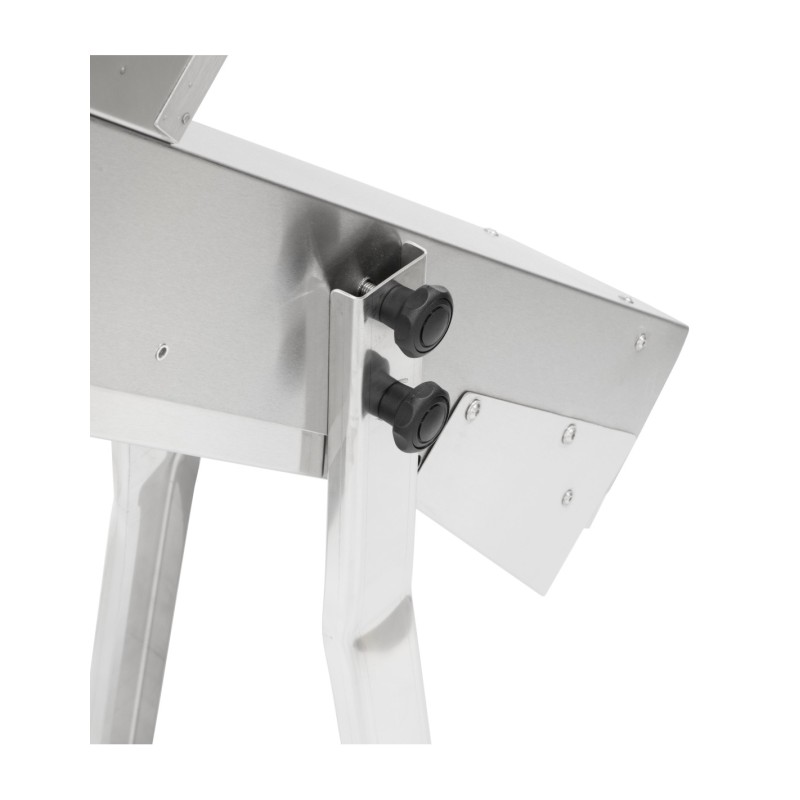
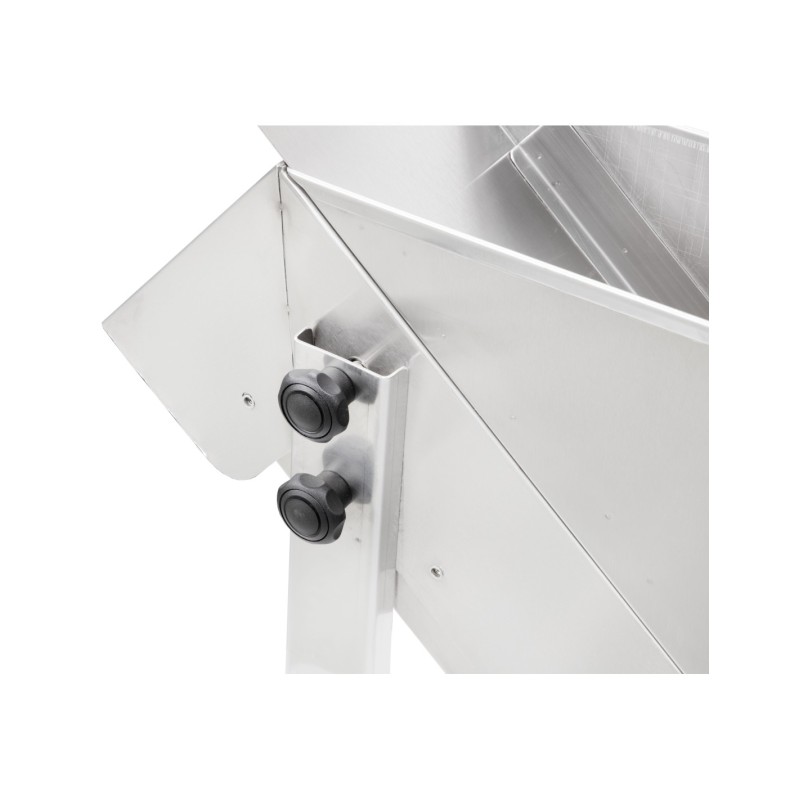
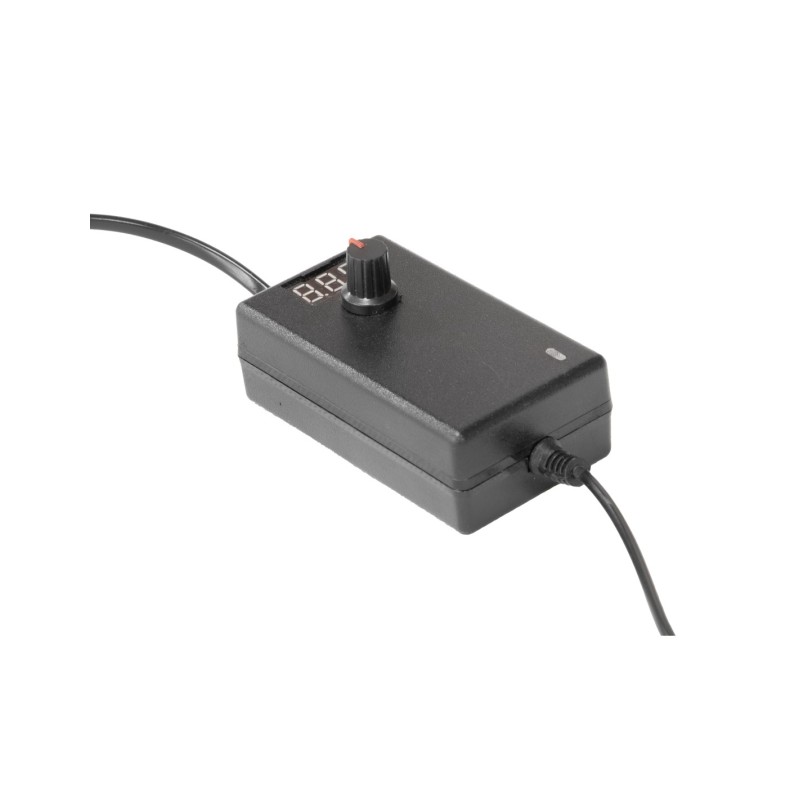
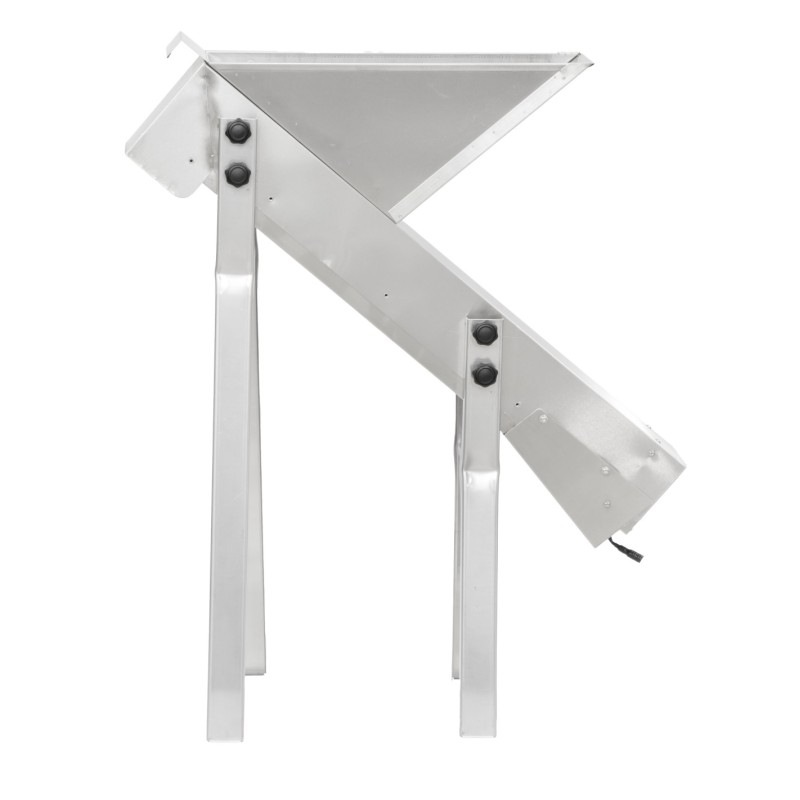
Built in AISI 304 stainless steel, which is what an appliance touching a food product calls for: it cleans well and does not pit. It runs on 230 V and measures 400 × 750 × 930 mm.
It is supplied for you to assemble. Using it is four steps: container under the outlet, switch on, pour the pollen into the hopper and let the impurities leave by their own side.
05 · BEFORE YOU BUY
It arrives flat, for self-assembly, and is meant for small and medium production.
| ✓ FITS | Already-dried pollen that has to be cleaned before packing, in batches up to 50 kg/h. |
| ✕ DOESN'T FIT | To dry the pollen: that is a different machine and it comes first. |
| ⚠ NOT INCLUDED | The container to collect the cleaned pollen in. |
| System | Separation by regulated air stream |
|---|---|
| Capacity | 50 kg/h |
| Hopper | 6 litres — about 3.5 kg of pollen |
| Supply | 230 V |
| Material | AISI 304 stainless steel |
| Size | 400 × 750 × 930 mm |
| Assembly | Supplied for self-assembly |
| What it separates | Dust, wings, legs and plant debris lighter than the pellet |
| What it does not do | Dry the pollen or separate impurities of the same weight |
| Brand | Lyson |
Collecting bee pollen is a fundamental activity in beekeeping, valued for its high nutritional content and growing demand as a natural supplement. However, the pollen collected contains impurities that must be removed before sale to ensure its quality and preservation. Elements such as dust, bee fragments (wings, legs), and plant residues can accelerate the deterioration of pollen and reduce its market acceptance. The MINIMA 230V pollen cleaner offers an efficient and practical solution for achieving precise cleaning, providing a pure and high-quality product.
check_circle
check_circle