 Apipasta with vitamins 15kg
 Beecomplet® Spring 14Kg
 Beekeeper suit with round veil
 Oxalic acid 1kg
 Beeswax Foundation 5kg
 Fresh royal jelly 20g
 Classic honey jar 1kg comb-lines TO77 - Pack of 16 units
 Promotor L Apis 1 litre

 Share in WhatsApp
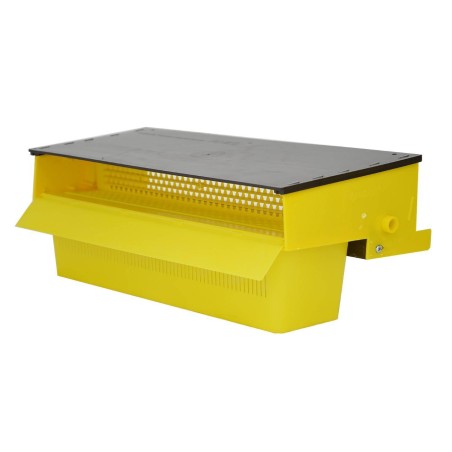
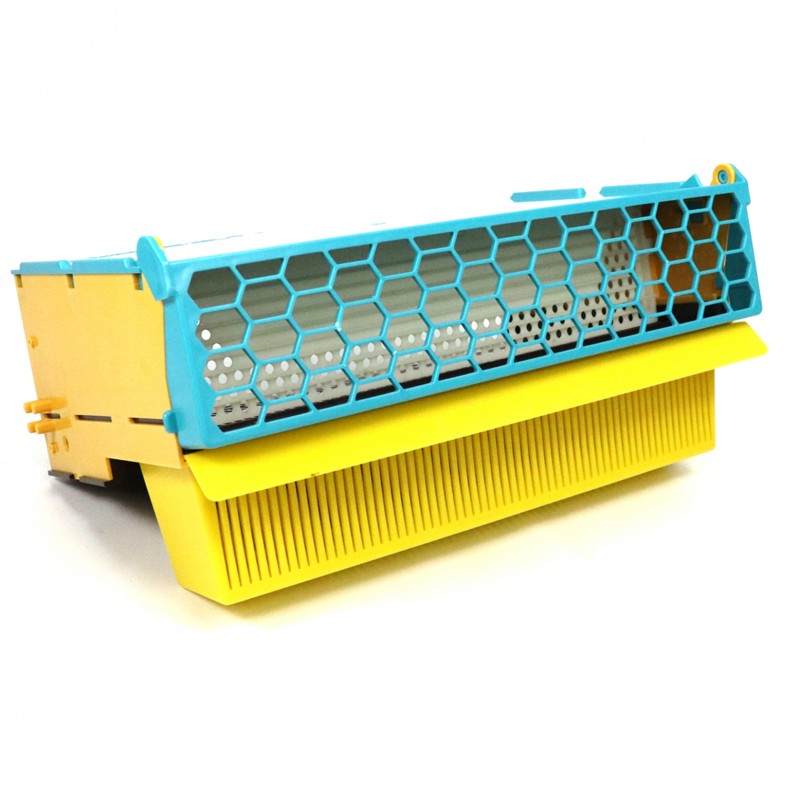
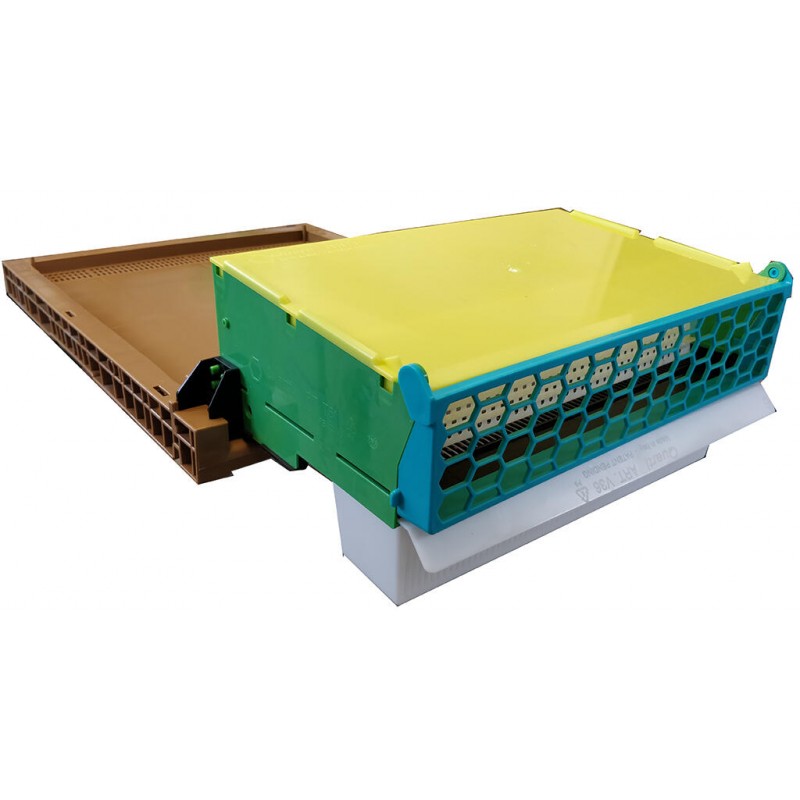
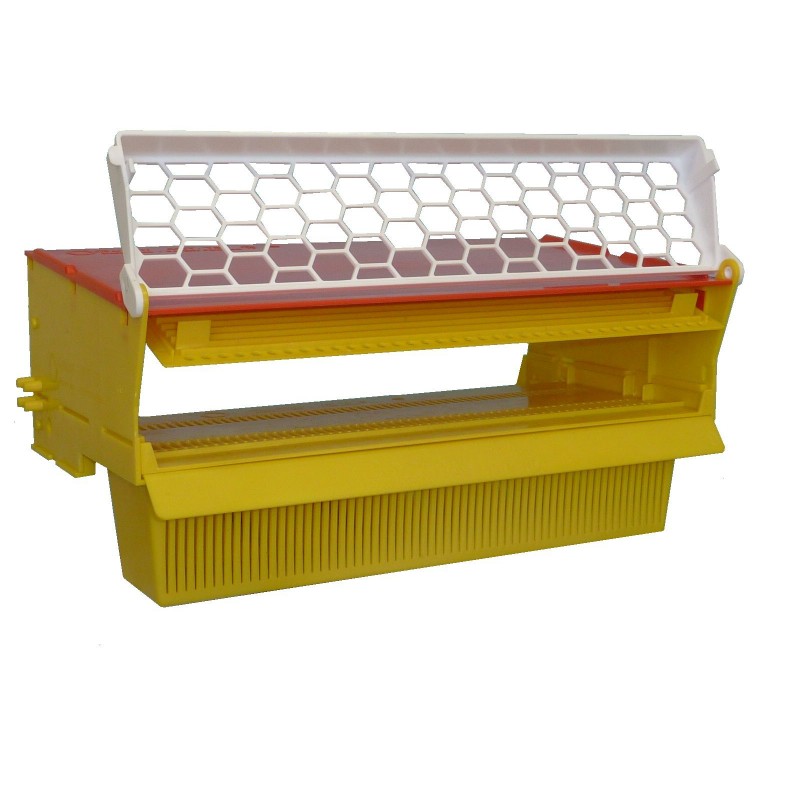
2-in-1 plastic pollen trap. It is used to collect pollen at the entrance of the hive and also serves as a shield for the asian wasp.
In September, in front of an entrance with hornets at it, foraging stops on its own. The bees see the hornet and stop going out.
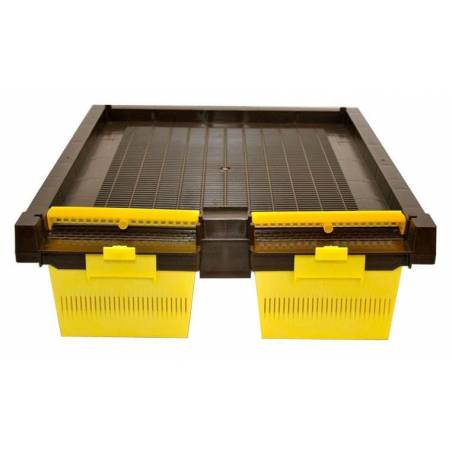
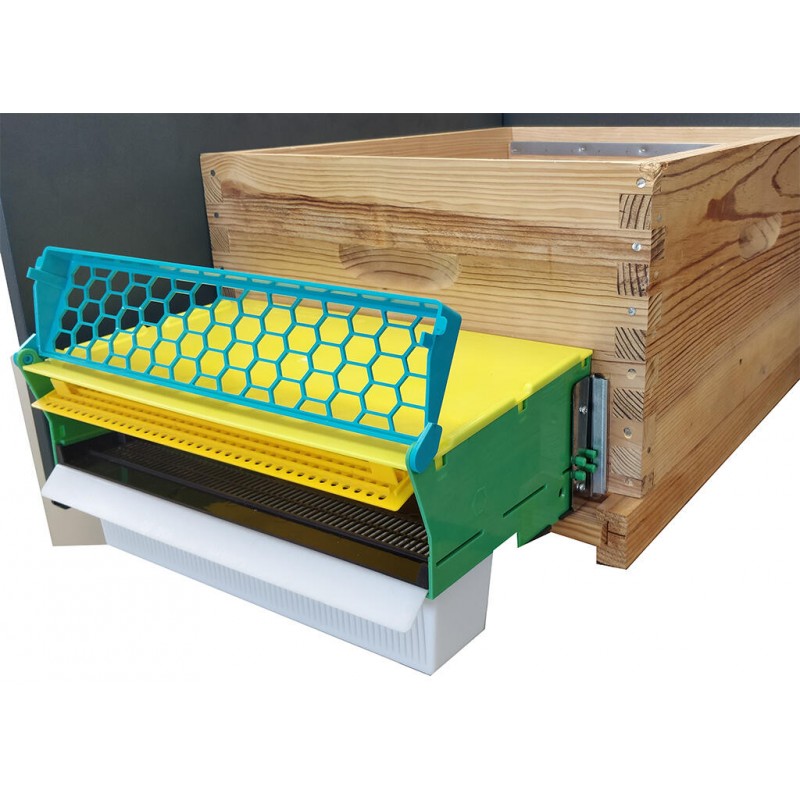
Quarti® entrance trap with two independent functions: a pollen-trap grid and a hornet guard. Both are removable and used separately, so the same piece works for the spring pollen harvest and for the hornet pressure at the end of summer.
01 · THE TWO GRIDS
The pollen grid makes the forager pass through a calibrated hole, and the pollen loads drop into the tray. The hornet grid is a guard lowered in front of the entrance: it lets the bee through and not the Asian hornet.
And here it pays to be exact, because this is what decides whether it suits you: the guard stops the hornet getting into the hive, which is where the real damage happens. What it does not do is clear it away from the front — the hornet is still there, hovering, and the colony's stress stays.
02 · MOUNTING
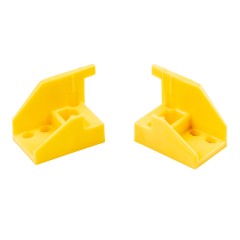
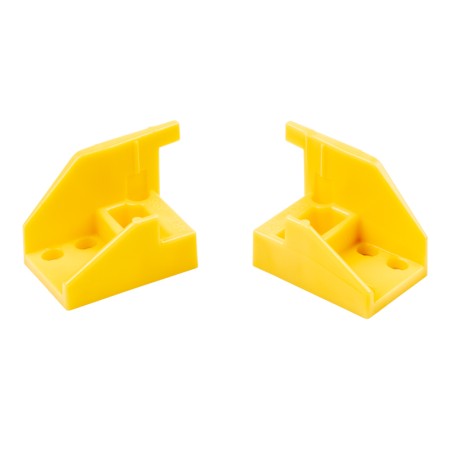
It is designed for vertical 10-frame hives — Langstroth, Dadant US and Dadant Blatt — with or without a landing board, and with a floor in wood, plastic or polystyrene. It comes with two sets of runners and screws, one for front fixing and one for side fixing, depending on your floor.
On a NICOT® plastic floor an adapter is needed, and that goes separately. Outside these formats, measure the front before ordering.
The roof is generous and keeps the rain off it, and the whole thing is recyclable food-grade plastic, assembled with no screws, nails or adhesives.
03 · HARVESTING POLLEN
Before trapping anything, fit the trap with the grid open for a few days. The bees learn the new way through without jamming, and when you drop the grid the colony no longer loses time at the door.
Second point, the one that ruins most harvests: close every other entrance. If a top entrance or the inner-cover vent is left open, the foragers find it within a day — and you end up staring at an empty tray, thinking the trap does not work.
The tray holds up to 700 g, but that is capacity, not a deadline: fresh pollen goes mouldy fast, so it is emptied every 24 hours and dried or frozen the same day. And you trap in spells, never continuously and never on weak colonies: that pollen is protein no longer going into the brood.
Two details well solved: a wide slot in front of the tray lets the bees carry rubbish out, and the two side holes are drone escapes — a drone will not fit through the pollen hole, and with no way out he would block the grid.
04 · BEFORE YOU BUY
It is an entrance fitting with two uses. Worth being clear about:
| ✓ FITS | Vertical 10-frame hives, Langstroth and Dadant, with any floor material. |
| ✕ DOES NOT FIT | As an answer to hornet pressure across the apiary: it stops entry, not the pressure outside. |
| ⚠ NOT INCLUDED | The adapter for a NICOT® floor, ordered separately. |
| Functions | Pollen grid and hornet guard, both removable |
|---|---|
| Compatibility | Langstroth · Dadant US · Dadant Blatt, 10 frames |
| Floors | Wood, plastic or polystyrene · NICOT® with adapter |
| Includes | 2 runners with front screws and 2 runners with side screws |
| Tray | Ventilated, up to 700 g of pollen, click-locked |
| Drone escapes | Two side holes |
| Material | Recyclable food-grade plastic, no screws or adhesives |
| Dimensions | 35.5 × 22.5 × 17.5 cm high |
| Reference | T51L19 |

2-in-1 plastic pollen trap. It is used to collect pollen at the entrance of the hive and also serves as a shield for the asian wasp.
check_circle
check_circle