 Apipasta with vitamins 15kg
 Beecomplet® Spring 14Kg
 Beekeeper suit with round veil
 Oxalic acid 1kg
 Beeswax Foundation 5kg
 Fresh royal jelly 20g
 Classic honey jar 1kg comb-lines TO77 - Pack of 16 units
 Promotor L Apis 1 litre

 Share in WhatsApp
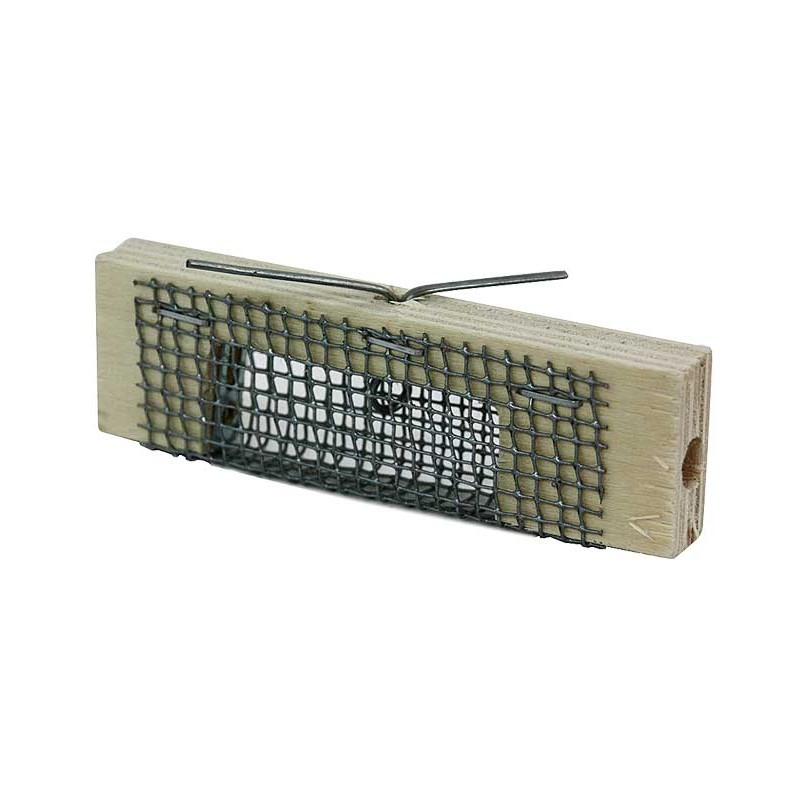
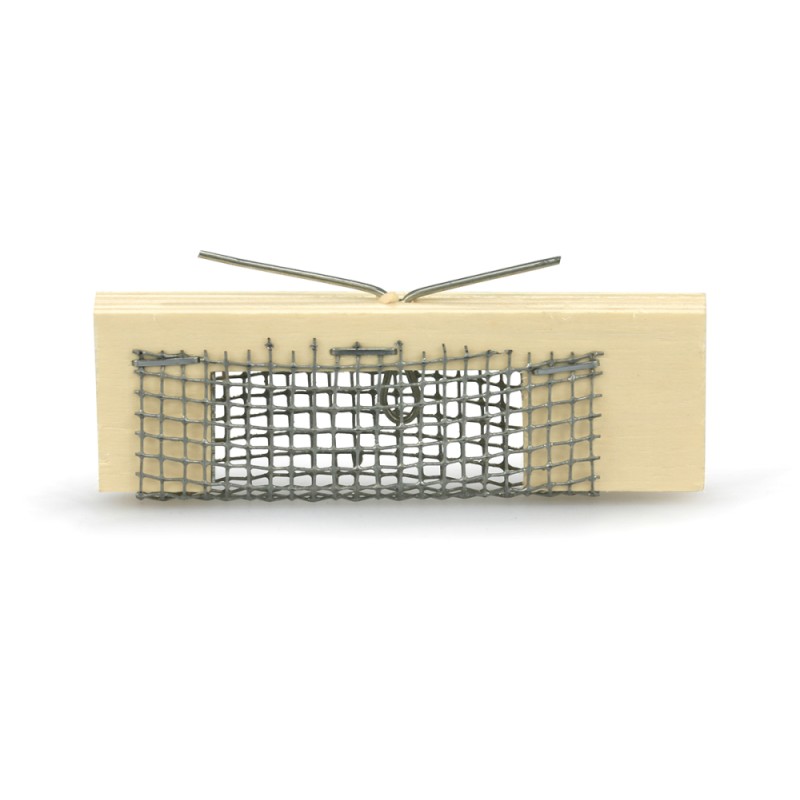
The Miller queen introduction cage is an essential tool for beekeepers who want to facilitate the acceptance of a new queen in the hive. This device combines the robustness of wood with the durability of wire mesh, providing an effective and long-lasting solution for queen introduction.
The cage does not make them accept the queen. All it does is buy time — and that time has to be watched.
Miller-type introduction cage in wood and wire mesh, about 100 mm long, with a wire hanger to hang it between two brood frames. It has two channels, and they are not interchangeable.
01 · HOW IT WORKS
The queen goes in through the long channel, and both channels are then plugged with candy — Apifonda, Apipasta or similar. Hung between two brood frames, the colony starts eating the plug from the outside while the queen waits inside: during those hours the bees smell her, touch her through the mesh, and her scent mixes with the nest's.
The short channel carries an excluder grid: the nurse bees come in that way to feed her, but the queen cannot fit through. That makes the long one her only way out, and that is why the candy works as a timer: by the time it is gone, the colony has already spent a day living with her.
02 · THE FAILURE TO AVOID
The candy is said to go in about 24 hours, but that depends on how much you use and how hard it is: a soft plug disappears in a day; a whole channel packed with dried candy can take weeks. Use a plug, do not fill the tunnel.
And above all, check on day three or four. It is perfectly possible for the nurses to have got in while the queen is still shut away: all it takes is for the exit to be blocked with propolis, with hardened candy, or for the channels to have been mixed up. If you open the hive and see her inside with the colony treating her well through the mesh, release her by hand. What you cannot do is leave her in there for twenty days.
03 · WHAT DECIDES ACCEPTANCE
Before you hang anything, the colony has to be genuinely queenless and free of queen cells. Going through frame by frame and cutting out every queen cell is what weighs most on the outcome: leave one and the colony already has its own plan, and the queen you bought is surplus, whatever cage she is in.
It also helps not to introduce during a dearth or with robbing about, and not to open the hive daily to look: every inspection breaks the very process you are trying to encourage.
04 · MATERIAL
Wood and wire mesh rather than plastic: the mesh lets the contact through — antenna to antenna, food mouth to mouth — which is exactly what gets her accepted. And the wire hanger keeps her in the right place, between two brood frames rather than lying on the floor.
It is cleaned by scraping and lasts seasons.
05 · BEFORE YOU BUY
This is an introduction cage, not a shipping one:
| ✓ FITS | Introducing a mated queen into a queenless colony already cleared of queen cells. |
| ✕ DOESN'T FIT | Posting queens: that is what shipping cages are for. |
| ⚠ NOT INCLUDED | Neither the candy nor the queen. |
| Model | Miller-type introduction cage |
|---|---|
| Material | Wood and wire mesh |
| Dimensions | About 100 mm long · 12-15 mm wide · 30 mm high |
| Channels | Two · the short one with a grid, the long one is the queen's way out |
| Placing | Hung by its wire hanger between two brood frames |
| Plug | Candy of the Apifonda or Apipasta type, not included |
| Check | On day 3-4, to make sure she has come out |
| Reference | BR-19350 |

The Miller queen introduction cage is an essential tool for beekeepers who want to facilitate the acceptance of a new queen in the hive. This device combines the robustness of wood with the durability of wire mesh, providing an effective and long-lasting solution for queen introduction.
check_circle
check_circle