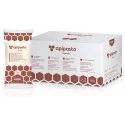
 Apipasta with vitamins 15kg
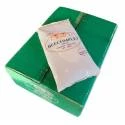 Beecomplet® Spring 14Kg
 Beekeeper suit with round veil
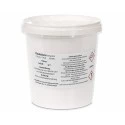 Oxalic acid 1kg
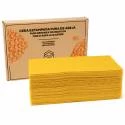 Beeswax Foundation 5kg
 Fresh royal jelly 20g
 Classic honey jar 1kg comb-lines TO77 - Pack of 16 units
 Promotor L Apis 1 litre
- To order

 Share in WhatsApp
Order it before 7 hours and 16 minutes and receive it between Friday, 13 November and Tuesday, 17 November with Ontime
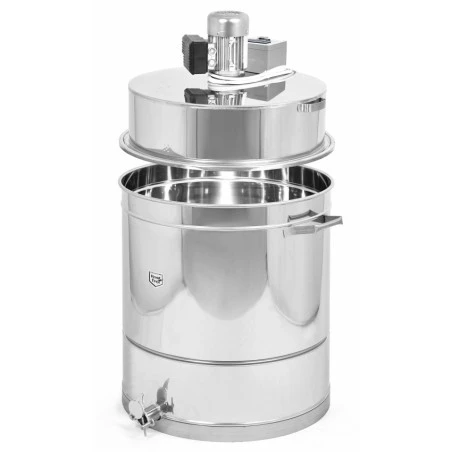
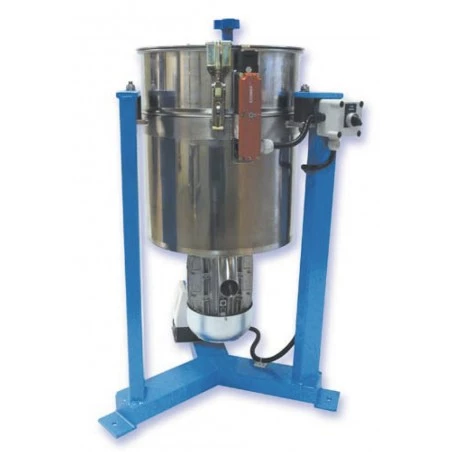
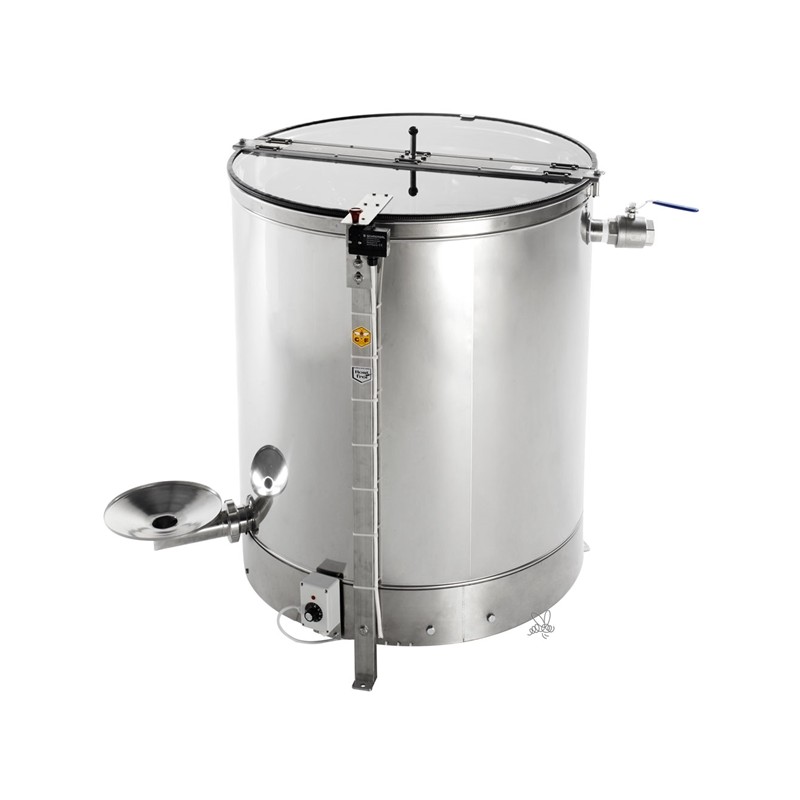
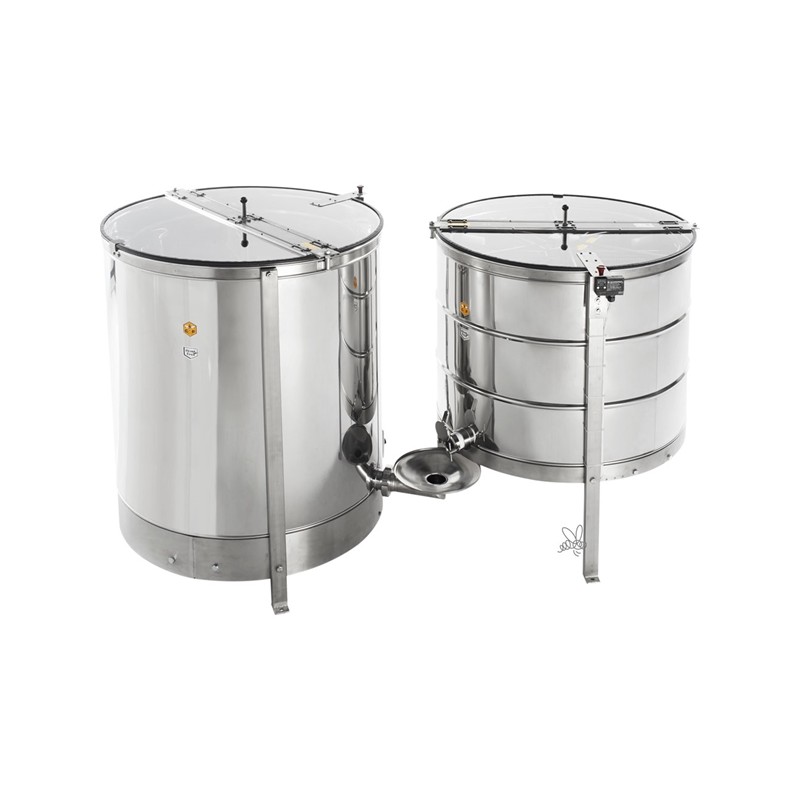
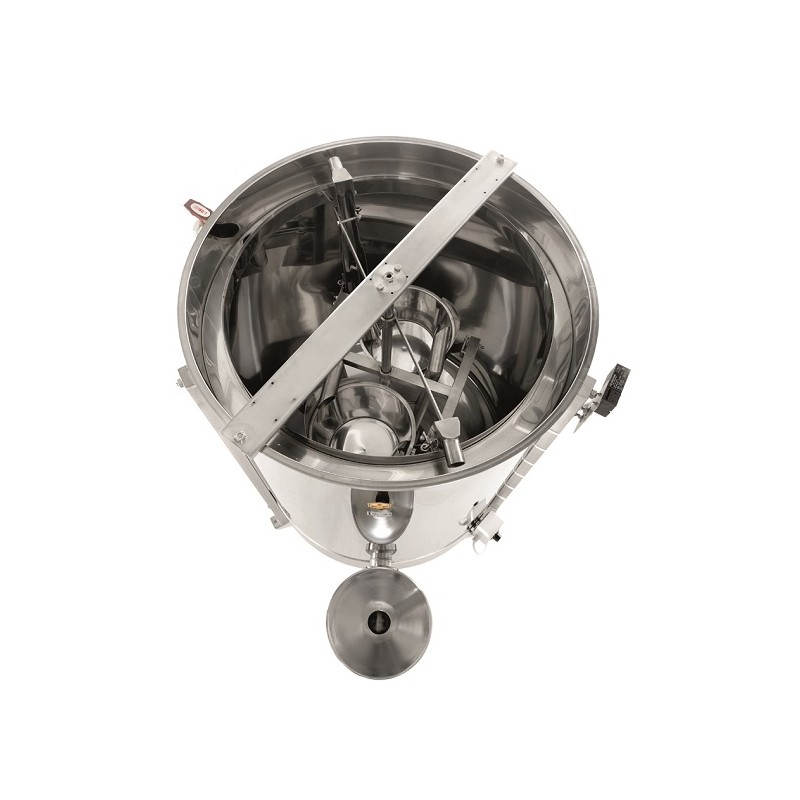
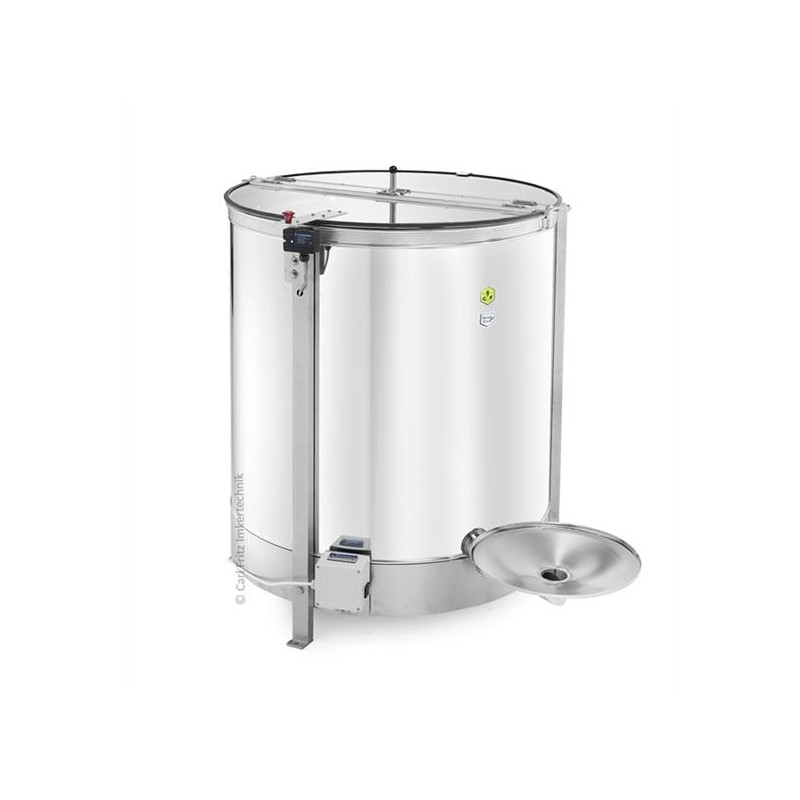
Carl Fritz cappings centrifuge, the maker’s honey-wax separator: it sits at the extractor outlet and spins out the wax carried by the honey, up to 300 kg/h, with a built-in heated base.
It is the cappings spinner that needs no second machine behind it. It turns at up to 300 rpm: honey, the denser phase, is thrown to the wall and leaves through the upper outlet; the wax stays on top and comes off dry. And unlike the big ones, this machine heats the mix itself.
01 · 85 °C IS THE BASE, NOT THE HONEY
The heated base thermostat runs from 30 to 85 °C. That is the range of the appliance, not the margin of the product: the hotter and the longer, the more HMF and the less diastase, so honey is worked warm, not hot.
The working band is the usual 35-40 °C. The 2,000 W element is there to get you up there quickly and hold it, not to turn the thermostat up because the mix came in cold. If the honey goes to analysis, this is not a nuance.
02 · IT HEATS ITSELF
High-throughput cappings centrifuges only hold temperature: they ask for a separate heat exchanger, plus a pump with an inverter. Here the heated base is inside.
That is why a 300 kg/h machine costs far less than a 1,300 kg/h one with its full system. They do not compete: they are two different steps of honey house.
03 · 300 KG/H ON 370 WATTS
The motor draws 370 W at 230 V, less than many household appliances; the consumption is in the 2,000 W of the base. Speed adjusts by hand from 0 to 300 rpm, which is how you match it to the flow and to the consistency of the cappings.
That adjustment is the real craft of the machine: dry cappings and dense honey want more turns; a warm, fluid mix wants fewer. There is no right number — you find it with the harvest in front of you.
04 · IT DISCHARGES HIGH, INTO THE DRUM
At 123 cm of overall height with the outlet at the top, honey falls by gravity straight into the drum. It is the exact opposite of the problem with big extractors, where the tap sits thirty-odd centimetres off the floor and nothing fits underneath.
Diameter is 93 cm inside and up to 110 cm outside. It goes wherever suits at the extractor outlet.
05 · CLEAN HONEY IS NOT FILTERED HONEY
What comes out on one side is honey separated from wax and on the other dry cappings. That saves the transfer, the cappings settling tank and a good part of the coarse-filtering work, which is a lot.
What it does not save is the settling: the honey still goes to the maturer to clear like the rest of the harvest. We would rather say so than have you find out at bottling.
06 · BEFORE YOU BUY
It goes at the extractor outlet; it does not replace the maturer.
| ✓ A GOOD FIT | Medium honey houses: 300 kg/h with the heated base built in, no separate exchanger. |
| ⚠ THE THERMOSTAT REACHES 85 °C | That is the appliance's range. The hotter and the longer, the more HMF: honey is worked warm, at 35-40 °C. |
| ✕ IT DOES NOT REPLACE THE MATURER | It gives honey separated from wax, not settled honey. The resting stage is still needed. |
| Type | Continuous-flow cappings centrifuge |
|---|---|
| Capacity | Up to 300 kg/h |
| Speed | From 0 to 300 rpm, manual adjustment |
| Separation | Centrifugal force, no filters |
| Heated base | 2,000 W with a 30 to 85 °C thermostat |
| Working temperature (our advice) | 35 to 40 °C |
| Motor | 370 W at 230 V |
| Diameter | 93 cm inside · up to 110 cm outside, without valve or funnel |
| Overall height | 123 cm · inlet about 36 cm off the floor |
| Discharge | Upper outlet, by gravity into the drum |
| Weight | About 130 kg |
| Manufacturer | Carl Fritz, Germany |
| Reference | 5000170 |
check_circle
check_circle