 Apipasta with vitamins 15kg
 Beecomplet® Spring 14Kg
 Beekeeper suit with round veil
 Oxalic acid 1kg
 Beeswax Foundation 5kg
 Fresh royal jelly 20g
 Classic honey jar 1kg comb-lines TO77 - Pack of 16 units
 Promotor L Apis 1 litre

 Share in WhatsApp
10 l HOPPER | 4 and 8 mm NOZZLES |
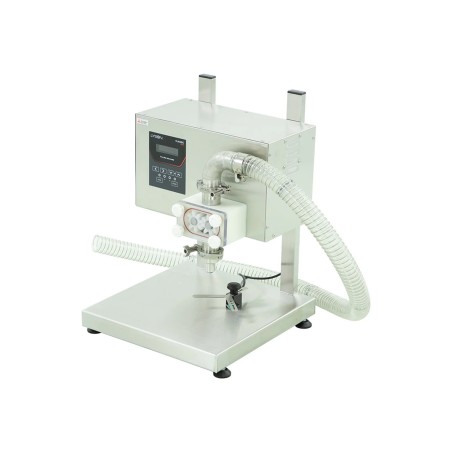
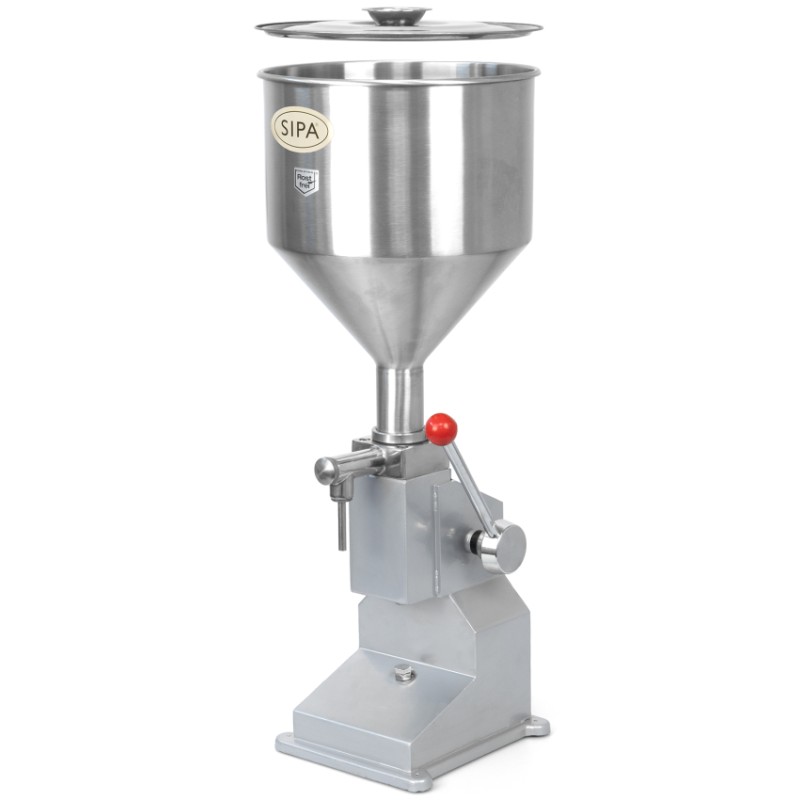
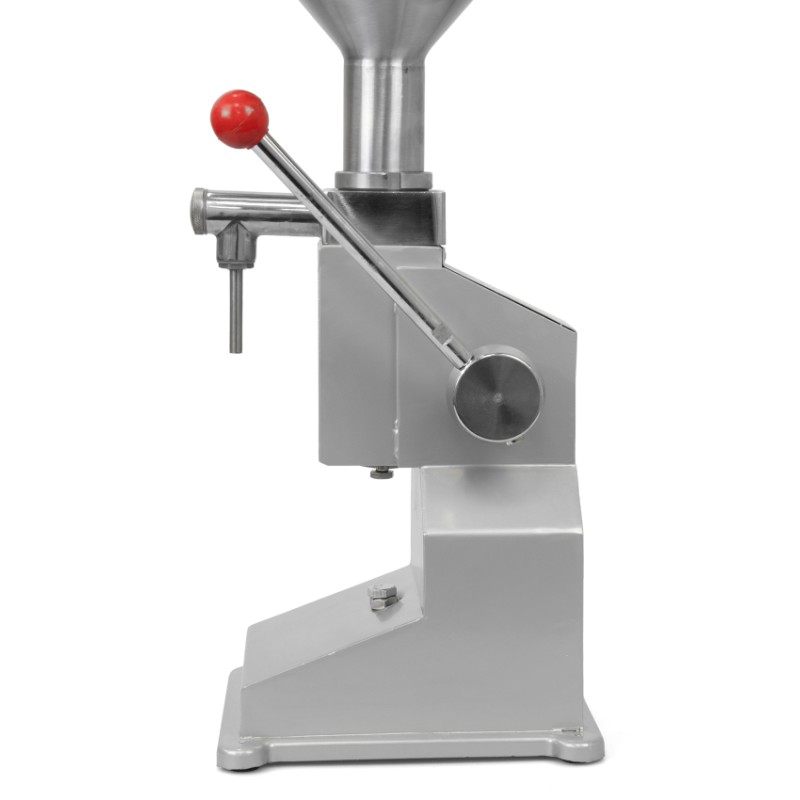
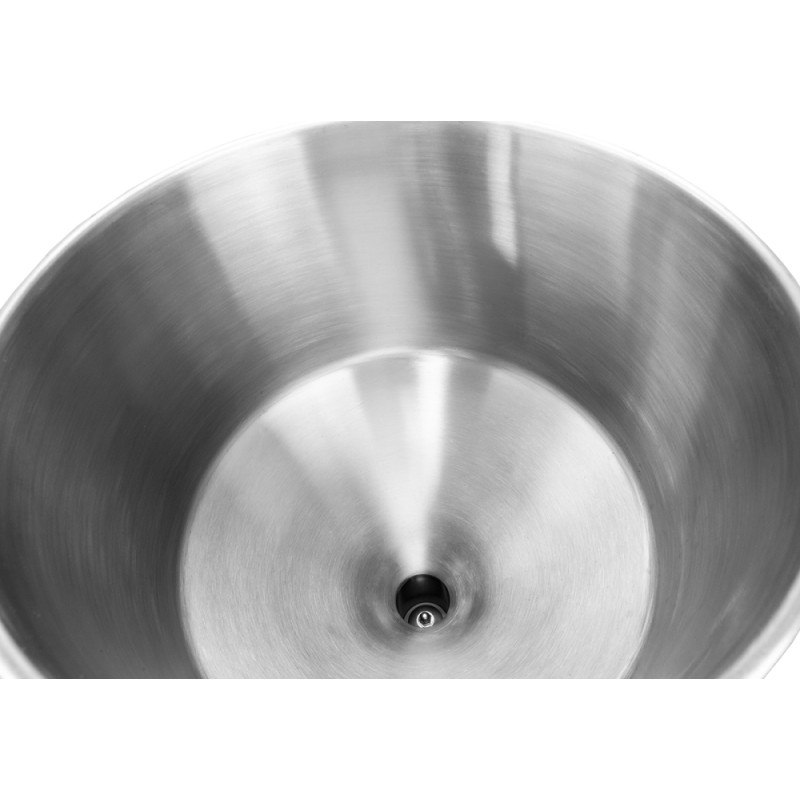
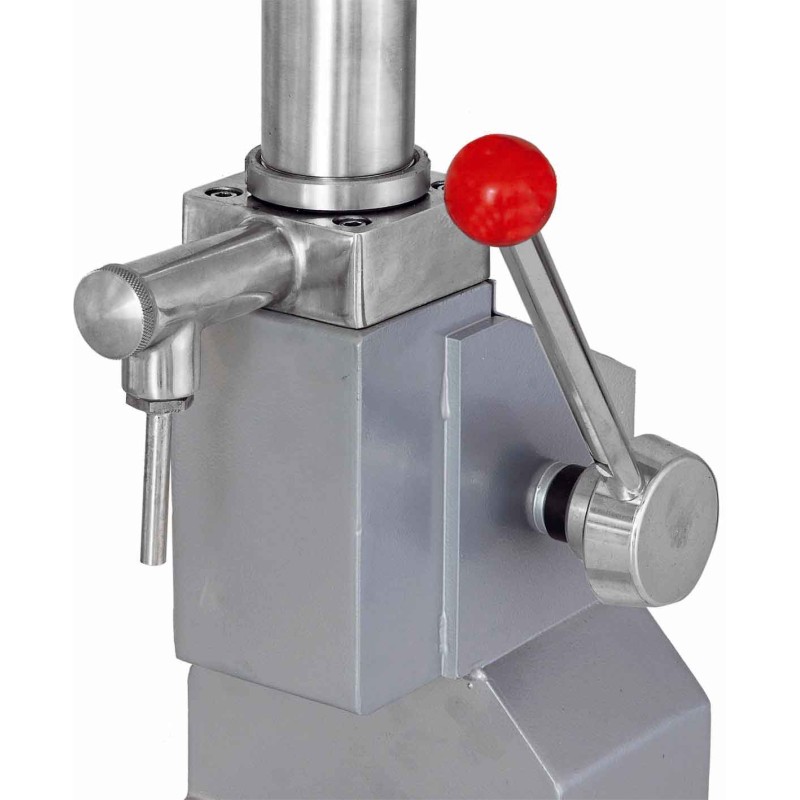
Manual stainless steel filler with a 10-litre hopper and screw-adjustable dose, for filling small formats of fresh royal jelly and single-dose honey.
Short runs with no compressed air and no mains supply.
01 · CALIBRATE FIRST, RUN AFTER
Set the volume with the screw on the base and run several test doses, weighing them on a suitable scale until you hit the target. It matters not to confuse units: millilitres and grams are not equivalent, so for a 30 g jar the setting is validated by weight, not by volume. Put a tray under the outlet while you adjust and set aside any unit that falls short. Write down the setting that works for each format: that is what turns preparing the next run into five minutes instead of half an hour.
02 · THE JELLY SETS THE CLOCK
This is the point that governs the whole job. The filler does not refrigerate, and fresh royal jelly is highly sensitive to temperature, light, oxidation and time. In practice that means organising the run so the product spends as little time out of the cold as possible: dark containers prepared in advance, capped and straight back into the cold, and no leaving the hopper loaded «for later». Fresh jelly is not a shelf-stable product, and breaking the cold chain is not only a commercial problem: it changes texture, proteins and freshness.
03 · VISCOSITY CHANGES THE SETTING
Here the two previous sections meet, and it is worth seeing before you lose a run. Jelly straight out of the cold flows differently from tempered jelly, just as honey changes viscosity over a few degrees. A calibration done with warmed product does not hold for cold product: repeat the test doses at the temperature you will actually work at. And if the product offers too much resistance, stop and check the setting rather than forcing the lever — the mechanism is a screw, not brute force.
04 · NOZZLE AND RHYTHM
The 4 and 8 mm nozzles let you choose the aperture to suit the product and the mouth of the container: the fine one for single doses and products that barely drip, the wide one for anything with more resistance. What most affects repeatability is not the nozzle but the rhythm: a steady stroke gives steady doses, an uneven one means reweighing. Keep the mouth of the jar clean between strokes — a smear on the rim ruins the seal and, with jelly, the keeping too.
05 · BEFORE YOU BUY
It is a manual filler for small containers: it is not intended for very dense products or ones with solid particles, and it is not validated for bleach, soap, vinegar or any liquid outside the intended food use. The exact volumetric range of the unit is not confirmed by the available documentation, so if your format sits near the limit, calibrate it with real product before committing to a run — or ask us and we will check it.
| LTA reference | BR-31035 |
|---|---|
| Operation | Manual · lever |
| Hopper | 10 litres |
| Adjustment | Volume set by screw |
| Nozzles | 4 mm and 8 mm |
| Material | Stainless steel |
| Refrigeration | Not included — cold is handled separately |
| Not suitable for | Dense products, solids or non-food use |
Data sheet
1 file available
check_circle
check_circle