 Apipasta with vitamins 15kg
 Beecomplet® Spring 14Kg
 Beekeeper suit with round veil
 Oxalic acid 1kg
 Beeswax Foundation 5kg
 Fresh royal jelly 20g
 Classic honey jar 1kg comb-lines TO77 - Pack of 16 units
 Promotor L Apis 1 litre

 Share in WhatsApp
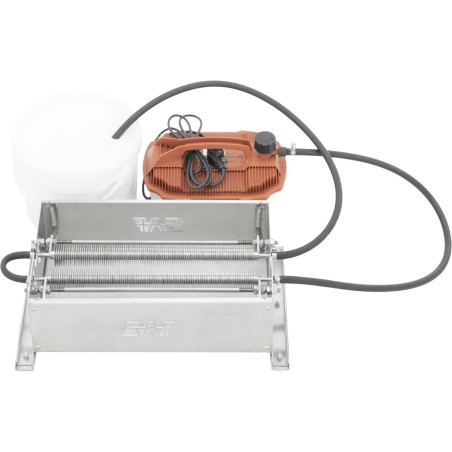
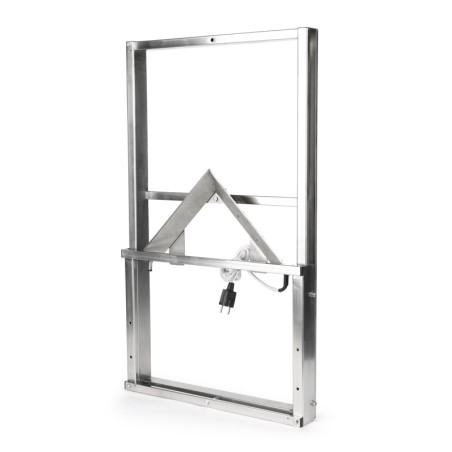
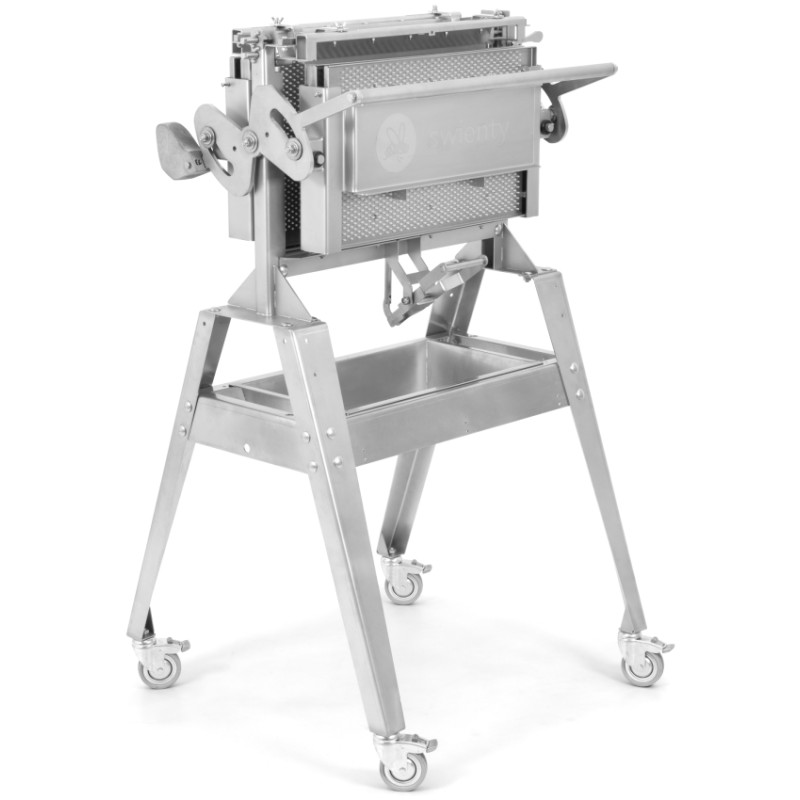
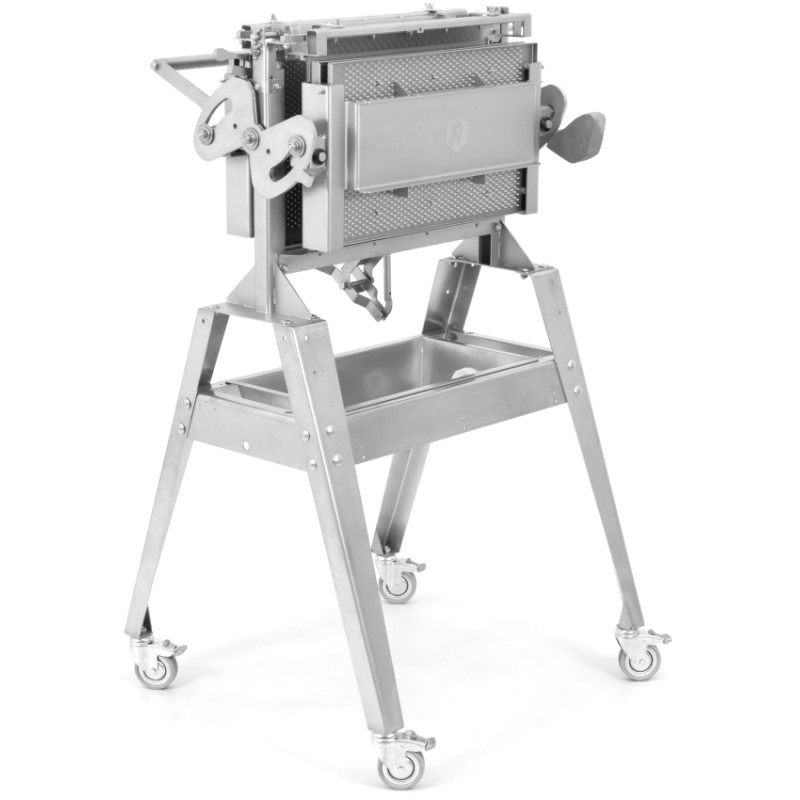
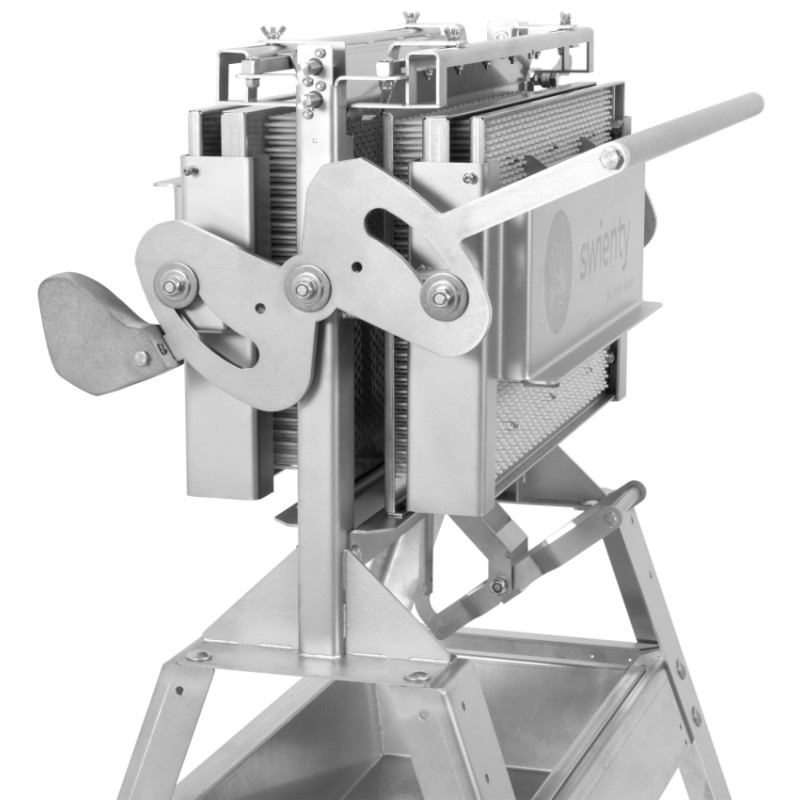
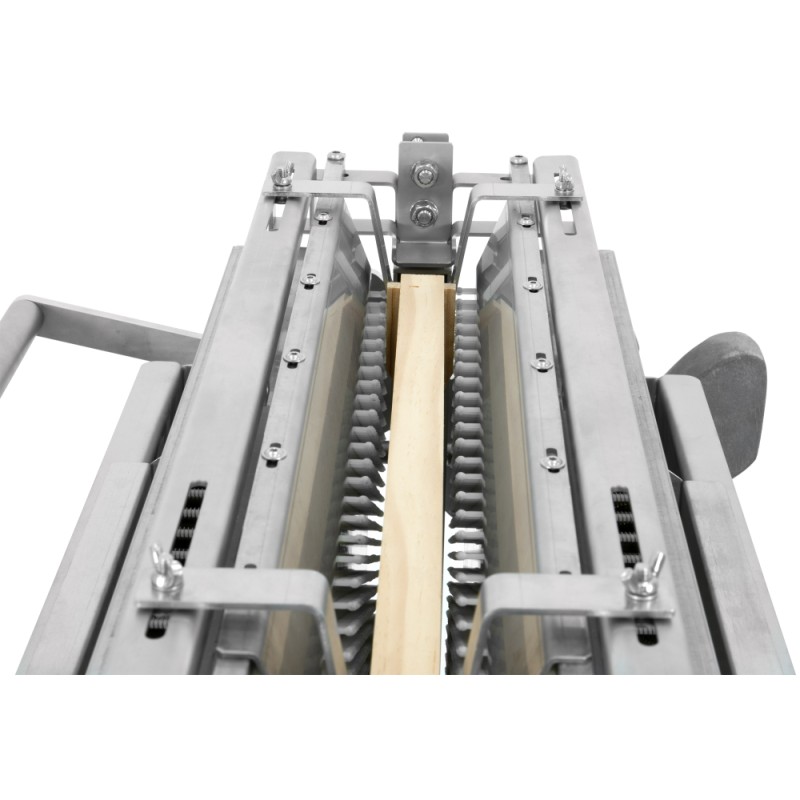
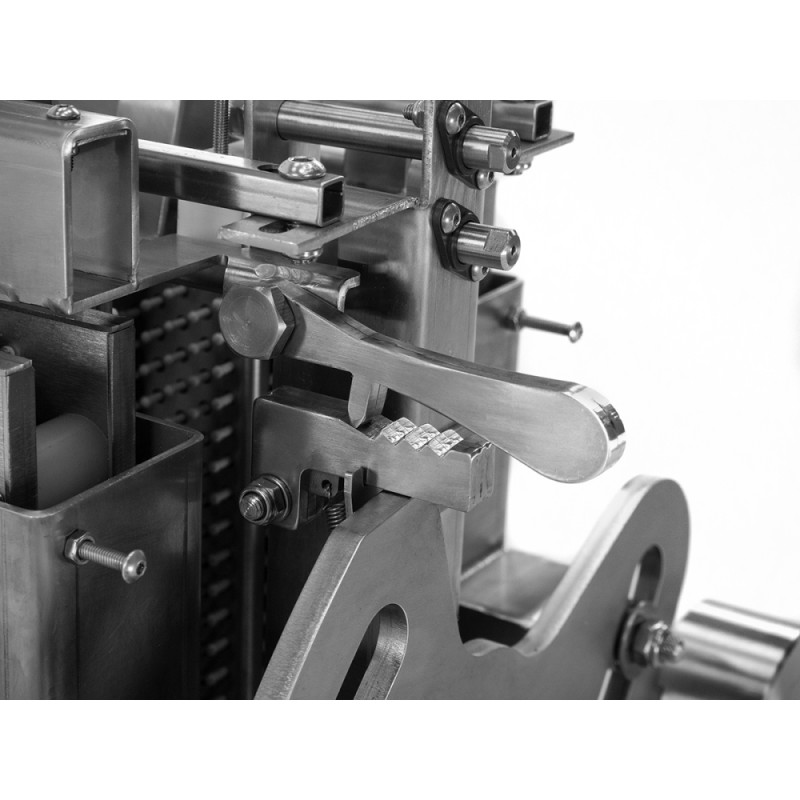
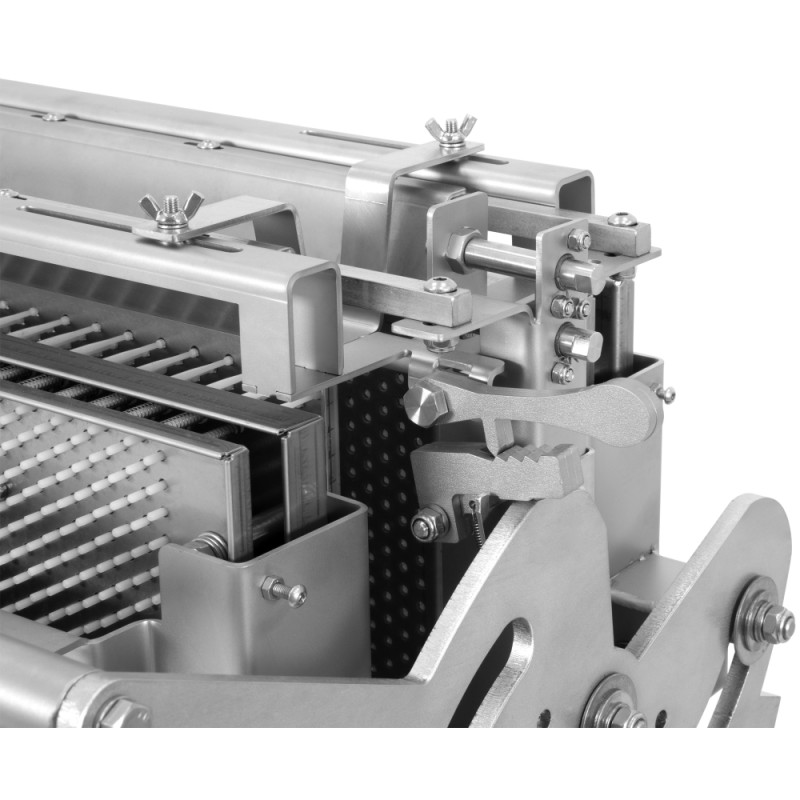
Swienty manual pricker: two plates with over 1,500 pins each, to perforate the cappings on dense honeys.
It pricks, it does not cut. And that is the whole difference. The frame goes between the two plates and you work the lever: the pins pierce the cappings and open the cell without removing it. That is what makes it possible to extract heather, bell heather or ling, honeys that stay put in a conventionally uncapped frame.
01 · IT PRICKS, IT DOES NOT CUT
An uncapper removes the layer of wax and drops it into the tub: that is where cappings wax comes from, the first-quality wax. A pricker removes nothing: it perforates. The consequence has to be said plainly: with this method you get no cappings wax.
In exchange the comb stays practically intact and the bees have far less to rebuild when it goes back. It is a real trade, not a free advantage: you give up the wax to gain in comb preservation and in being able to extract what otherwise will not come out.
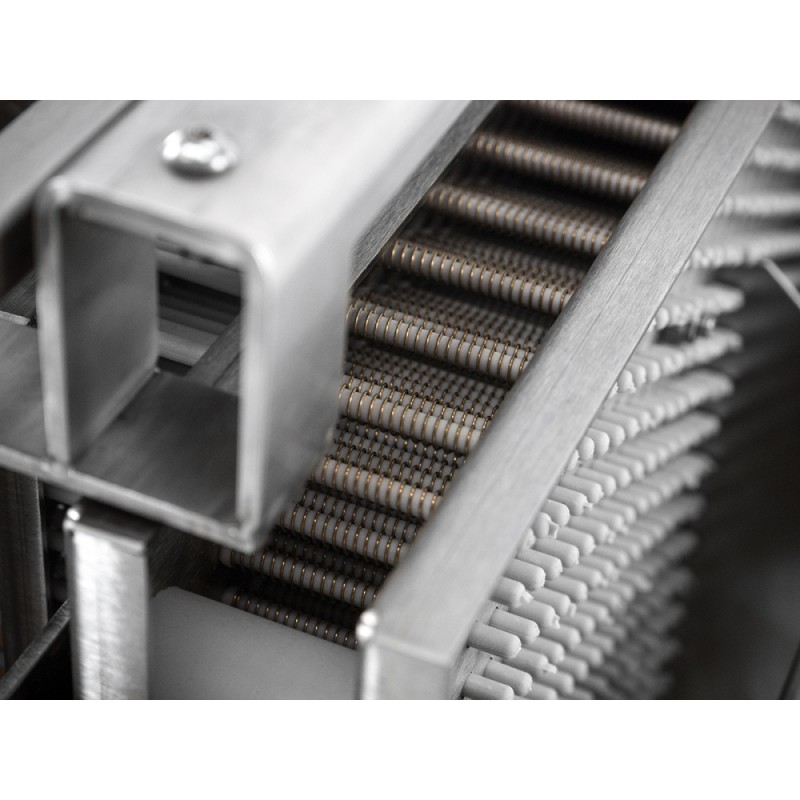
02 · 1,500 PINS A PLATE, ON SPRINGS
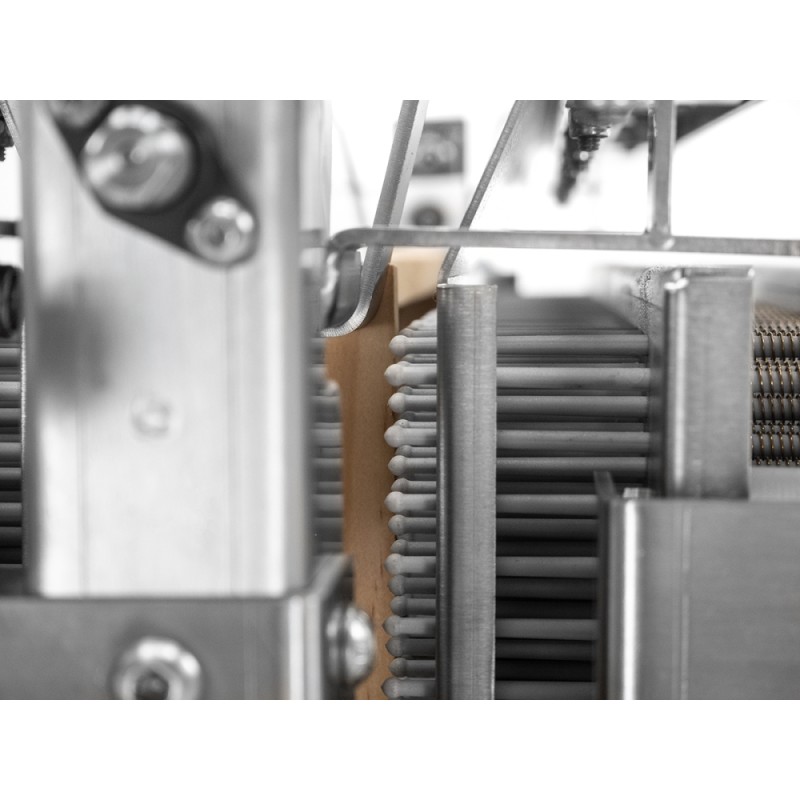
Each plate carries over 1,500 pins mounted on springs. That suspension is the heart of the design: it lets a pin that meets a hard cell, hardened pollen or the frame's timber give way instead of bending.
It is what protects the comb and the machine at the same time. Without the spring, every irregularity in the frame would be a bent pin.
03 · TWO OR THREE FRAMES A MINUTE
Output is 2 to 3 frames a minute, some 120 to 180 an hour. Compared with an automatic uncapper — around 200 — it is slower, and that is worth knowing: this machine does not replace an uncapping line, it solves the specific case of honey that will not flow.
It takes frames up to 442 × 270 mm, measured over the lugs, which covers Dadant and Langstroth. Measure the comb and you will get considerably less: same part, measured differently.
04 · STAINLESS FROM TOP TO BOTTOM
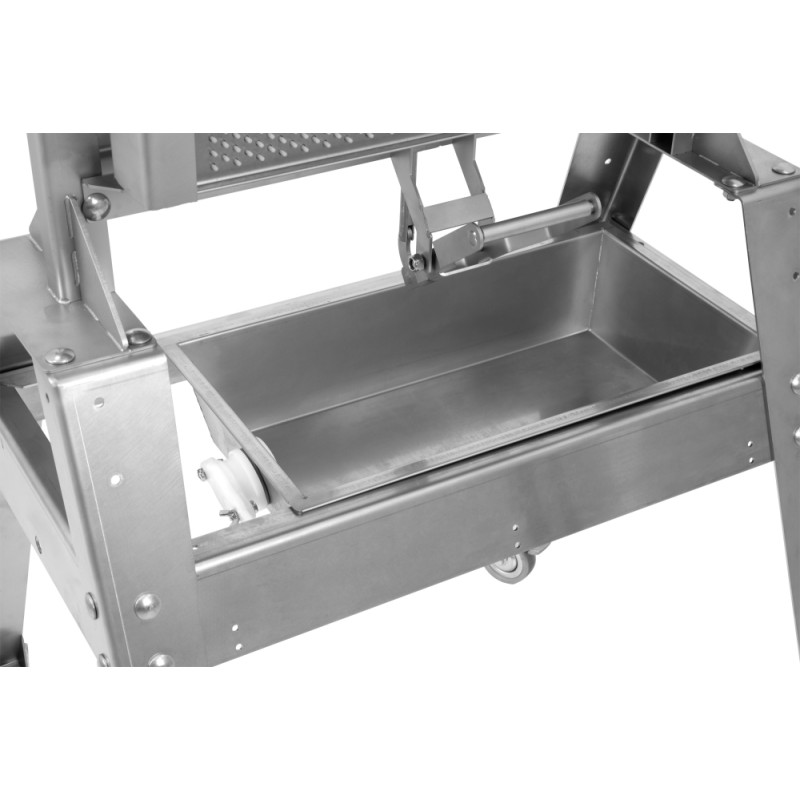
Construction is entirely stainless steel, which in an extraction room is the only sensible option: it stands up to the acidity of honey and to hot-water washing without pitting.
It is a standing machine, around 66 cm long and 30 kg, that stays in its place beside the extractor. Built by the Danish firm Swienty.
05 · BEFORE YOU BUY
A tool for honey that will not flow.
| ✓ A GOOD FIT | Heather, bell heather, ling and very dense honeys. Frames up to 442 × 270 mm over the lugs. |
| ⚠ ASK US ABOUT WIDTH AND HEIGHT | The maker's two sources disagree on those two figures. If your space is tight, ask us first. |
| ✕ IT YIELDS NO CAPPINGS WAX | It is not an uncapper: it perforates rather than removes. If you want the wax, you need a knife or chains. |
| Function | Perforating the cappings, not uncapping |
|---|---|
| Plates | Two, with over 1,500 pins each |
| Suspension | Pins mounted on springs |
| Operation | Manual, by lever |
| Output | 2 to 3 frames a minute |
| Frames | Up to 442 × 270 mm over the lugs (Dadant and Langstroth) |
| Material | Stainless steel |
| Length | 66 cm |
| Weight | Around 30 kg |
| Built by | Swienty, Denmark |
| Reference | 107331 |
2 files available
Write your question
check_circle
check_circle