 Apipasta with vitamins 15kg
 Beecomplet® Spring 14Kg
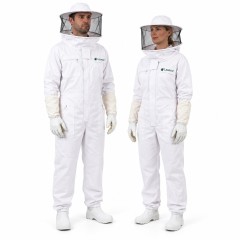
 Beekeeper suit with round veil
 Oxalic acid 1kg
 Beeswax Foundation 5kg
 Fresh royal jelly 20g
 Classic honey jar 1kg comb-lines TO77 - Pack of 16 units
 Promotor L Apis 1 litre


 Share in WhatsApp
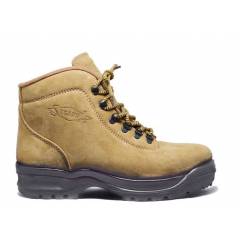
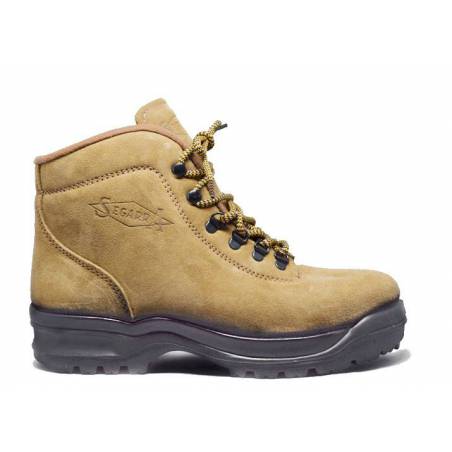
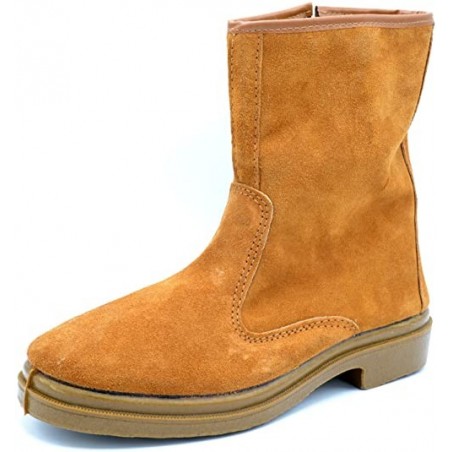
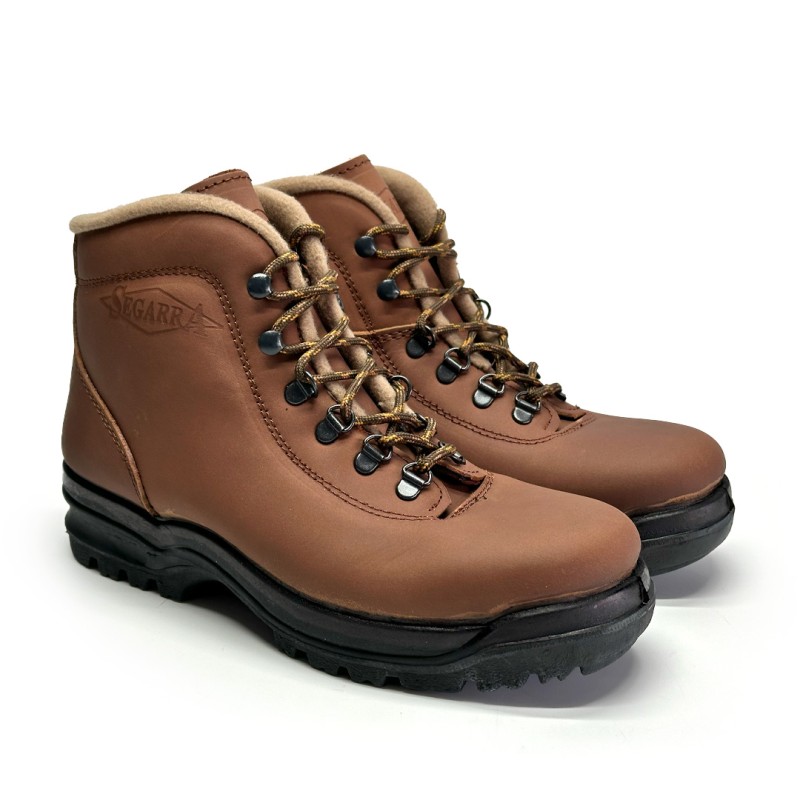
The Sprinter boots are the perfect choice for beekeepers seeking comfort, protection, and versatility in their footwear. Originally designed as trekking boots, their adaptation to the beekeeping environment makes them an indispensable tool for any beekeeper. These boots combine the necessary strength and insulation to work long hours in the field, providing stability and protection on uneven terrain and, most importantly, protection against bee stings.
Against a bee it is not the boot that protects you: it is the point where the boot meets the trousers.
Boot in 1.8 mm oiled leather with a rubber sole vulcanised directly to the upper, velour lining and a removable EVA insole. Made in Spain, from size 39 to 46.
01 · WHY A HIGH BOOT
A bee does not sting through 1.8 mm of oiled leather: that part is solved. The real problem is higher up, at the ankle, where the bee walks up and finds the gap between footwear and suit.
That is why a laced boot with a shaft matters: the elastic of the trousers or the suit falls outside and covers the whole shaft, leaving not a finger of skin or sock in sight. A low shoe gives that elastic nothing to sit on.
02 · THE SOLE
The sole is black Maxresist rubber, non-slip and resistant to contact heat, vulcanised directly to the upper — not glued. That is the difference between a boot that comes apart in two seasons and one that survives crossing rough ground with your hands full.
It also carries a layer of natural cork inside the sole, which insulates from cold ground in winter and hot ground in August.
03 · INSIDE
Padded velour lining and a removable thermoformed EVA insole — removable is no small detail: it lets you pull it out and dry it after a wet day instead of putting the whole boot in the sun.
The hooks are blued iron and the laces high-strength, which are the two parts that break first on a work boot.
04 · UPKEEP
Oiled leather repels water only while it stays fed. As soon as it looks dull and wets easily, it wants a coat of grease or shoe wax; without it, the same boot that shrugged off the dew starts letting water in.
And the usual: if it gets soaked, dry it in the shade and away from the radiator. Direct heat hardens the leather and lifts the sole.
05 · BEFORE YOU BUY
It is a trekking boot adapted to the apiary:
| ✓ FITS | Apiaries on rough ground, the cold season and long days on your feet. |
| ✕ DOESN'T FIT | Summer in a very hot region: it is a leather boot and it is warm. |
| ⚠ NOT INCLUDED | Gaiters or maintenance grease. |
| Product | Sprinter® leather beekeeping boot |
|---|---|
| Upper | Brown oiled leather, 1.8 mm |
| Sole | Black Maxresist rubber, vulcanised to the upper, non-slip |
| Insulation | Inner layer of natural cork |
| Lining | Padded velour |
| Insole | Thermoformed EVA, removable |
| Fastening | Blued iron hooks and high-strength laces |
| Sizes | 39 to 46 |
| Made in | Spain |
| Reference | 4201-SPRINTER |
The Sprinter boots are the perfect choice for beekeepers seeking comfort, protection, and versatility in their footwear. Originally designed as trekking boots, their adaptation to the beekeeping environment makes them an indispensable tool for any beekeeper. These boots combine the necessary strength and insulation to work long hours in the field, providing stability and protection on uneven terrain and, most importantly, protection against bee stings.
check_circle
check_circle