 Apipasta with vitamins 15kg
 Beecomplet® Spring 14Kg
 Beekeeper suit with round veil
 Oxalic acid 1kg
 Beeswax Foundation 5kg
 Fresh royal jelly 20g
 Classic honey jar 1kg comb-lines TO77 - Pack of 16 units
 Promotor L Apis 1 litre
- Best seller
- Made in 🇫🇷


 Share in WhatsApp
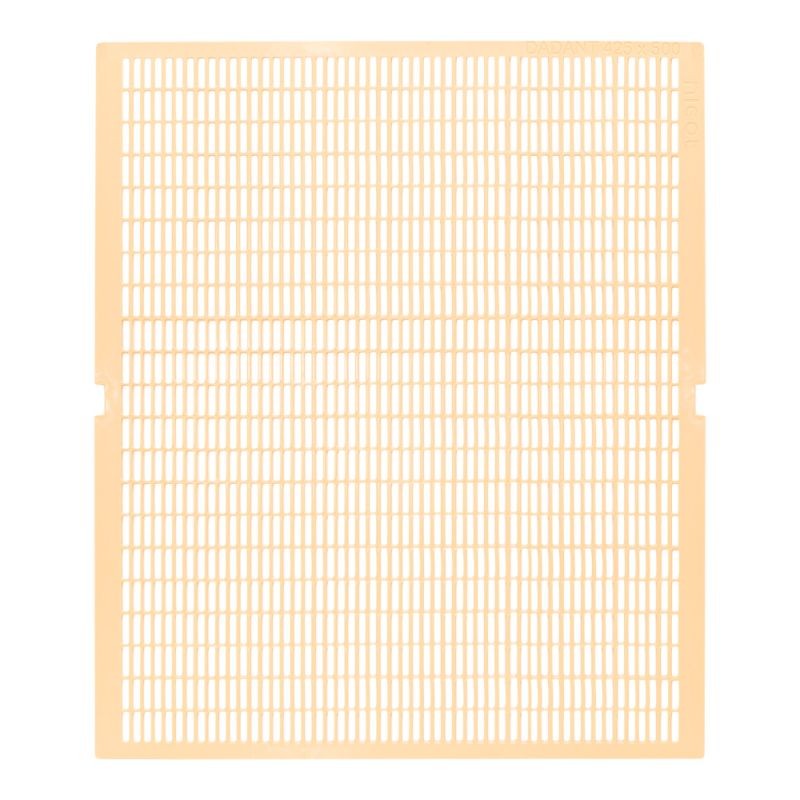
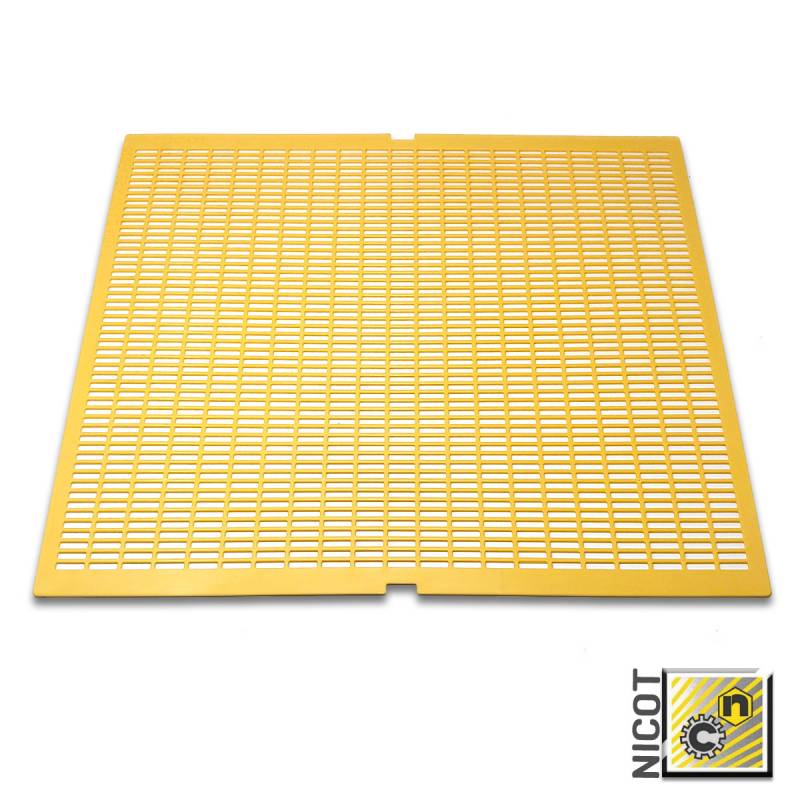
425 × 510 mm OVERALL SIZE | 10 LANGSTROTH AND DADANT US FRAMES |
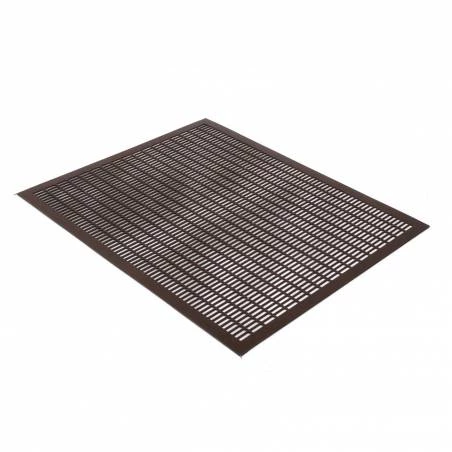
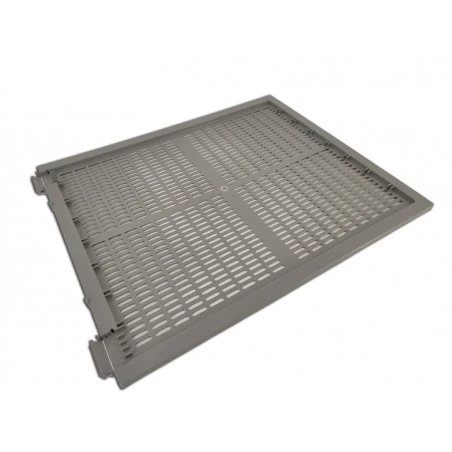
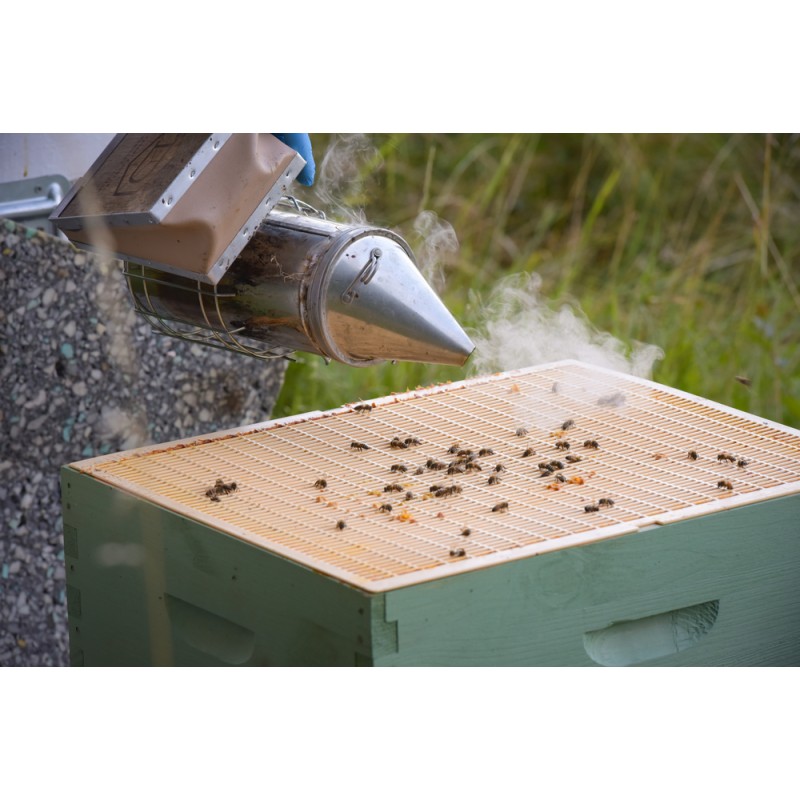
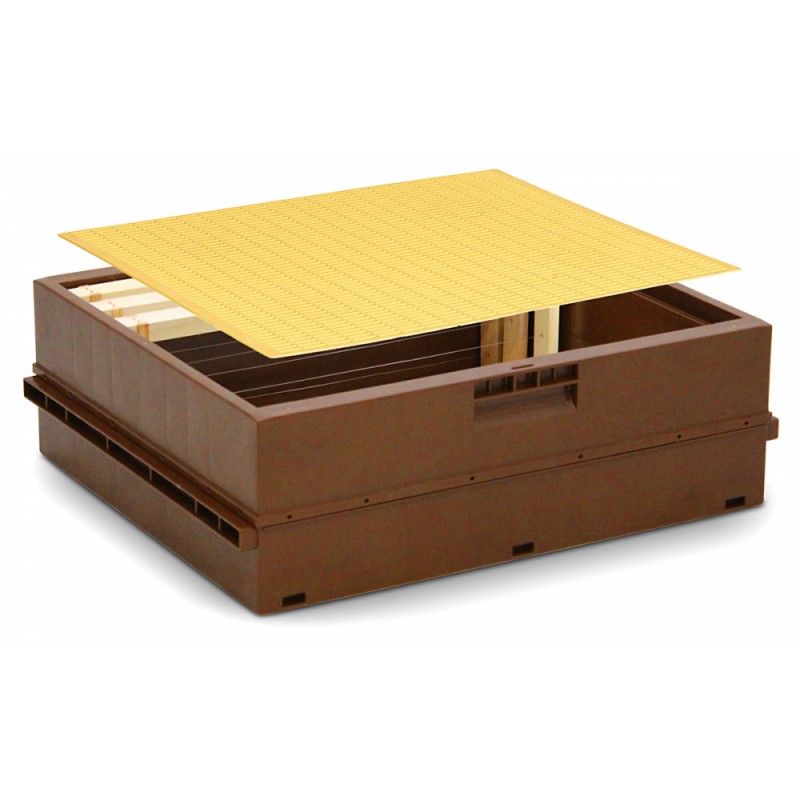
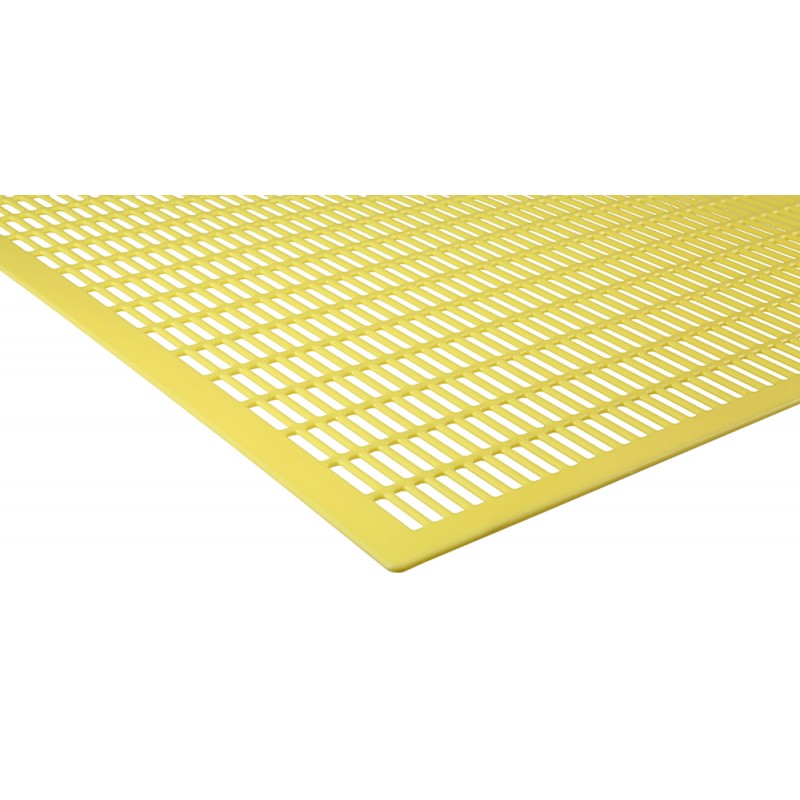
Moulded plastic queen excluder for Langstroth and Dadant US 10-frame hives: the queen stays in the brood box and the super fills with honey alone.
The question we get most on this page is the size, so here it is up front: 425 × 510 mm, the 10-frame format. If you run Dadant Blatt — the French and Italian standard — this one will not fit.
01 · COMPATIBILITY
It fits Langstroth and Dadant US 10-frame hives, wooden or plastic. It does not fit Dadant Blatt, which is a centimetre narrower and has its own format, nor Layens. If you keep both sizes in the apiary, look at the frame of the excluder itself: Nicot moulds the dimension into the plastic.
02 · HIVE MANAGEMENT
Workers pass between the bars and the queen does not, so there is no laying above the excluder. The super fills with honey alone and the combs never accumulate cocoon remains or brood pollen: they stay pale season after season and extraction runs cleaner. There is a second benefit you feel at every inspection — with the queen confined below, finding her means opening the brood box and nothing else.
03 · BUILD
It is injection-moulded in one piece from semi-rigid, food-grade recyclable plastic, with rounded edges: there are no burrs or welds to damage the workers' wings as they pass. Against a metal excluder it has a real working advantage — it does not create a cold zone inside the hive. Clean it by scraping and with hot water; it withstands up to 110 °C. The whole piece weighs 240 g.
04 · BEFORE YOU BUY
In some regions and with black bees it is worth weighing up: the excluder can hold the workers back from moving up into the super.
| ✓ FITS | Langstroth and Dadant US 10-frame hives, wooden or plastic. |
| ✕ DOESN'T FIT | Dadant Blatt or Layens. For Dadant Blatt, the NICOT excluder for 10-frame Dadant Blatt or the NICOT excluder for 12-frame Dadant Blatt, 500 × 500 mm. |
| Material | Food-grade recyclable plastic, semi-rigid |
|---|---|
| Dimensions | 425 × 510 mm |
| Weight | 240 g |
| Compatibility | Langstroth and Dadant US, 10 frames |
| Heat resistance | Up to 110 °C |
Data sheet
1 file available

My advice for finding the queen with an excluder
If you work with two brood boxes and a laying queen, I would use the excluder to help narrow the search. The guide by Uzunov, Gabel and Büchler suggests placing it between the boxes and checking after 3 days: fresh eggs identify the box in which the queen is laying. This is a temporary use, different from separating brood from honey supers.
During this check, I would not move brood frames between the boxes, because you would lose the clue you are looking for. And I would not conclude that the colony is queenless just because there are no eggs: this method assumes a queen that is laying.
If you work with a single box or cannot come back after three days, the same excluder works as a last resort: place it over an empty brood box and brush the bees off each frame onto it, one at a time. The workers pass through and the queen stays on top of the excluder.
This excluder is 425 × 510 mm and is the one for 10-frame Langstroth and Dadant US hives. The 500 × 500 mm one, for 12-frame Dadant Blatt, is a separate item from the same maker: the NICOT queen excluder for 12-frame Dadant Blatt. Measure the inside of your body before choosing: the grid has to rest on the rebate without leaving a gap at the edges, and a centimetre short is a gap the queen will climb through.
Sorry, no results found.
Write your question