 Apipasta with vitamins 15kg
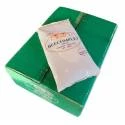 Beecomplet® Spring 14Kg
 Beekeeper suit with round veil
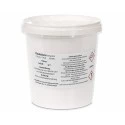 Oxalic acid 1kg
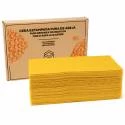 Beeswax Foundation 5kg
 Fresh royal jelly 20g
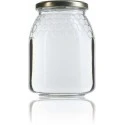 Classic honey jar 1kg comb-lines TO77 - Pack of 16 units
 Promotor L Apis 1 litre

 Share in WhatsApp
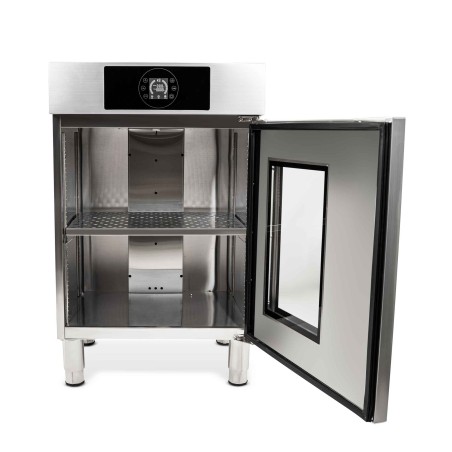
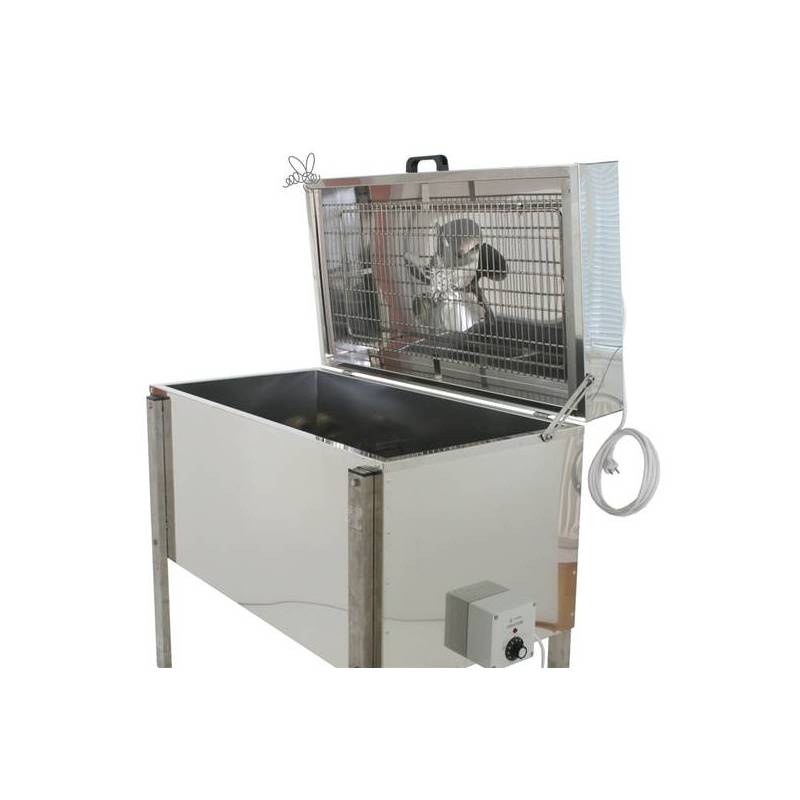
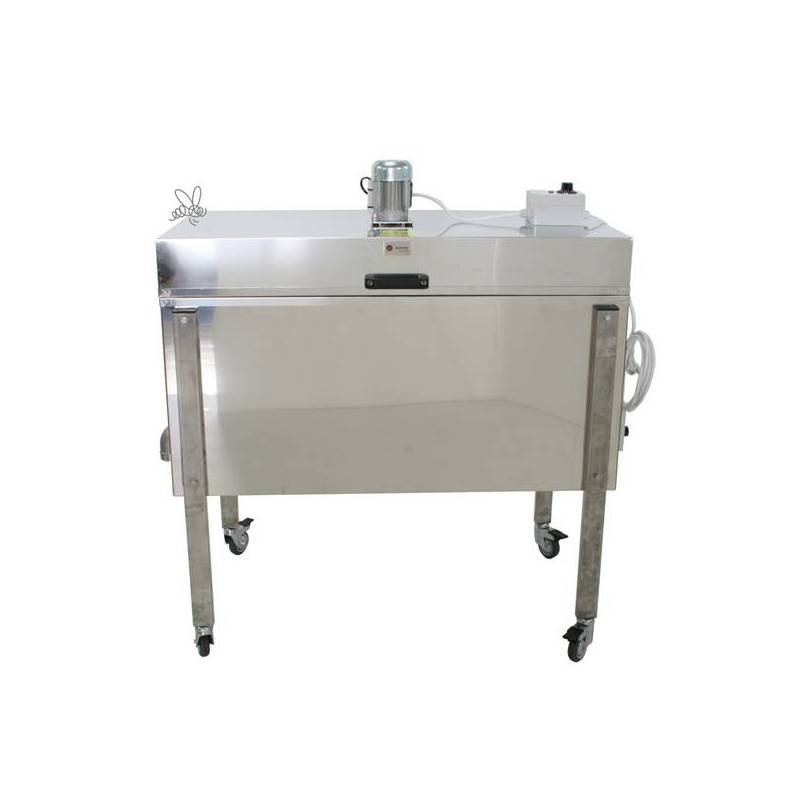
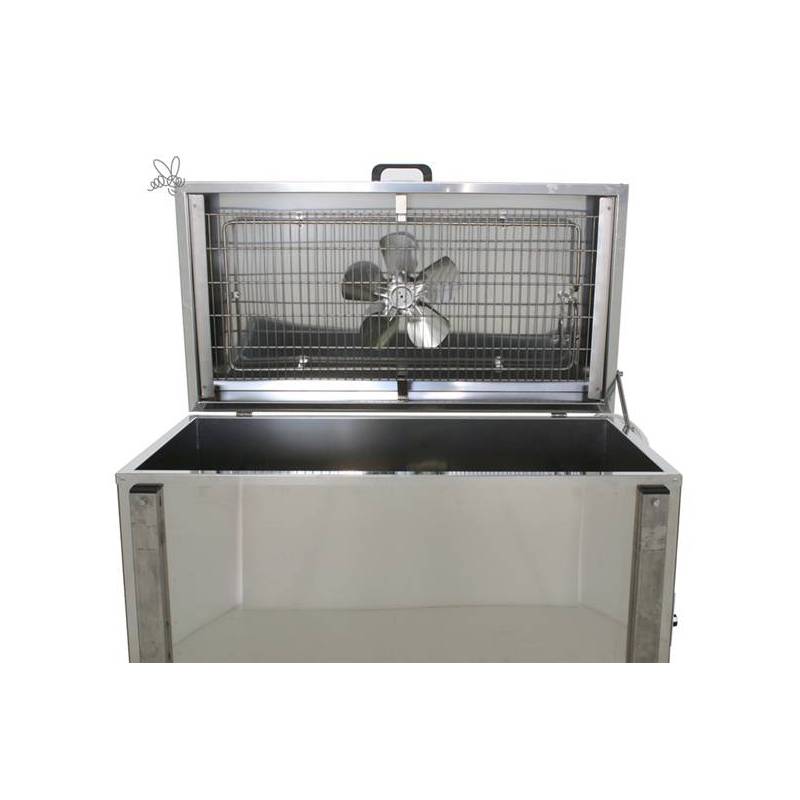
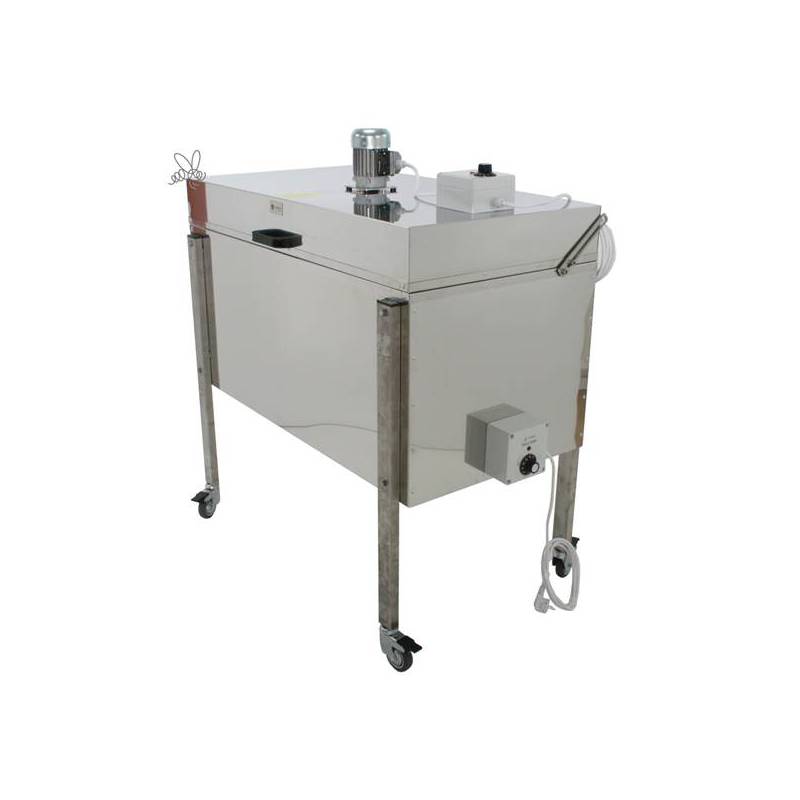
Multifunction bench with insulated double wall and two independent heats: hot air at 80 °C in the lid and elements at 40 °C in the base.
The two heats are the whole idea, and that is what the sheet never explained. The heat that melts comes from above, from the fan in the lid; below, at 40 °C, sits the honey that has already drained. That is how it drains up to 120 kg of cappings per batch without the collected honey ever seeing the 80 °C a hand's width above it.
01 · ABOVE MELTS, BELOW KEEPS
In the lid there is a hot-air fan adjustable up to 110 °C: that is what softens the wax and makes the honey trapped in the cappings let go and fall. In the base there are elements at 40 °C that only keep the drained honey fluid so it flows out of the tap.
If both heats were one, either the honey would cook or the wax would not release. The body is insulated double-wall stainless steel, which is what holds that difference for hours without wasting energy.
02 · THE OVERNIGHT BATCH
The maker recommends loading about 100-120 kg per batch and working with the lid at 80-110 °C and the base at 40 °C, from 3 to several hours depending on the starting temperature. That cycle fits a night exactly: you load it at the end of the day and by morning there is honey ready to bottle.
It is worth being precise about the heat: honey starts to pay above 40 °C, and it pays in HMF, a parameter with legal weight. This route is far gentler than melting, but it is not free: work at the low end of the range and do not stretch the batch beyond what it needs.
03 · THE FAST ROUTE AND ITS PRICE
The same unit will melt the cappings together with the honey: once melted, wax and honey separate by density, the wax is poured into moulds and the honey collected apart. It is quick and it leaves blocks of wax ready.
But it is the expensive route for the honey: at those temperatures the HMF rises. It is for leftovers and for end-of-season wax, not for the honey that is going into jars.
04 · THE OTHER THINGS IT DOES
It melts wax lumps, combs and old frames; it turns dry cappings into blocks of wax; it warms frames with crystallised or dense honey, the heather case, so it can be extracted; it decrystallises buckets and jars inside the chamber; and it doubles as an uncapping bench.
At the end of the season many people prefer to melt the dry cappings in a separate steam boiler so as not to dirty this machine, which is a fair call if you handle a lot of wax.
05 · BEFORE YOU BUY
A large cabinet with a specific supply.
| ✓ FITS | Up to 120 kg of cappings per batch; also buckets, jars and frames inside the 99 × 49 × 34 cm chamber. |
| ⚠ 2.65 kW AT 230 V | That is around 11.6 A: check the supply in your room before ordering. |
| ✕ IT DOES NOT STERILISE | It melts and separates; it does not sterilise, does not remove acaricides and does not replace the later settling of the wax. |
| Type | Heated multifunction bench, insulated double wall |
|---|---|
| Upper heat | Hot-air fan in the lid, adjustable from 30 to 110 °C |
| Lower heat | Elements in the base, adjustable from 30 to 80 °C (worked at 40 °C) |
| Control | Both elements, independently |
| Capacity per batch | Up to 120 kg of cappings (about 100-120 kg per load) |
| Draining cycle | From 3 to several hours |
| Internal dimensions | 99 × 49 × 34 cm |
| Material | Insulated double-wall stainless steel |
| Supply | 2.65 kW at 230 V (lid 1,670 W + base 1,000 W, about 11.6 A) |
| Manufacturer | Swienty (Denmark) |
| Reference | 104400EU |
1 file available
Write your question
check_circle
check_circle