 Apipasta with vitamins 15kg
 Beecomplet® Spring 14Kg
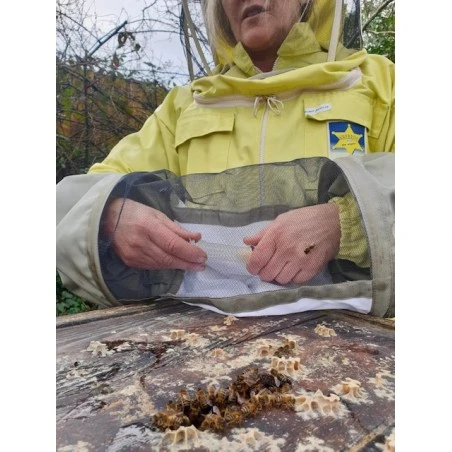
 Beekeeper suit with round veil
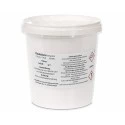 Oxalic acid 1kg
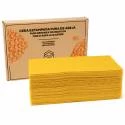 Beeswax Foundation 5kg
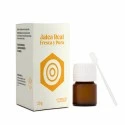 Fresh royal jelly 20g
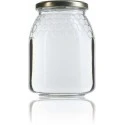 Classic honey jar 1kg comb-lines TO77 - Pack of 16 units
 Promotor L Apis 1 litre

 Share in WhatsApp
220 V · 12 V POWER SUPPLY | 4 kg SHIPPING WEIGHT |
34 × 27 × 16 cm CLOSED CASE | Stainless FOOD-GRADE CONTAINER |
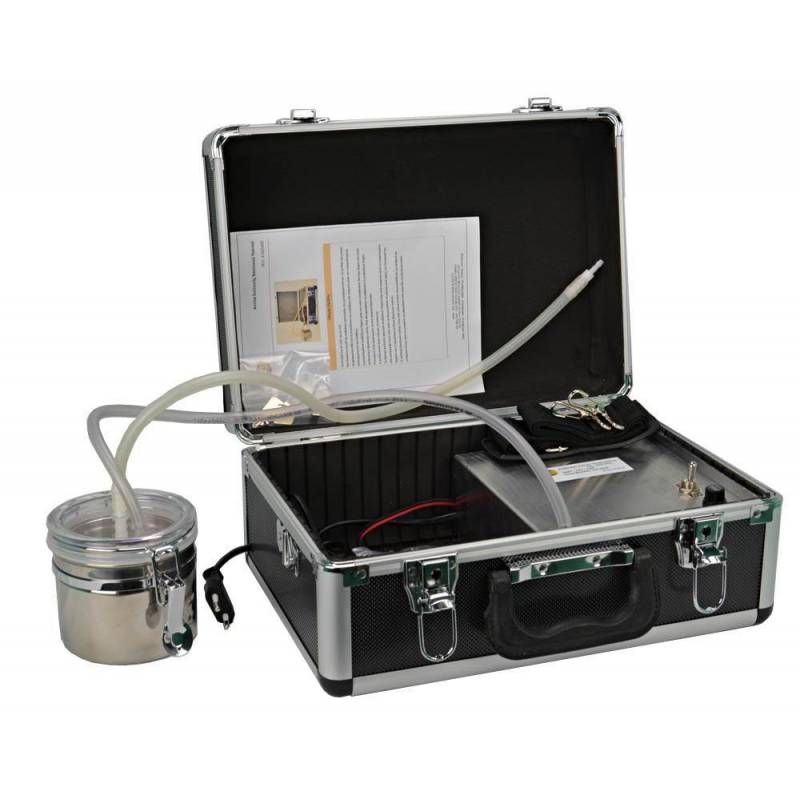
Vacuum harvester that draws royal jelly out of queen cells, with a stainless steel container and a field case.
It is not a pump that pushes product through an impeller: the unit pulls a vacuum inside a sealed stainless jar and the jelly travels up the hose on its own. It runs on 220 V mains and on 12 V vehicle power, which lets you harvest at the apiary and get the jar into the cold without a trip in between.
01 · HOW IT WORKS
The motor unit sits in the base of the case and draws air out of the gasketed stainless jar. As the pressure inside drops, jelly is pulled from the cell through the cannula, along the hose and into the jar. The hose is flexible and non-collapsible, and that is the part holding the vacuum: a soft tube flattens under suction and the pull is lost on the way.
02 · POWER SUPPLY
The unit carries a transformer and pump protection, and takes both voltages: 220 V mains when you harvest under a roof, and 12 V from a cigarette-lighter socket when you work out in the field. It is the question we are asked most often about this machine, and the short answer is that no generator is needed: an ordinary socket or the vehicle battery will do.
03 · COMPATIBILITY
The cannula draws from inside the queen cell, so it does not depend on the rearing system you use: Nicot, JZBZ, Jenter or wax cups are all the same to it. What it does require is the usual order of work, open the cell and lift the larva out before suction. It does no grafting and removes no larvae, and moves jelly only: this is no honey or syrup pump.
04 · CLEANING
Royal jelly is heat-sensitive and light-sensitive: its properties start to shift within hours at room temperature, and it belongs at 0-5 °C and in the dark from the moment of suction. The stainless jar is already opaque, so it doubles as the working container until the fridge. Hose, cannula and jar get washed the moment you finish: dried jelly inside the hose is far harder to shift.
05 · BEFORE YOU BUY
This is production kit, not starter kit: if you harvest one bar a year, a hand spatula does the same job for pennies. The harvester pays off on volume, and the arithmetic is worth doing first: at roughly 0.3 g per cell, a double bar of 66 cups yields on the order of 20 g. Nor is it a flow pump, so expect no litres-per-hour figure; our own field reference with a trained operator is around 240 g in an hour, down to their hands more than the motor.
| ✓ FITS | Royal jelly production with cell bars from any system (Nicot, JZBZ, Jenter or wax), harvesting at the apiary on 12 V or in the honey house on 220 V. |
| ✕ DOESN'T FIT | Moving honey or syrup, lifting the larvae out, and any job with no mains socket and no 12 V battery within reach. |
Draw jelly only. Entering the cell with larval or wax debris pulls solids into the hose and is the quickest way to block it.
Do not let the jar fill up to the mouth of the suction tube: liquid would pass into the motor circuit.
Unplug from the mains or the vehicle before opening the jar and before washing any part.
Filter the jelly before packing it (0.2 mm mesh) and keep it at 0-5 °C in an opaque container.
| Reference | AN65400 |
|---|---|
| Manufacturer | Anel (Greece) |
| Function | Vacuum extraction of royal jelly from queen cells |
| Power supply | 220 V mains (with transformer) and 12 V vehicle |
| Container | Stainless steel, food-grade material |
| Hose | Flexible, transparent and non-collapsible |
| Included | Hard case, jar, hose with cannula, motor unit and instructions |
| Shipping weight | 4 kg |
| Closed case | 34 × 27 × 16 cm (D × W × H) |
| EAN | 5200707706563 |
Data sheet
Specific References
check_circle
check_circle