 Apipasta with vitamins 15kg
 Beecomplet® Spring 14Kg
 Beekeeper suit with round veil
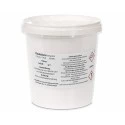 Oxalic acid 1kg
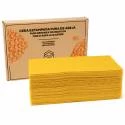 Beeswax Foundation 5kg
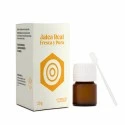 Fresh royal jelly 20g
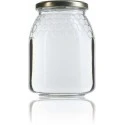 Classic honey jar 1kg comb-lines TO77 - Pack of 16 units
 Promotor L Apis 1 litre

 Share in WhatsApp
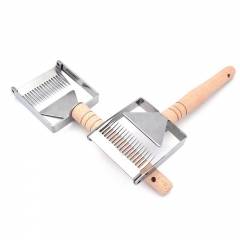
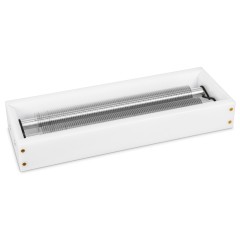
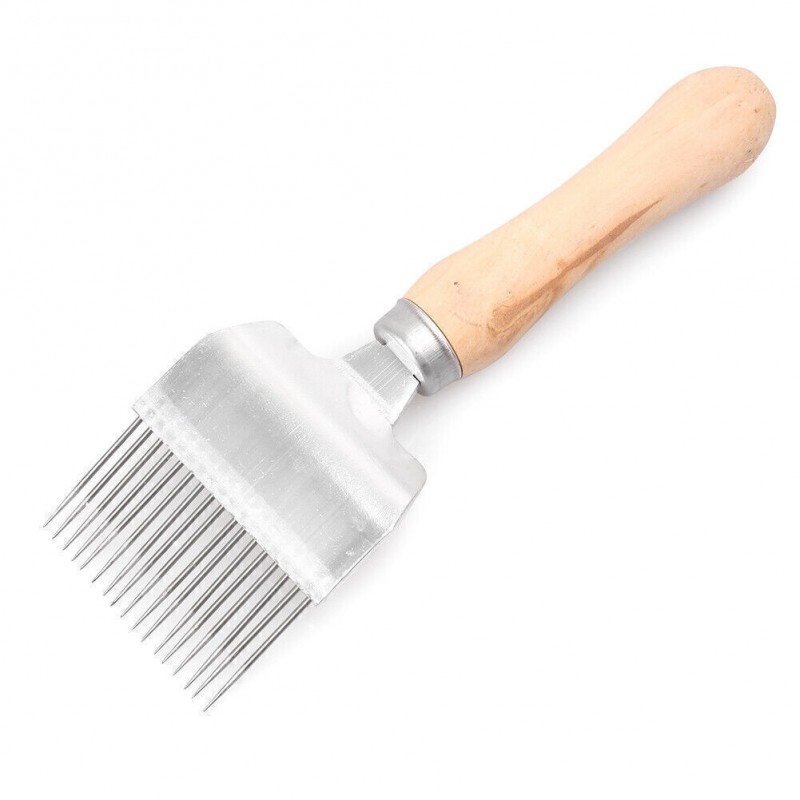
Uncapping fork with fine stainless tines in a single row and a turned wooden handle. 22.5 cm.
It does not shave the capping off: it lifts it. That is how it reaches where a knife rides over, and why it finishes everything else.
01 · WHERE IT BEATS THE KNIFE
A knife does well on flat, regular comb. As soon as there are sunken cells, corners or a bowed face, the blade rides over and leaves cells closed that then will not give up their honey in the extractor. The tines dig in exactly there. And it is the finisher after an automatic uncapper, which opens the central band and leaves the edges closed.
02 · IT TAKES LESS WAX
Lifting only the lid takes less wax than a knife cut: you recover the honey clinging to the capping and the comb stays whole for the bees to reuse rather than rebuild.
03 · KNIFE, FORK OR ROLLER
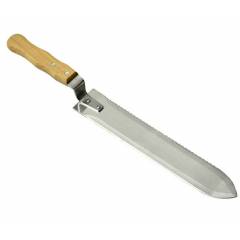
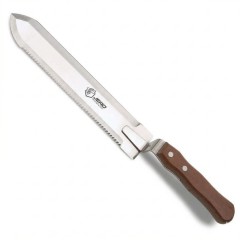
The knife is the fast one on regular comb and fluid honey, and the one that removes most wax. The fork — this — is the fine one: it reaches the irregular parts and finishes what the others leave. And the needle roller removes nothing: it punctures the capping and stirs the honey inside the cell, which is what thixotropic honeys such as heather need. You do not choose by preference: the comb and the texture of the honey decide.
04 · BEFORE YOU BUY
Take off honey and wax when you finish, before they harden, and dry it without bending the tines. Do not leave the handle soaking, and check before each use that no points are bent: those are what tear the comb.
| ✓ FITS | Irregular combs, sunken cells and finishing after an automatic uncapper. |
| ✕ DOESN’T FIT | Uncapping a big harvest of regular comb: a knife is faster there. |
| Reference | UF03 |
|---|---|
| Type | Uncapping fork |
| Tines | Stainless steel, single row of fine tines |
| Handle | Turned wood |
| Dimensions | 22.5 × 7.1 × 3.5 cm |
| Use | Manual uncapping and finishing after an automatic uncapper |
| In the range | Uncapping knife · needle roller for thixotropic honeys |
Data sheet

check_circle
check_circle