 Apipasta with vitamins 15kg
 Beecomplet® Spring 14Kg
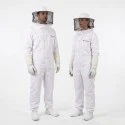 Beekeeper suit with round veil
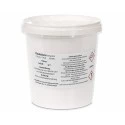 Oxalic acid 1kg
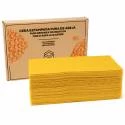 Beeswax Foundation 5kg
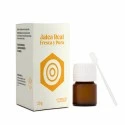 Fresh royal jelly 20g
 Classic honey jar 1kg comb-lines TO77 - Pack of 16 units
 Promotor L Apis 1 litre

 Share in WhatsApp
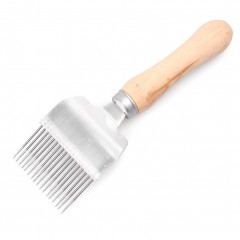
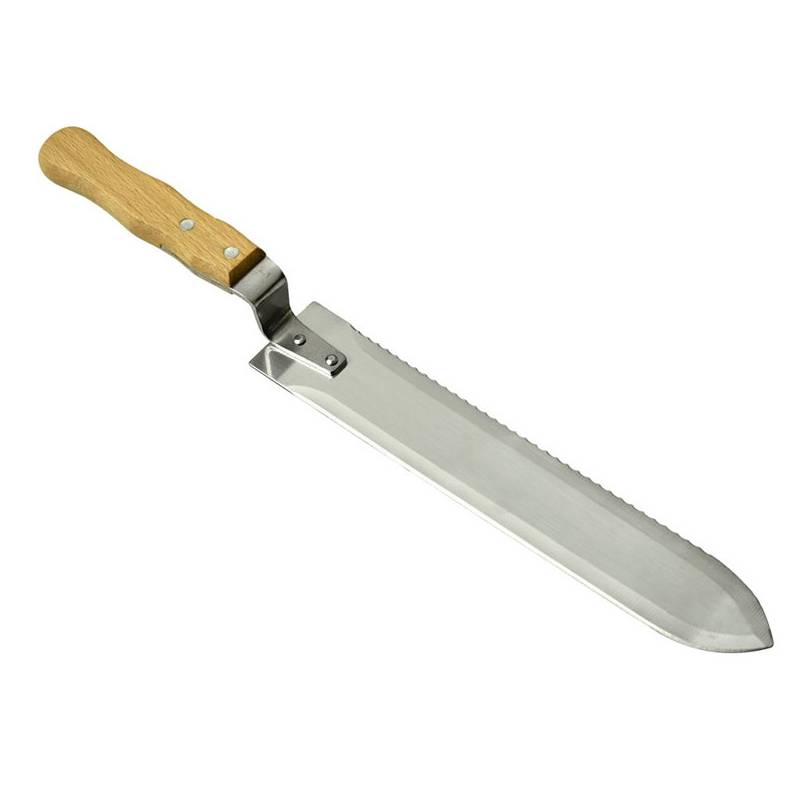
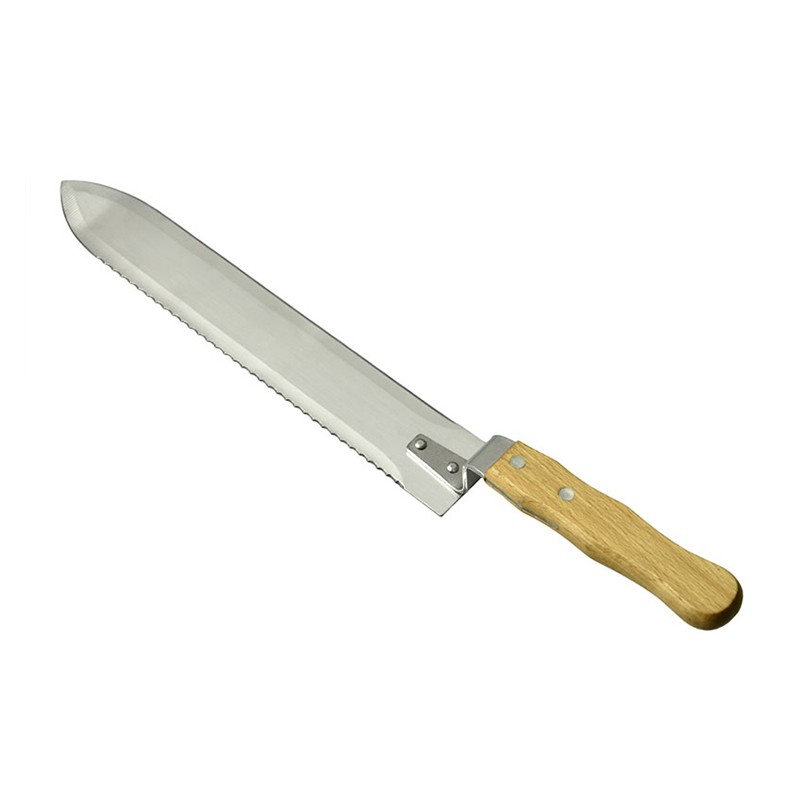
Uncapping knife with a 28 cm serrated edge, a 1.8 mm blade and a wooden handle.
The serration is not a gimmick: it is what bites into old, hard wax full of cocoons, where a plain edge skids. That is what it is built for, and that is why it is not the knife for everything.
01 · HIVE HEALTH
Heat it in a water bath and cut the cappings with the blade warm. As a practical reference, uncapping knives are cited at around 49 °C for cutting; what matters is that it is warm, not scalding. If you want to move fast, keep two: cut with one while the other warms in the water, and alternate.
02 · PERFORMANCE
A serrated edge suits old or dark wax, with nymph cocoons and hard comb. On light, recent, well-formed wax, a well-sharpened plain knife gives a cleaner cut. It is not that one is better: they tackle different combs.
03 · BEFORE YOU BUY
The 28 cm edge reaches right across a Dadant or Langstroth brood frame, which is where a short blade leaves you half done. And like any uncapping knife, it performs according to how sharp it is: put it away with an edge on it.
| ✓ SUITS | Old or dark wax, with cocoons and hard comb. |
| ✕ NOT THE BEST CHOICE | Light, recent wax: a plain edge does better there. |
| Edge | Serrated, 28 cm, on both sides |
|---|---|
| Blade thickness | 1.8 mm |
| Handle | Wood |
| Heating | In a water bath |
| Weight | 100 g |
Data sheet
Specific References

check_circle
check_circle