 Apipasta with vitamins 15kg
 Beecomplet® Spring 14Kg
 Beekeeper suit with round veil
 Oxalic acid 1kg
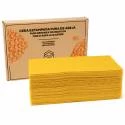 Beeswax Foundation 5kg
 Fresh royal jelly 20g
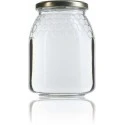 Classic honey jar 1kg comb-lines TO77 - Pack of 16 units
 Promotor L Apis 1 litre

 Share in WhatsApp
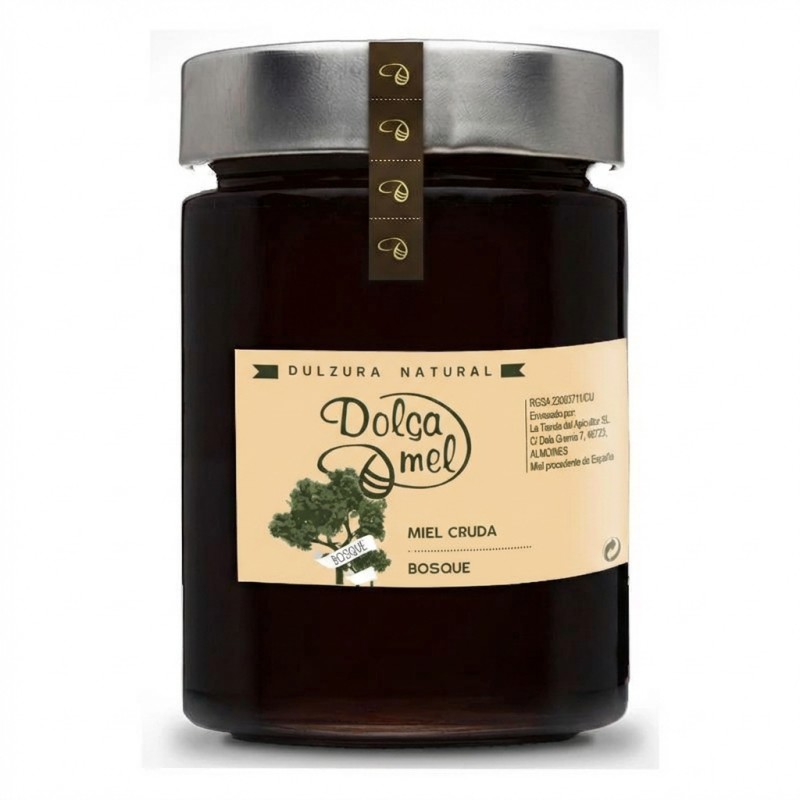
900 g GLASS JAR | Holm oak and oak QUERCUS HONEYDEW, WITH UNDERGROWTH FLORA |
Late summer HARVEST IN THE INLAND RANGES | Unpasteurised BOTTLED RAW |
Spanish forest honey in a 900 g jar: holm oak and oak honeydew with the undergrowth flora, harvested in late summer in the inland ranges and bottled unpasteurised. Dark amber with reddish glints, a malty toasted-cereal aroma and a sweetness with salty notes that sets it apart from any flower honey. It crystallises very slowly or not at all.
Bees do not make it from the nectar of a flower: they gather it from the honeydew that aphids and psyllids leave on holm oaks and oaks, which is why it tastes of forest and not of garden.
01 · SENSORY PROFILE
Amber to dark amber, reddish against the light. The aroma opens floral and turns malty at once, toasted cereal, almost old must. On the palate it is sweet with clear salty notes, less cloying than a nectar monofloral, and retronasally the maltiness grows and leaves a long finish. As honeydews have little glucose against fructose, it stays liquid or slightly dense for months.
02 · ORIGIN
The main source is honeydew from holm oak, oak and cork oak, with the nectar of wild legumes, rockroses, heathers, brambles and some undergrowth labiate. It is produced across the peninsula except the coastal strip, above all in the inland mountain ranges, and harvested in late summer. Like any honey of a landscape and a season, two harvests are not identical: the share of honeydew and the colour change with the year.
03 · WHAT RAW MEANS
“Raw” is the trade name of the range: honey bottled unpasteurised. Directive 2001/110/EC, in Spain Royal Decree 1049/2003, sets what separates a honeydew honey from a flower honey and what betrays heat: electrical conductivity of at least 0.8 mS/cm in honeydews and blends, HMF below 40 mg/kg and diastase of at least 8 Schade units. Each lot’s values go in its quality sheet, not on this page, because they change with the harvest.
04 · AT THE TABLE
With its salty notes and malty base it works where another honey is too sweet: cured and blue cheeses, fresh goat’s cheese, foie, glazed roasts, mustard marinades and sweet-and-sour dishes. Alone, on buttered toast, Greek yoghurt or black tea. Anyone who thinks they do not like honey because it is cloying usually changes their mind with this one. Keep closed, cool and dry, no fridge. It is a food, not a treatment, and is not given to children under 12 months.
05 · BEFORE YOU BUY
One 900 g glass jar is supplied; the rest of the raw range (heather, eucalyptus, thyme, wildflower, lemon, loquat) has its own pages.
| ✓ FITS | Anyone after a dark, malty, not very sweet honey for cheeses, roasts and breakfasts with character. |
| ✕ DOESN’T FIT | Anyone wanting a pale, mild flower honey: this is honeydew and tastes of forest. |
| ⚠ NOT INCLUDED | Lot quality sheet: analytical values are published per lot, not here. |
| Reference | BOS0900 |
|---|---|
| Trade name | Raw forest honey |
| Ingredient | Honey |
| Botanical origin | Holm oak, oak and cork oak honeydew (Quercus) with undergrowth flora |
| Geographical origin | Spain, inland mountain ranges |
| Harvest | Late summer |
| Net quantity | 900 g, glass jar |
| Profile | Dark amber; malty toasted cereal; sweet with salty notes |
| Crystallisation | Very slow or absent |
| Treatment | Unpasteurised |
| Regulation | Directive 2001/110/EC; Royal Decree 1049/2003 |
| Storage | Cool, dry place, jar closed, no fridge |
| Warning | Not suitable for children under 12 months |

Write your question
check_circle
check_circle