 Apipasta with vitamins 15kg
 Beecomplet® Spring 14Kg
 Beekeeper suit with round veil
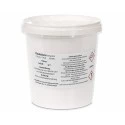 Oxalic acid 1kg
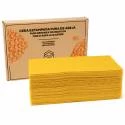 Beeswax Foundation 5kg
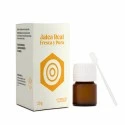 Fresh royal jelly 20g
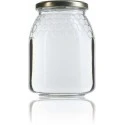 Classic honey jar 1kg comb-lines TO77 - Pack of 16 units
 Promotor L Apis 1 litre

 Share in WhatsApp
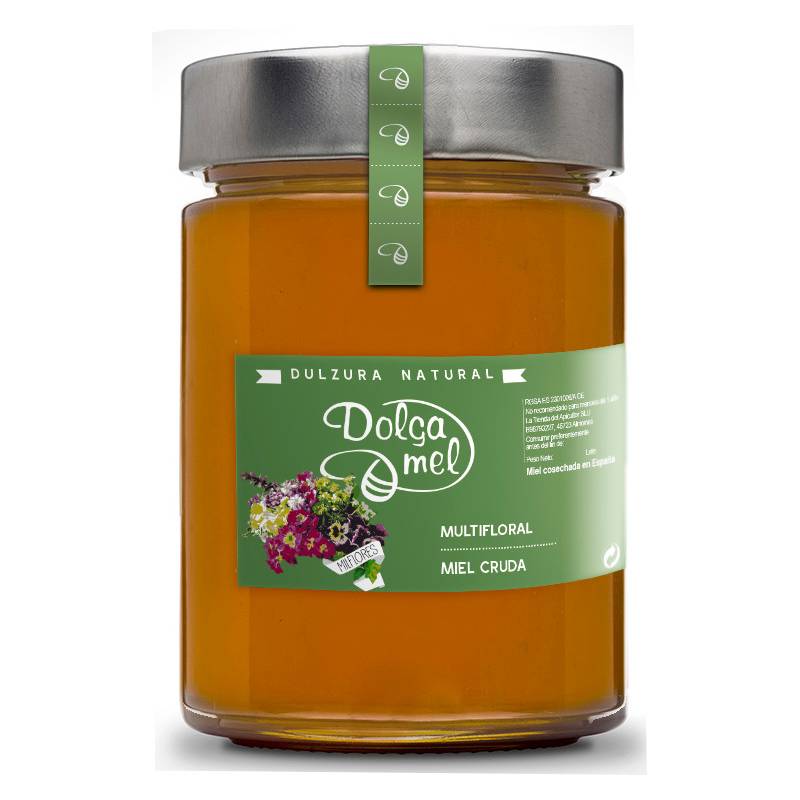
Multifloral blossom honey harvested in Spain, in a 900 g jar and bottled unpasteurised.
Multifloral honey carries a bad name it does not deserve: it is not what is left over once the single-flower honeys are separated out. It is the honey that tells you what was in bloom that year and in that place, which is why it changes from one season to the next.
01 · WHAT MULTIFLORAL IS
A honey is called multifloral when it comes from the nectar of several species and none contributes enough to declare it single-flower. It is what bees produce when there are several blooms within foraging range at once and none dominates, so the profile depends on the landscape and on when it was harvested: a spring multifloral from dry Mediterranean country runs pale and floral, and one from late summer in the hills comes out more amber and fuller-bodied. Colour and aroma change between batches, and that is normal in a honey that is not standardised.
02 · CRYSTALLISATION
As it is not pasteurised, the jar behaves like the beekeeper’s bulk honey: sooner or later it crystallises, and it may do so unevenly within the same jar. That is not a fault, nor a sign of adulteration — the speed and the size of the crystal depend mostly on the glucose-to-fructose ratio of the batch and on the temperature it is kept at. It goes back to liquid with gentle heat and patience: a bain-marie with warm water, never boiling, stirring now and then. What to avoid is the microwave and any sharp blast of heat, which heat unevenly and cost it aroma.
03 · WHAT IS IN IT
It is a question that comes up now and then: an unpasteurised honey has the same sugars as a pasteurised one. Honey is sugar and water, and the standard fixes it: in a blossom honey, fructose and glucose together come to at least 60 g per 100 g, and water may not exceed 20 % — commercially it is kept below 18.5 so it does not ferment. What changes without pasteurising is not the sugar but the handling: without that heating the enzymes and the aroma keep better, and in exchange it crystallises when its time comes. The exact figures are those of each batch’s analysis.
04 · BEFORE YOU BUY
Keep it in a dry cupboard, away from the hob and the radiator: honey takes up ambient moisture readily and that is where it really spoils. The jar holds 900 g net and measures 15 × 8.4 × 8.4 cm. And as with any food, the figures that govern are those on the jar you receive: label, origin and best-before date.
| ✓ FITS | Everyday use at home, and for anyone who wants the honey of one particular landscape and season. |
| ✕ DOESN’T FIT | Anyone after identical colour and aroma with every purchase: multifloral honey is not standardised. |
⚠ PRECAUTIONS
Honey is not recommended for children under 12 months. Always use clean, dry utensils and close the jar properly after each use.
| Denomination | Multifloral blossom honey |
|---|---|
| Net content | 900 g |
| Origin stated on the label | Honey harvested in Spain |
| Declared processing | Bottled unpasteurised |
| Appearance | Colour and aroma vary between batches; it may crystallise |
| Jar | 15 × 8.4 × 8.4 cm |
| Storage | Dry and cool, away from heat sources and direct light |
| Warning | Not recommended for children under 12 months |
1 file available

check_circle
check_circle