 Apipasta with vitamins 15kg
 Beecomplet® Spring 14Kg
 Beekeeper suit with round veil
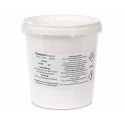 Oxalic acid 1kg
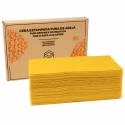 Beeswax Foundation 5kg
 Fresh royal jelly 20g
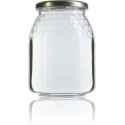 Classic honey jar 1kg comb-lines TO77 - Pack of 16 units
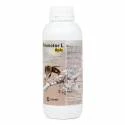 Promotor L Apis 1 litre


 Share in WhatsApp
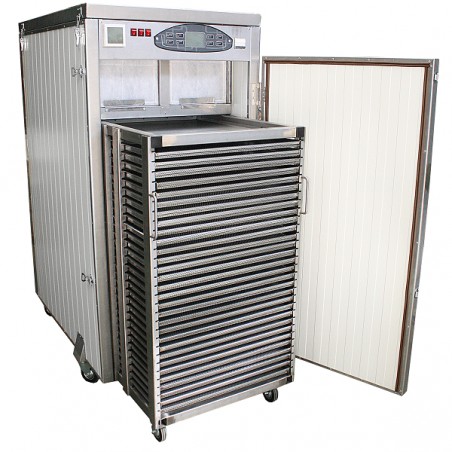
Forced hot-air dryer with 10 stainless steel trays for bringing down the moisture of freshly harvested pollen, with a 30 to 90 °C thermostat and a timer of up to 24 hours.
Freshly collected pollen may contain around 20–30% water. Moisture and warmth favour spoilage: take it promptly to the dryer, or freeze it if you intend to keep it fresh.
01 · TEMPERATURE
The machine adjusts from 30 to 90 °C. To preserve sensitive pollen constituents, Bogdanov recommends drying at the lowest possible temperature, with a maximum of 30 °C. Traditional drying practices use 40 °C, but do not preserve those constituents as well.
There is no universal boundary between preserving everything at 40 °C and damaging it at 45 °C: temperature, time and the batch all matter. Check the actual temperature in the drying area and avoid direct sunlight.
02 · THE LOAD
The stated load is 1.5–2 kg per tray and 15–20 kg fresh pollen per batch, spread thinly to about 2 cm at most. Dry weight depends on initial moisture: for example, 20 kg at 25% moisture would yield about 16 kg at 6%, allowing only for water loss.
The stated 6–12 hours is an indication, not a guarantee for every load or setting. Check samples from several trays; if drying is uneven, review the load distribution and airflow before declaring the batch finished.
03 · THE END POINT
Bogdanov’s drying reference is 6 g of water per 100 g of pollen. Campos gives 6–8% as a tentative maximum in a proposed standard, not a storage guarantee. Above 10%, susceptibility to fermentation increases; further drying does not always improve texture. Verify moisture using a method suitable for pollen.
Let the pollen cool before closing the container, in clean, dry surroundings. Our guide gives 10–14 minutes of cool airflow as a reference: adapt this to the load and the machine’s available functions. That duration alone guarantees neither cooling nor storage stability.
04 · THE MACHINE
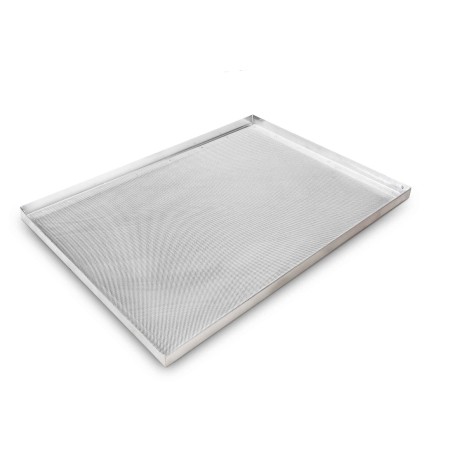
The trays and everything that touches the pollen are food-grade 304 stainless steel and go in the dishwasher, which is what lets you move from one lot to the next without carrying residues across.
It runs on 220 V at 1,000 W with a quiet fan, so its place is the honey house and not the apiary. The LED panel sets the time in 30-minute steps and the temperature in steps of 5 degrees.
05 · BEFORE YOU BUY
A dryer only solves half the problem: the other half is collecting daily and getting there soon.
| ✓ FITS | Harvests of 15-20 kg per batch, with a socket nearby and pollen collected the same day. |
| ✕ DOESN'T FIT | For drying out in the field, or for large lots in continuous flow: this works in batches. |
| ⚠ NOT INCLUDED | No sieving or cleaning: it dries, it does not separate legs, wings or plant debris. |
| Trays | 10, 304 stainless steel, included |
|---|---|
| Capacity | 1.5-2 kg per tray · 15-20 kg of fresh pollen per batch |
| Temperature | Adjustable from 30 to 90 °C in 5 °C steps; the equipment range is not a pollen drying protocol |
| Timer | 0 to 24 hours, in 30-minute steps |
| Power | 1,000 W at 220 V |
| System | Forced hot-air convection, with overheat protection |
| Noise | Around 35 dB |
| Cleaning | Removable parts are dishwasher safe |
| Size and weight | 44 × 41 × 52 cm · 14 kg |
Write your question
check_circle
check_circle