 Apipasta with vitamins 15kg
 Beecomplet® Spring 14Kg
 Beekeeper suit with round veil
 Oxalic acid 1kg
 Beeswax Foundation 5kg
 Fresh royal jelly 20g
 Classic honey jar 1kg comb-lines TO77 - Pack of 16 units
 Promotor L Apis 1 litre
- Out of stock

 Share in WhatsApp
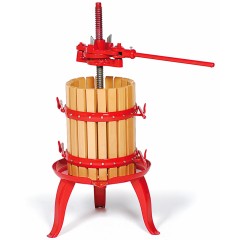
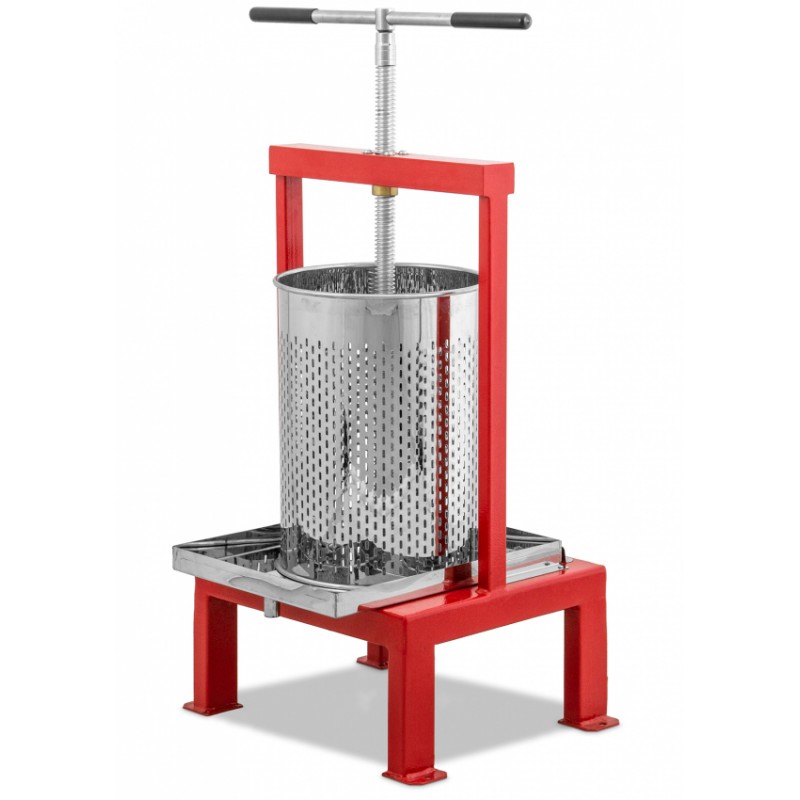
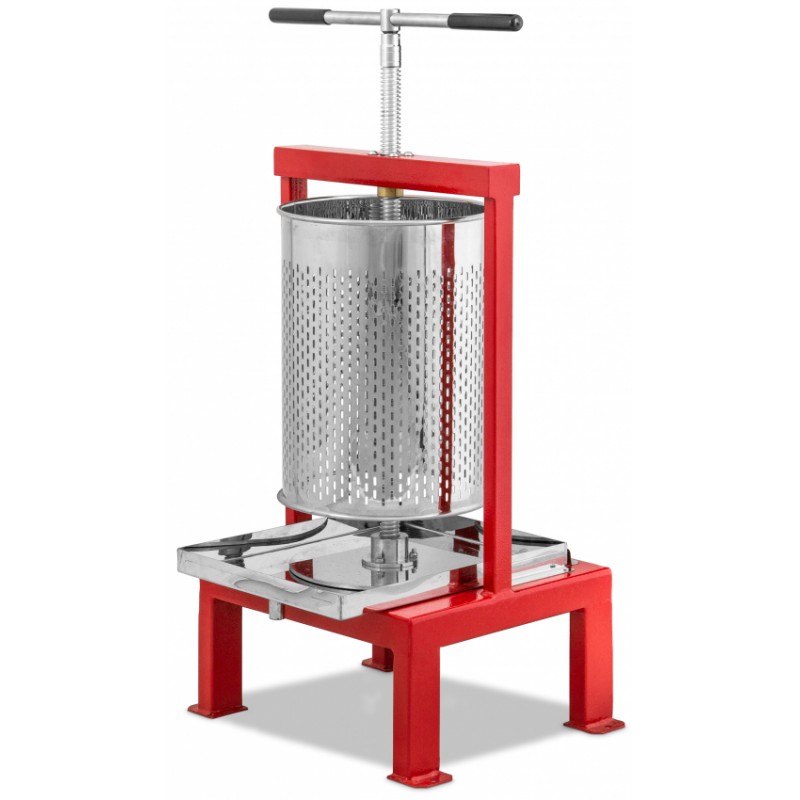
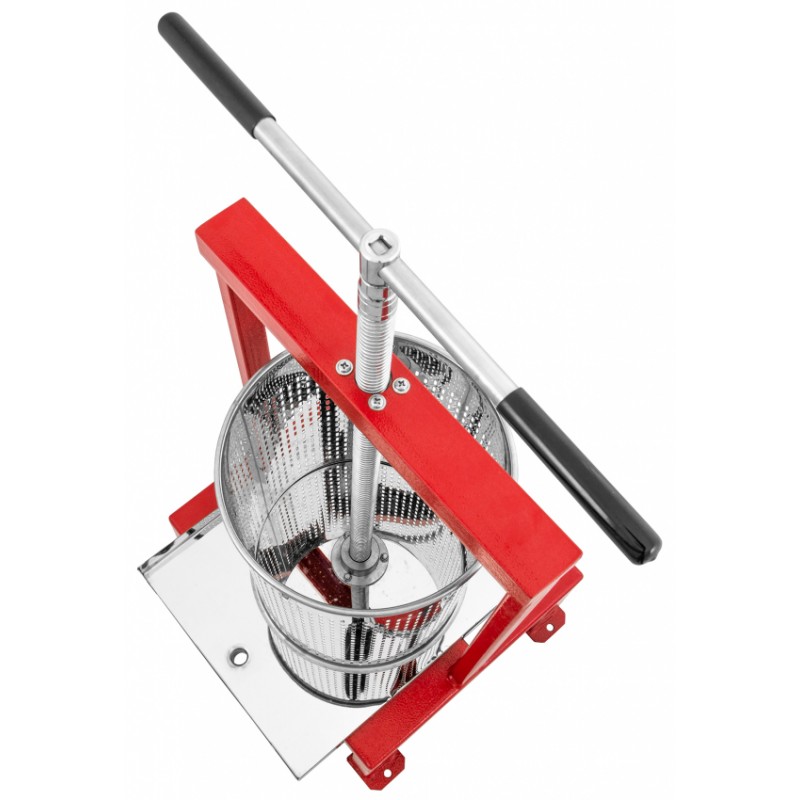
Manual screw press with a perforated stainless steel basket 25 cm across, to drain the honey out of cappings and to press combs from hives without wired frames.
Pressing is not the same as spinning, and the difference ends up on the label. Honey obtained by compressing the combs has a name of its own in the regulation, and a temperature ceiling to go with it.
01 · PRESSED HONEY IS A CATEGORY
European honey law distinguishes drained, extracted and pressed honey, and defines the last as the one obtained by compressing broodless combs, with no applied heat or with moderate heating of up to 45 °C.
Two concrete conditions, and both easy to miss: comb with brood in it does not qualify, and if you warm it past those 45 °C to make it run, neither does the honey.
02 · THE TWO JOBS
The first is recovering the honey trapped in the cappings, which over a season is kilos. The wax cake left in the basket then goes to the melter.
The second has no alternative: combs from a Warré or a Kenyan top-bar hive have no wired frame and will not survive an extractor. Pressing is the only way to get the honey out of them.
03 · WHAT COMES OUT
Pressed honey carries more pollen and more fine wax than extracted honey, so it wants time in a settling tank and a strain before jarring: foam and wax rise on their own if you give them time.
And it is slow. A 25 cm basket is a modest load and the force comes from your arm: this is a tool for small batches, not for a whole season.
04 · THE MACHINE
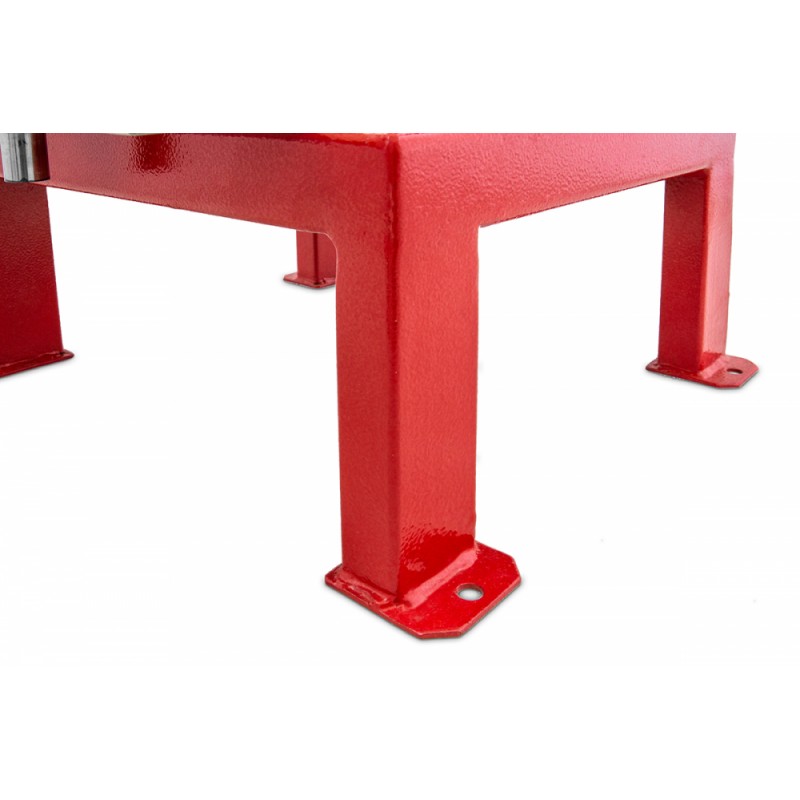
The perforated basket, the plate and the screw are stainless steel; the frame is painted steel. The collecting tray is 37 × 30 × 3 cm with the outlet flush with the bottom, which is what lets you leave it draining into a bucket on its own.
At 88 cm high you work standing up, and with a 45.5 × 40.5 cm footprint it asks for its own corner in the honey house.
05 · BEFORE YOU BUY
It is an arm-powered press: it solves the cappings of a small apiary and the comb that cannot be spun.
| ✓ FITS | A small apiary with cappings piling up, or Warré and top-bar management. |
| ✕ DOESN'T FIT | For handling cappings in quantity: that is where a powered cappings press or spinner comes in. |
| ⚠ NOT INCLUDED | The collecting bucket and the strainer. And the pressed wax cake then goes to the melter. |
| Type | Manual screw press |
|---|---|
| Basket | Perforated stainless steel · 25 cm inside diameter |
| Wetted parts | Basket, plate and screw in stainless steel |
| Frame | Painted steel |
| Tray | 37 × 30 × 3 cm, outlet flush with the bottom |
| External dimensions | 45.5 × 40.5 cm · 88 cm high |
| Uses | Cappings and combs without wired frames (Warré, top-bar) |
Write your question
check_circle
check_circle