 Apipasta with vitamins 15kg
 Beecomplet® Spring 14Kg
 Beekeeper suit with round veil
 Oxalic acid 1kg
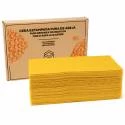 Beeswax Foundation 5kg
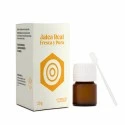 Fresh royal jelly 20g
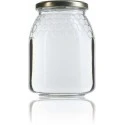 Classic honey jar 1kg comb-lines TO77 - Pack of 16 units
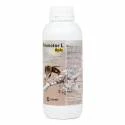 Promotor L Apis 1 litre

 Share in WhatsApp
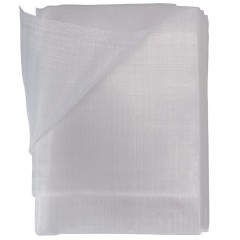
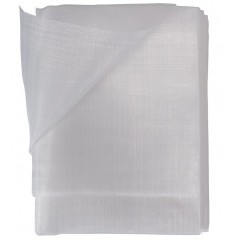
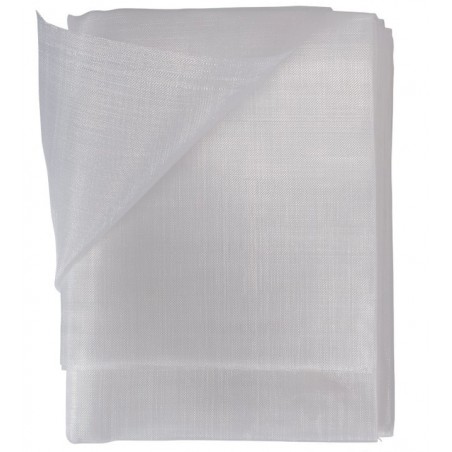
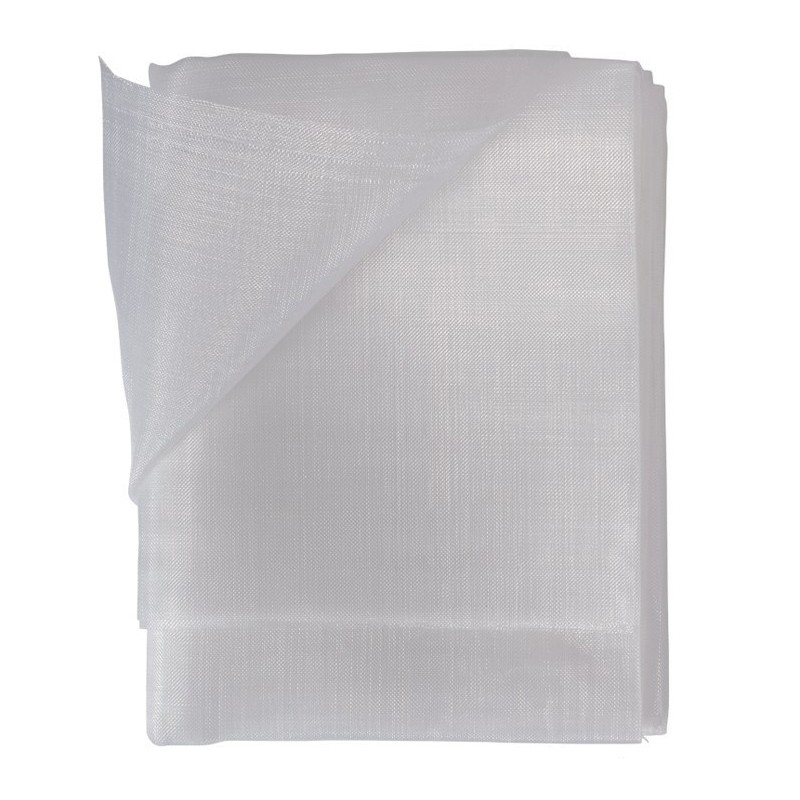
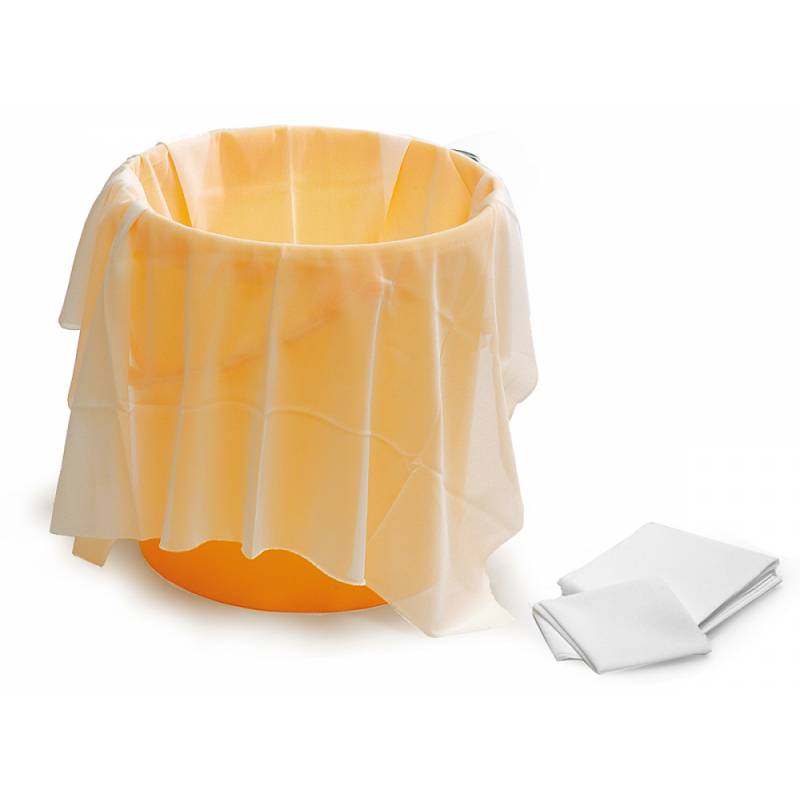
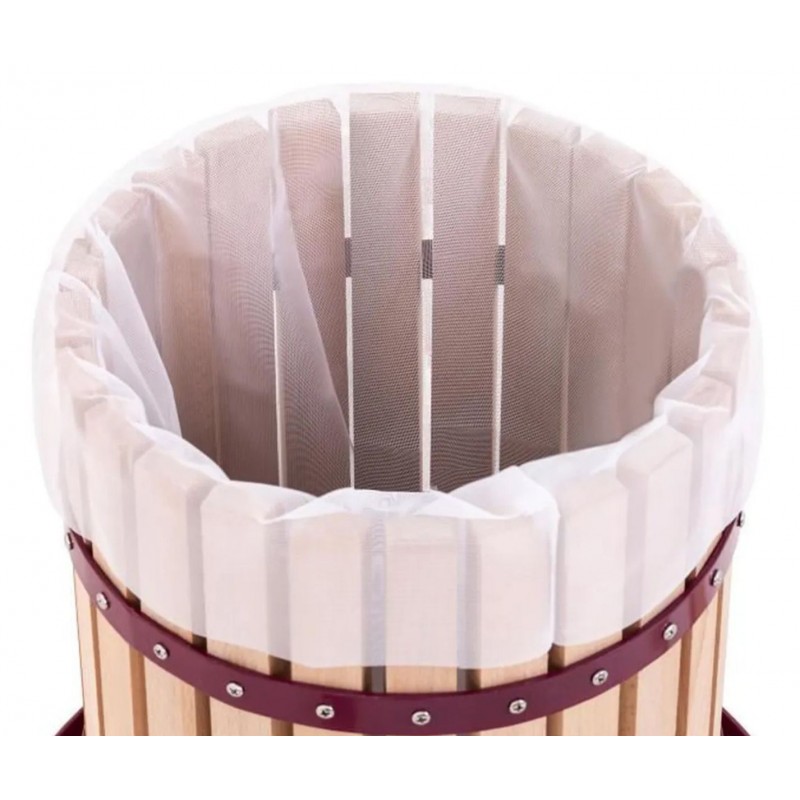
Special nylon fabric of 500 microns to filter the honey, it is an intermediate sieve. The roll has dimensions of 1270mm wide, with the advantage that thanks to this format can be cut to size for the manufacture of filters, making it possible to adapt to all types of honey tanks. Sold by the metre, i.e. one unit equals 1000x1270mm of filter cloth.
Nylon filter cloth of 500 microns by the linear metre: a piece of 1,000 × 1,270 mm to build the filter to fit the vessel you already own.
A ready-made strainer comes with its own ring and diameter: it either fits or it does not. Cloth works the other way round — you cut the area you need and the vessel stops dictating.
01 · WHICH OF THE THREE
There are three apertures in the catalogue and one of them trips people up: TEL1000 is 1,000 µm (coarse straining and pre-filters), TEL500 is 500 µm — this one — and TEL200 is 300 µm, not 200. There is no 200 micron cloth: if you are looking for the 300, you have to order TEL200. The 500 µm is the sensible choice for straining a reasonably clean honey in one pass; if you are going to work in two stages, the logic is 1,000 for the rough and 300 for the finish.
02 · THE MOUNTING
Cut the piece leaving enough to hold the whole perimeter, and rest it on a basket, a ring or a stable support. Do not leave it hanging from the rim alone: the column of honey is heavy, and either the fabric distorts or the fixing lets go exactly when the bucket is full. Before loading honey, test the set-up with water and check there is no fold where the honey could bypass the filter.
03 · WHAT IT HOLDS BACK
Half a millimetre of aperture holds back fragments of wax, bits of capping and visible particles from the process. It removes no residues, it does not sterilise and it does not repair a fermented or overheated honey. And watch a common confusion: the micron figure states the opening, not the flow. Honey that is cold, thick or starting to granulate will pass slowly however open the mesh; what helps is more filter area and fluid honey, not more heat.
04 · THE CLEANING
Cold, the wax grips the fabric and costs you twice the work. Wash it with nothing that can cut the mesh — no metal scourer, no scraper — rinse and dry it completely before storing. Replace the piece when tears or distorted areas appear, or when smells survive the wash: a torn mesh filters far worse than it looks.
05 · BEFORE YOU BUY
Each unit is one linear metre off the roll, that is 1,000 × 1,270 mm: enough for several small filters or to line a whole settling tank.
| ✓ FITS | Buckets, drums and settling tanks of any diameter, building the filter to measure. |
| ✕ DOESN'T FIT | As a finishing strain: that is what the 300 µm cloth is for. |
| ⚠ NOT INCLUDED | Ring, basket or support: the cloth needs something to rest on. |
| Material | Nylon |
|---|---|
| Nominal aperture | 500 µm (0.5 mm) |
| Position in the family | Middle, between TEL1000 (1,000 µm) and TEL200 (300 µm) |
| Roll width | 1,270 mm |
| Unit of sale | 1 linear metre: a piece of 1,000 × 1,270 mm |
| Reference | TEL500 |
1 file available

Special nylon fabric of 500 microns to filter the honey, it is an intermediate sieve. The roll has dimensions of 1270mm wide, with the advantage that thanks to this format can be cut to size for the manufacture of filters, making it possible to adapt to all types of honey tanks. Sold by the metre, i.e. one unit equals 1000x1270mm of filter cloth.
check_circle
check_circle